My latest blog has disappeared into the ether When I find it you will see it!

My latest blog has disappeared into the ether When I find it you will see it!
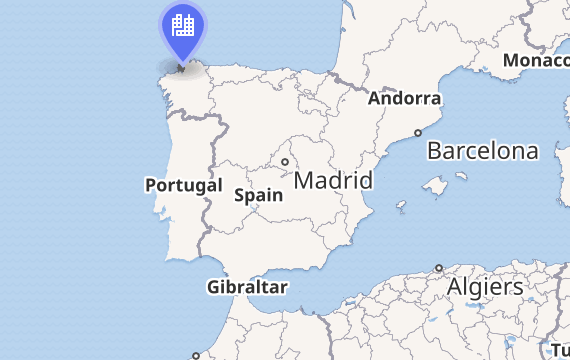
On the move again. Greetings from Ferrol, a city on the “seafood coast of Galicia”in the A Coruña Province.
Located in the northwest corner of Spain, Ferrol has been a major naval shipbuilding center for hundreds of years. It is the birthplace of the dictator Francisco Franco and the start of the Camino Inglés, which is why I am here.
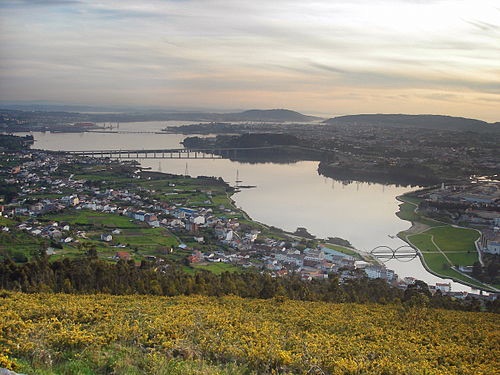
Tomorrow Edie Morrill and I and two Rhode Island neighbors ( Roxanne and Matt) will begin a 114 km six day walk back to Santiago de Compostela.
Edie and I arrived here last night after a work day in Santiago , dropping off a suitcase full of supplies for Casa Anglicana and Santa Susana. Matt and Roxanne have been in Madrid and will arrive later today.
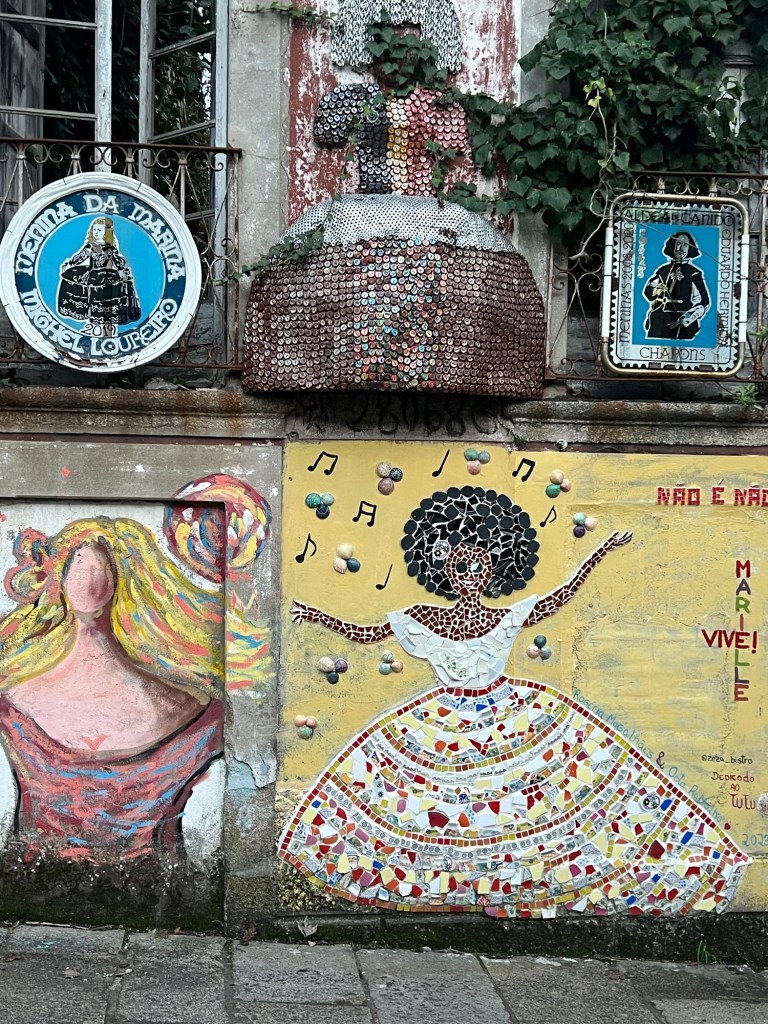
On our walk from the bus station to the hotel we passed walls, doorways , entire facades and even mailboxes painted with varied interpretations of Diego Valazquez’ famous picture “Las Meninas “which hangs in the Prado Museum in Madrid.
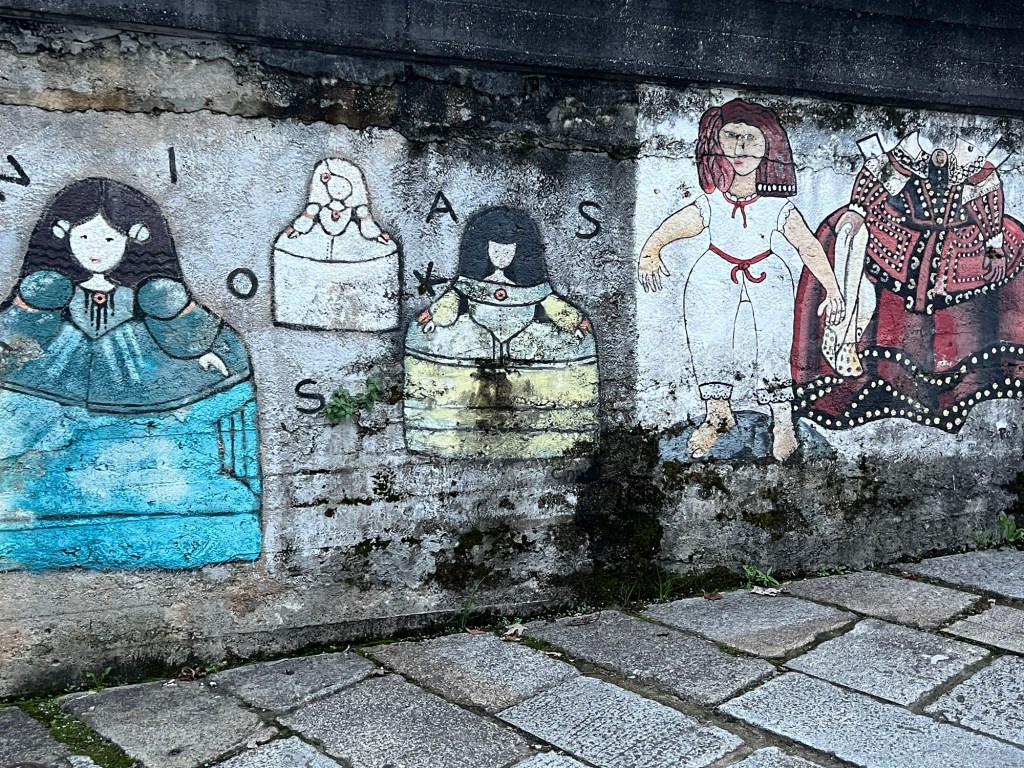
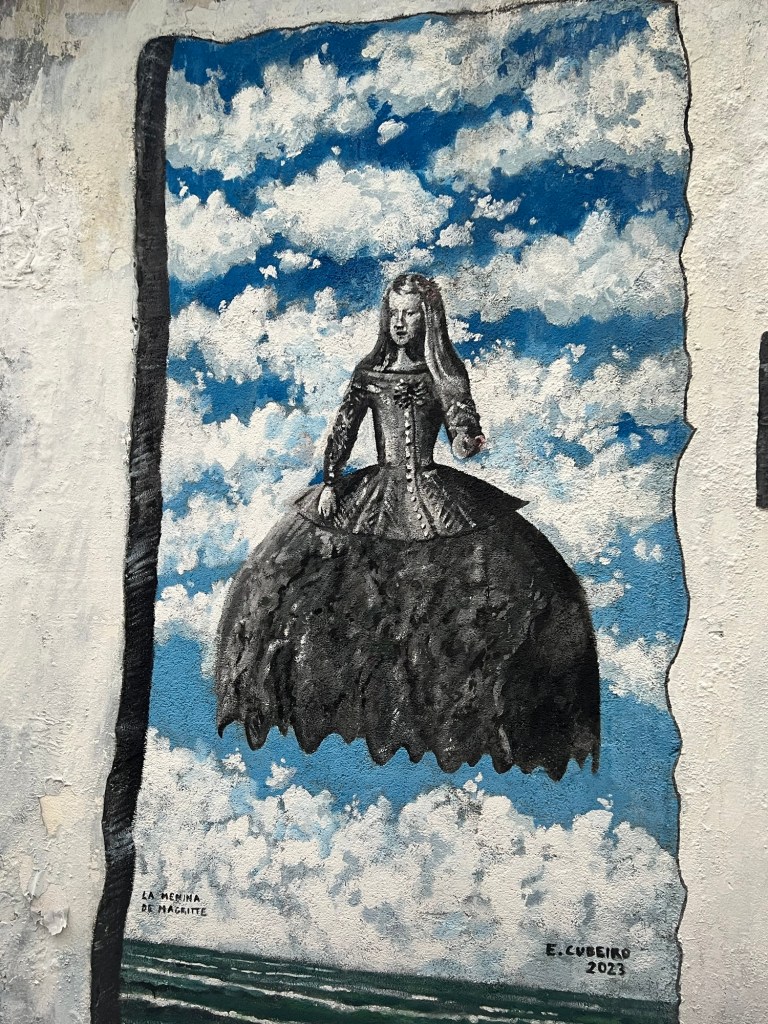
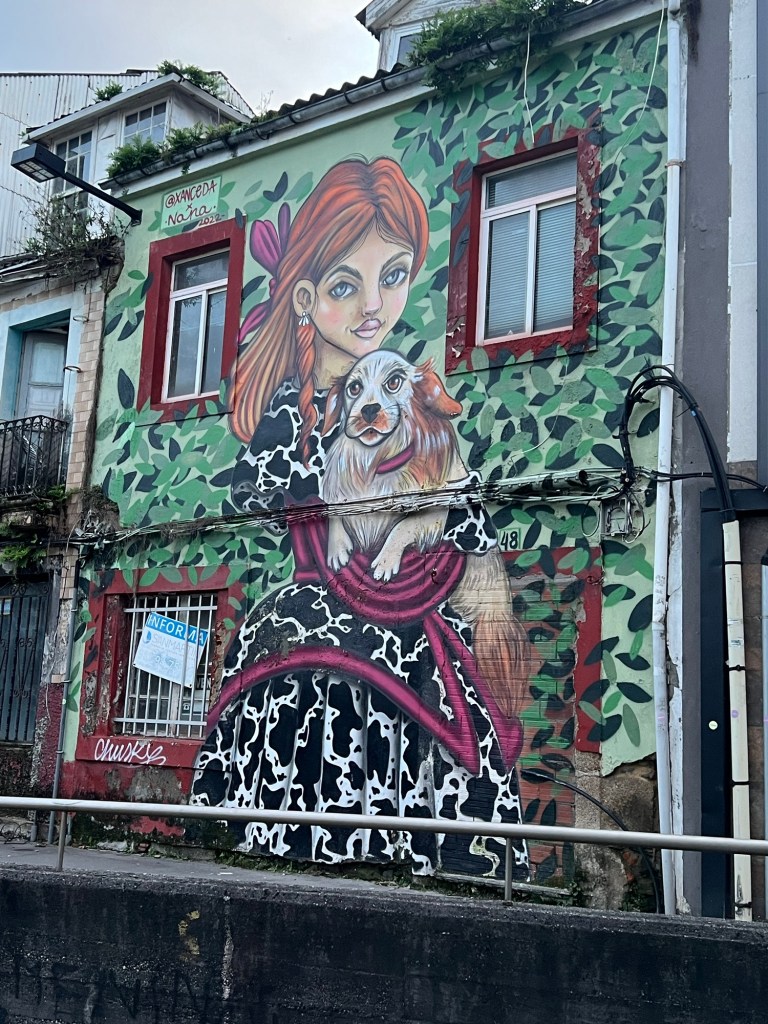


We were to learn that these images were part of an effort begun in 2008 by artist Eduardo Hermida who painted the first “menina” in an effort to revitalize a declining neighborhood. He hoped to draw people and interest to this architecturally beautiful part of Ferrol.

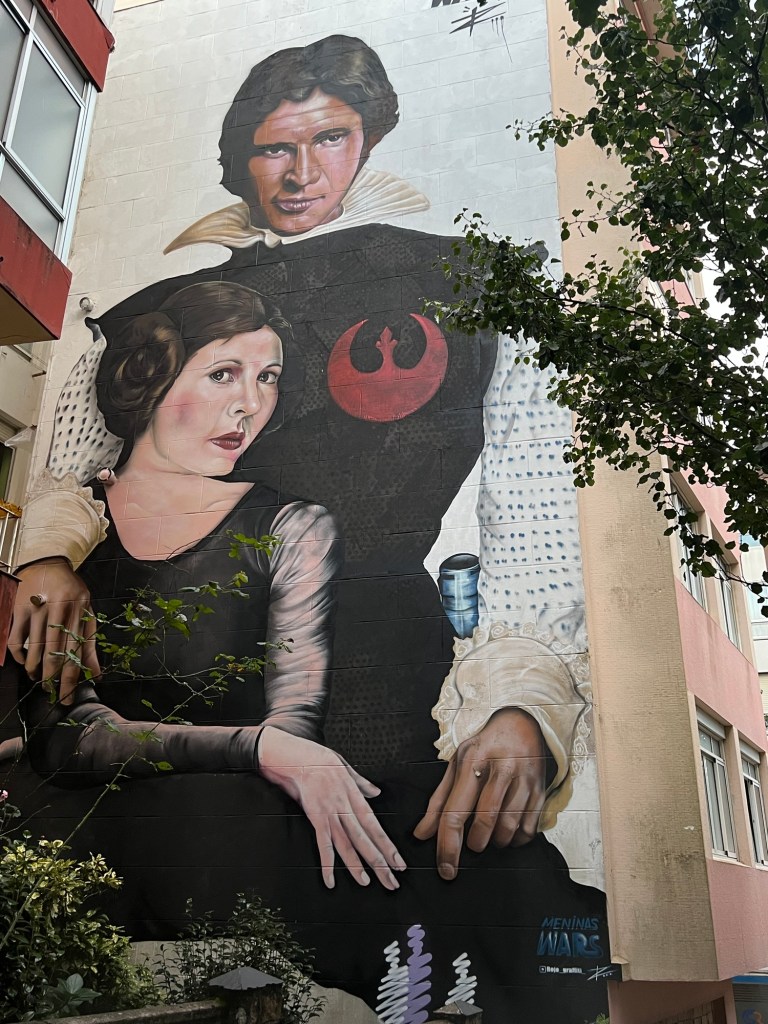
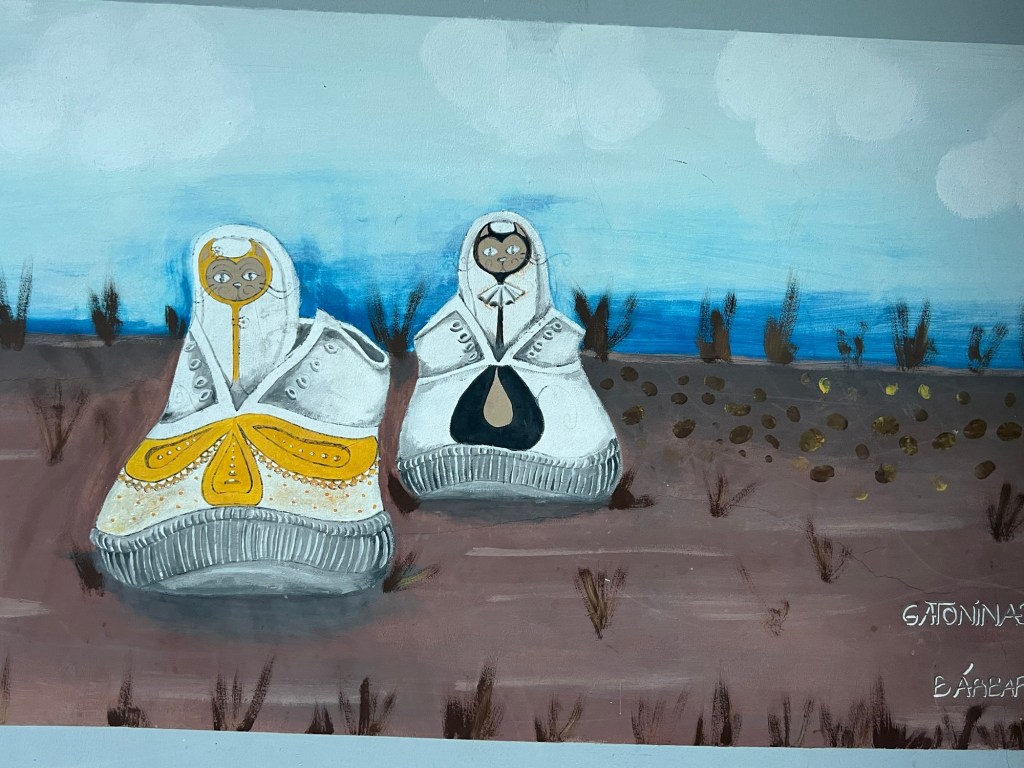
Each year in September artists paint three hundred meninas and thousands tourists follow the Ruta de las Meninas de la Canido 2024 through neighborhoods being discovered, appreciated, and reinvigorated.
We didn’t see all three hundred but what we did see were amazing and ran the gamut of creativity-everything from skirts made of bottle caps to Star Wars to white sneakers to Snoopy .

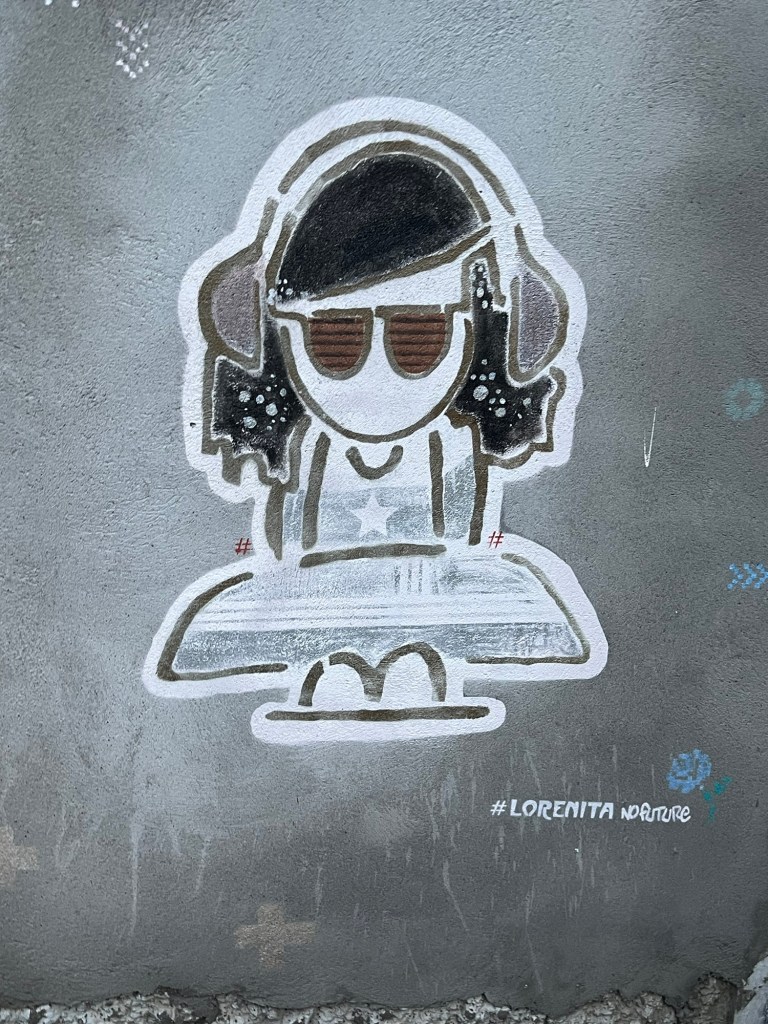
One particularly striking picture captured our attention- a minina holding a gray navy destroyer looking toward two cranes silhouetted against a golden sky.

Checking into our hotel and looking out the window, we had our answer. We were right beside the docks of the Spanish Navy Maritime Department of the north.
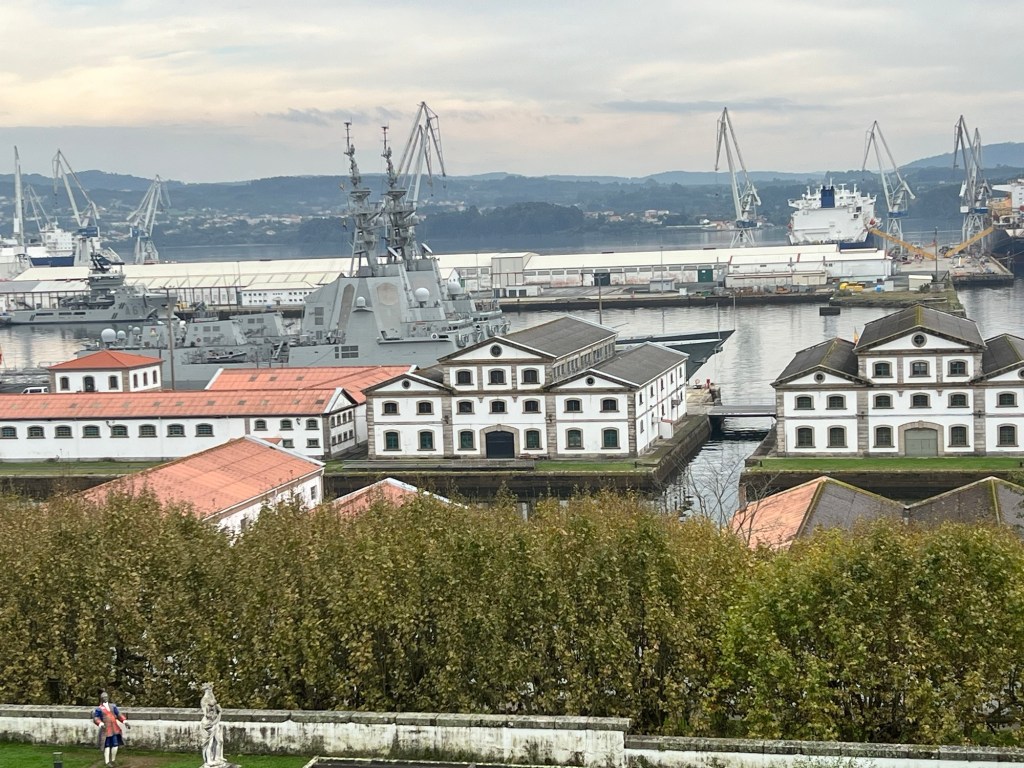
That was then. This is now.
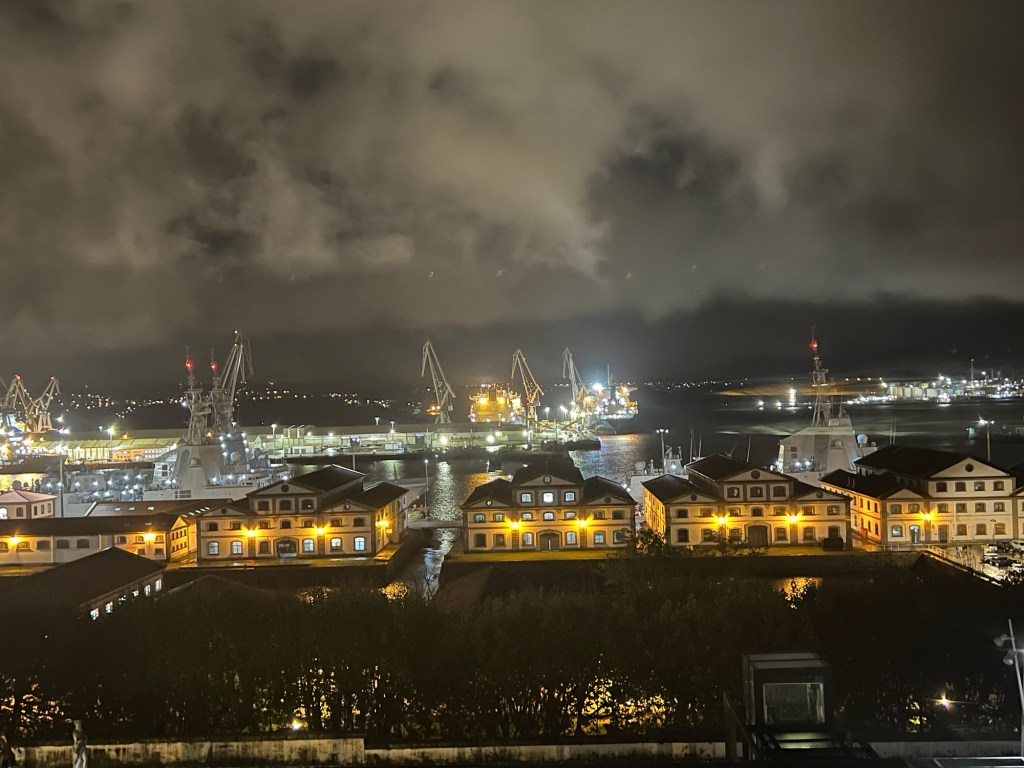
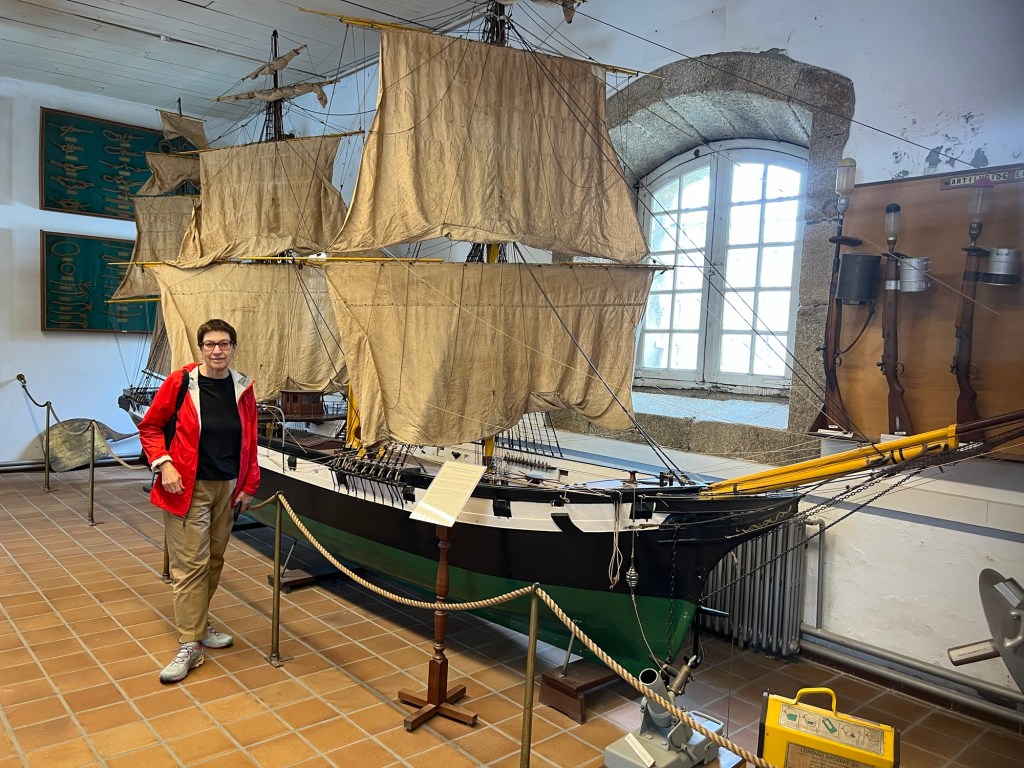
We spent much of the day visiting the two naval museums, walked 25,531 steps, met up with Roxanne and Matt and had our share of seafood and wine .
Tomorrow we walk; tonight I must sleep! Will tell you all about the museums tomorrow. And typos will get fixed by Eagle Eye Edie when she wakes up.
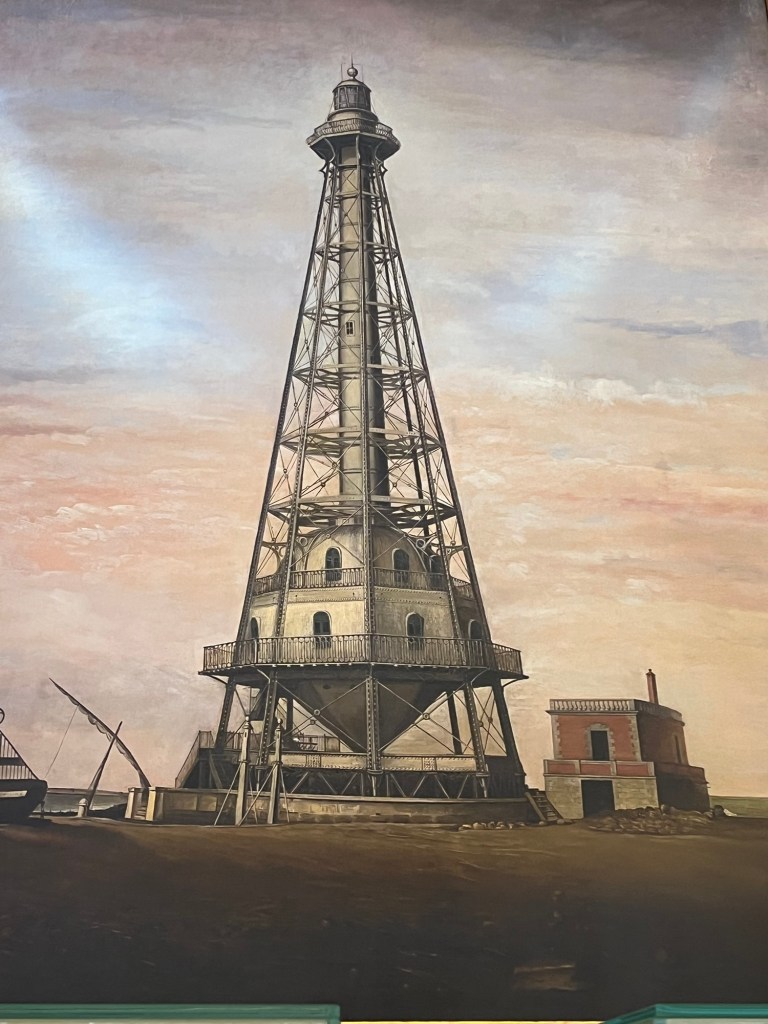
A preview of what we saw.


Buenos sueños. Hasta mañana
Our tour officially began this afternoon. We met Jackie Dias our tour leader in the lobby of the Lodge and began our walk to the Cathedral.
Along the quay we did some additional stealth shopping before crossing the Dom Luís Bridge. This two tiered bridge spanning the Douro River, was built in 1886 by Teófile Seyrig, a partner of Gustave Eiffel. The upper level is for pedestrians and a light rail system while the lower level is for pedestrians and cars.

We were on the lower level but the views are spectacular from either tier.
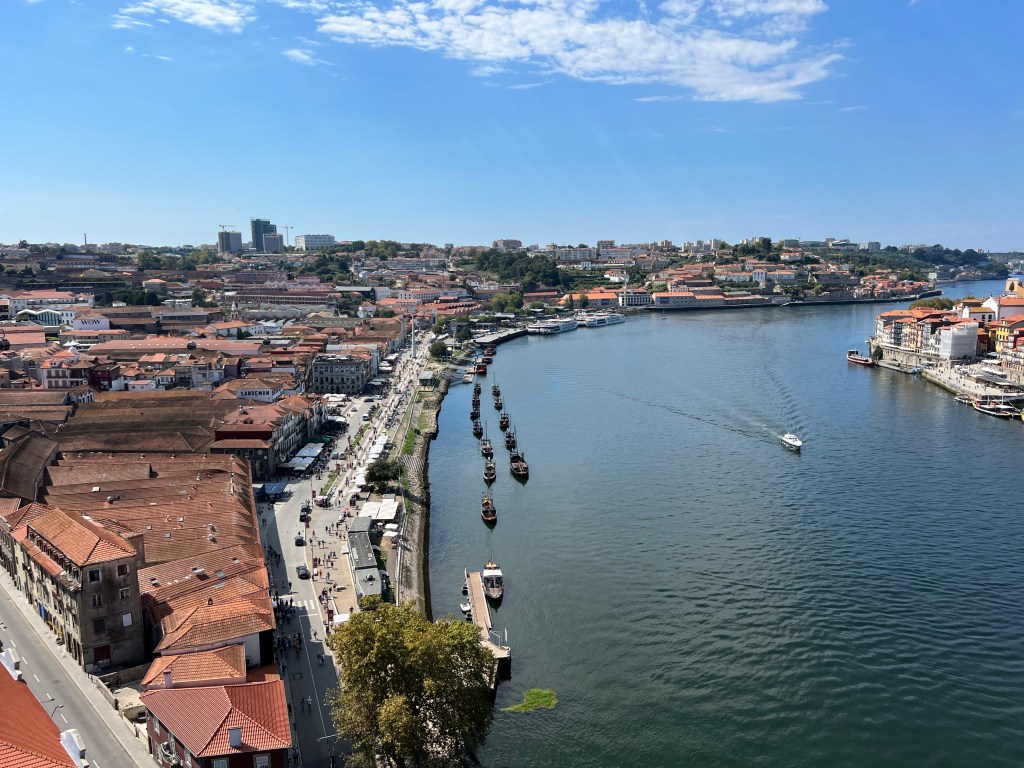
A look back at the wine lodges surrounding our hotel.

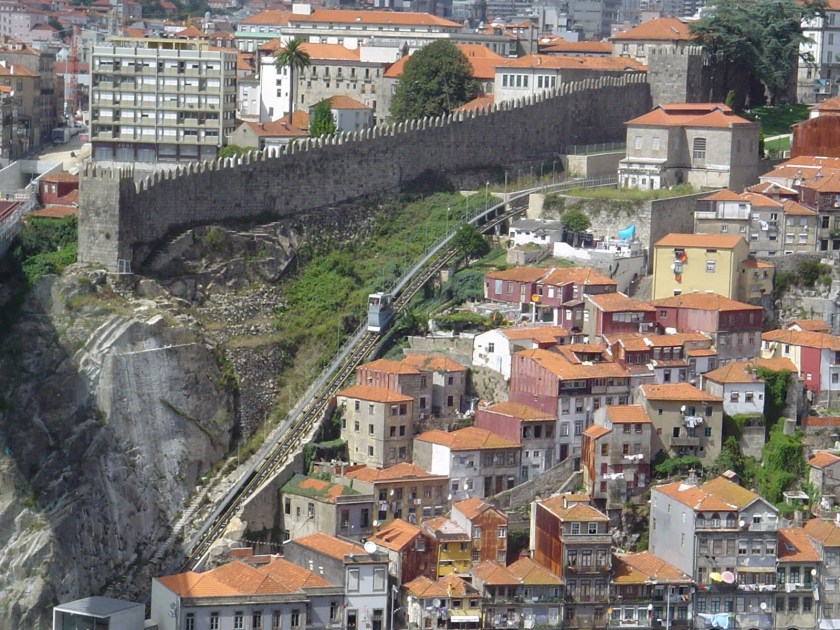
Instead 0f walking up the steep hill, we took the funicular that goes up along the 14th century wall which once surrounded the old city.
Our group boarded together and waited until the car was crammed NY subway style full before taking off. For a couple of Euros, it was fun, interesting, easy on the knees, and gave us more views of the Douro behind us.

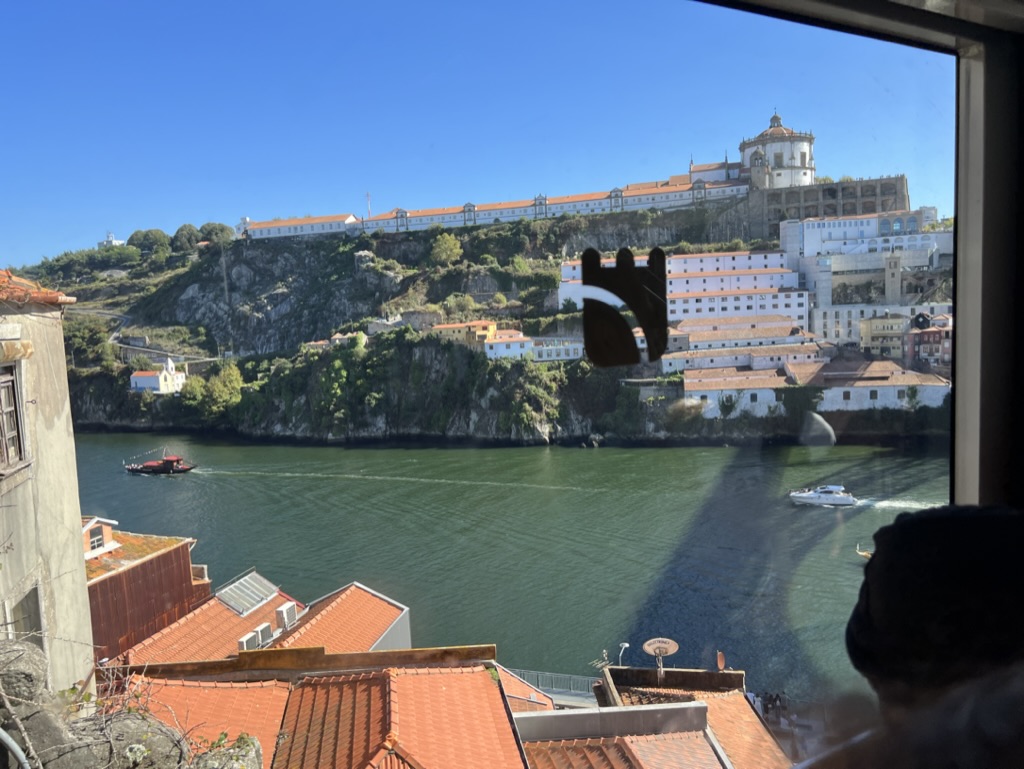
The original funicular, built in 1891, closed after a brief two year run which ended badly! The present one reopened in 2001.
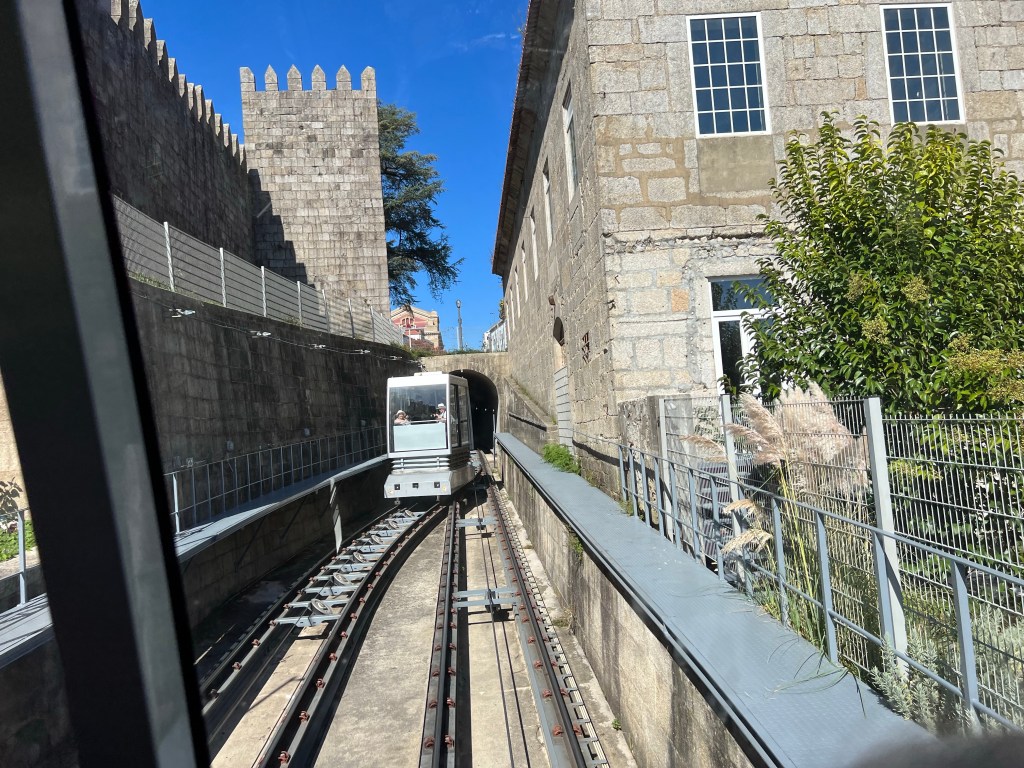
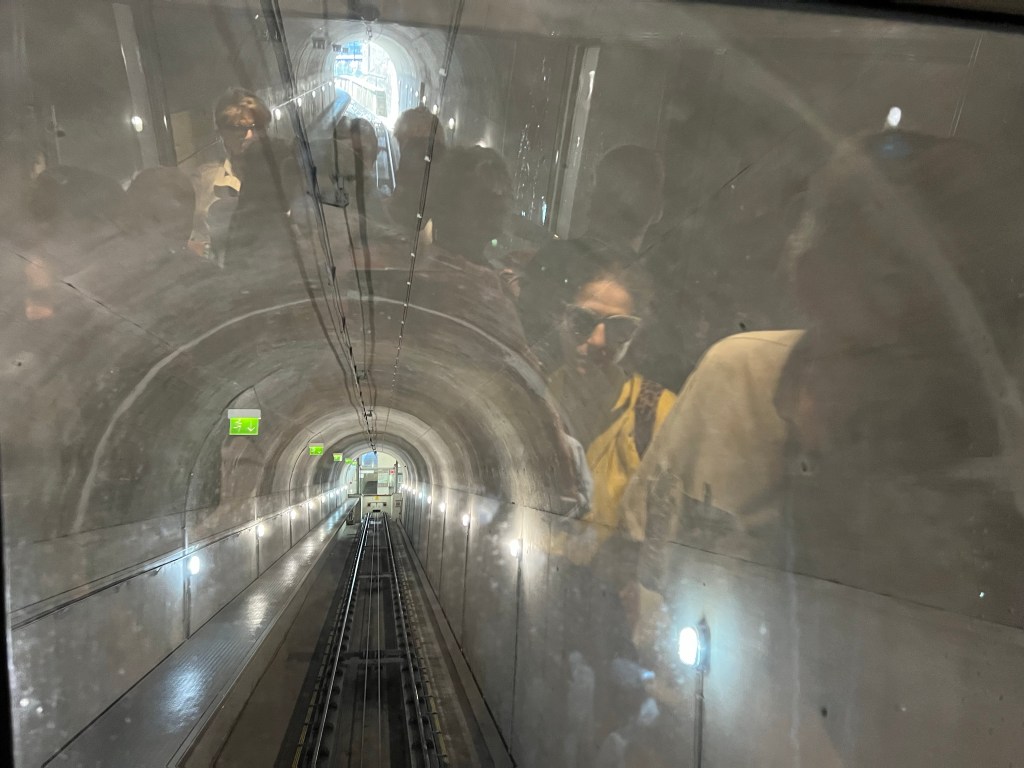
Happily for us, in spite of meeting another car coming down as we went up, we made it into the tunnel and exited up a flight of stairs just around the corner from the Cathedral of Porto.

The present cathedral is known locally by various names, all honoring the Virgin Mary. Begun in the mid 12th century, its original Romanesque style has undergone numerous changes and additions over the years. It was been enlarged and embellished with both Baroque and Gothic features but to me the exterior looks as much like a fortress as it does a church. In 1387, it was the scene of the marriage of Philippa of Lancaster to King João.

Our local guide, Jorge, was waiting for us at the pillory, where in earlier times criminals were hanged.
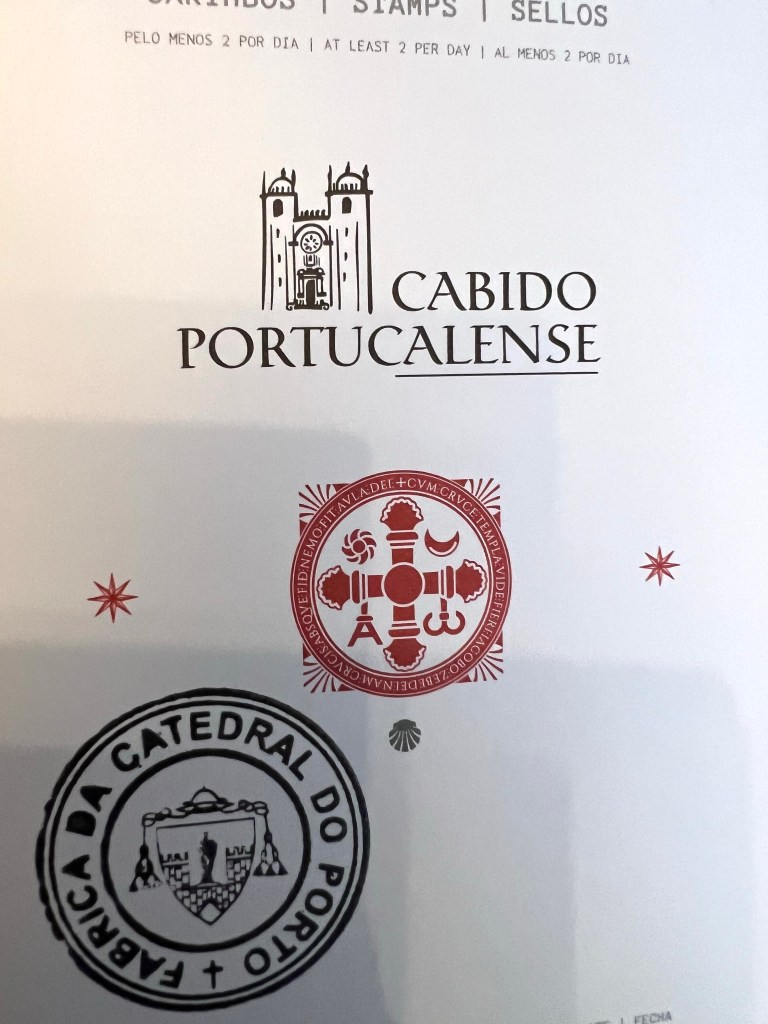
We were given our pilgrim passports and our scallop shells signifying we were pilgrims to Santiago. It would be our responsibility to get two stamps each day of our pilgrimage if we wanted to receive the Compostela document at the end of our walk.

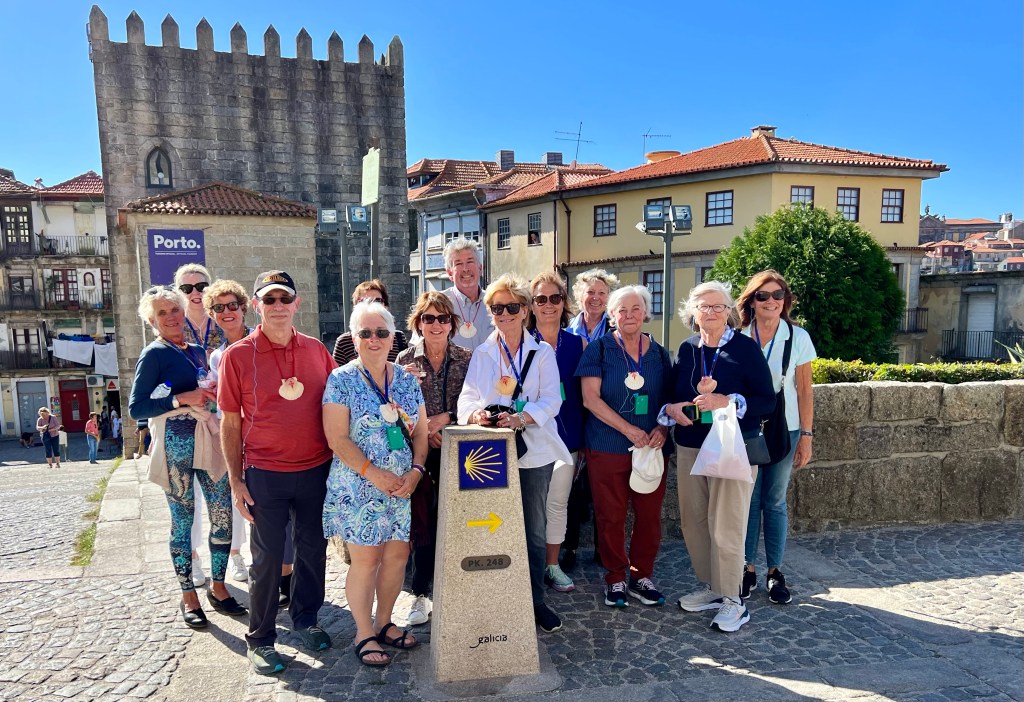
Before we went inside, we took a group shot in front of the Camino marker, showing the distance to Santiago. (248km) We will do half of that distance leaving from Tui.

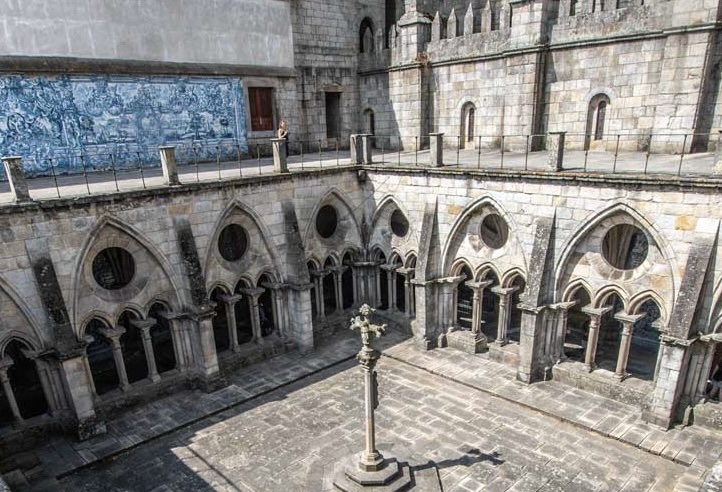
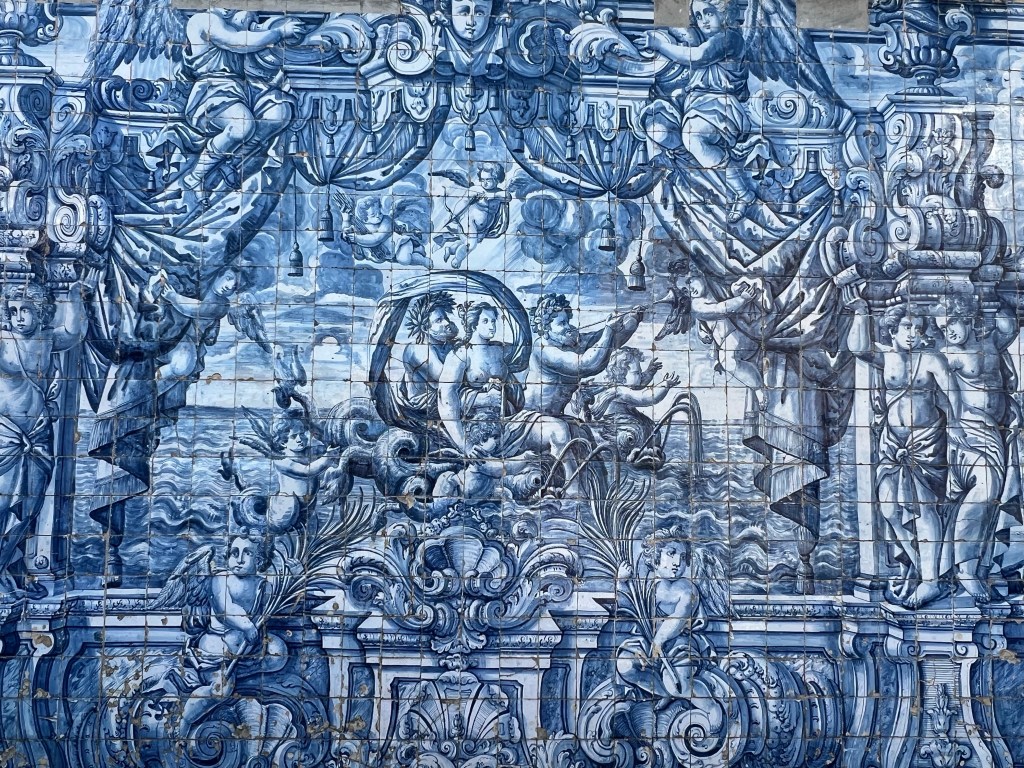
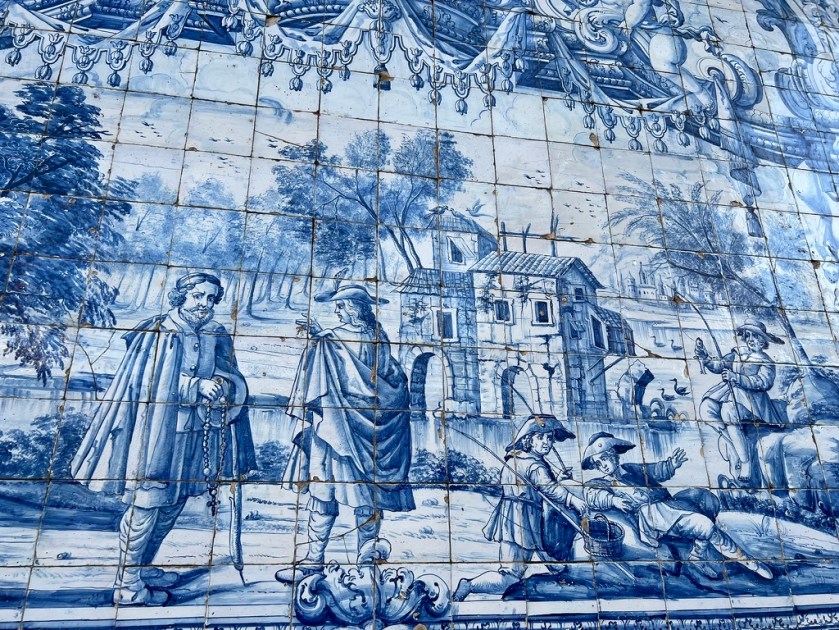
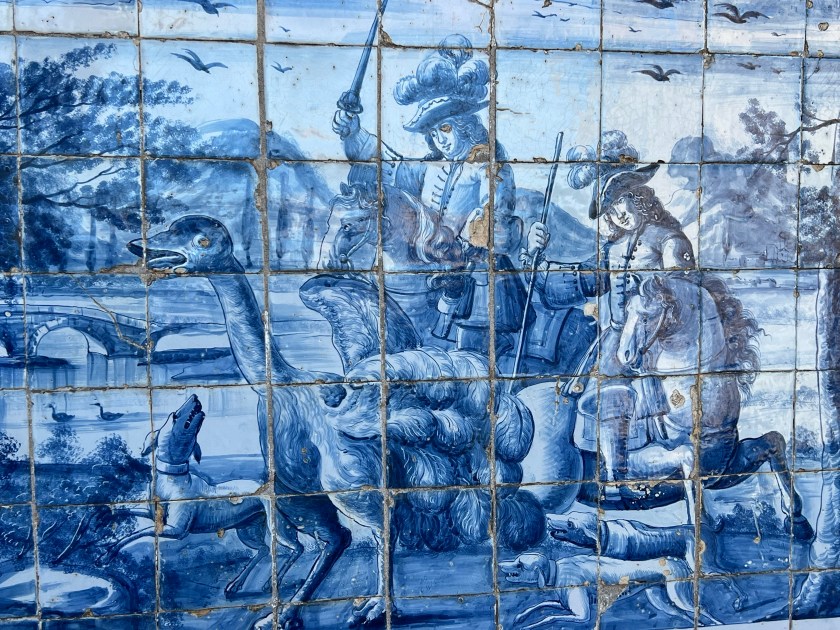
Inside the Cathedral we paused in the cloister while Jorge explained the history of the blue and white tiles.
The tiles are called azulejos which means “smooth polished stone” in Arabic. First brought to Spain by the Moors in the 13th century, King Manuel I saw them in Seville and brought them to Portugal to decorate his palace. Today they can be seen all over Porto, from the walls of the train station to homes and street signs.

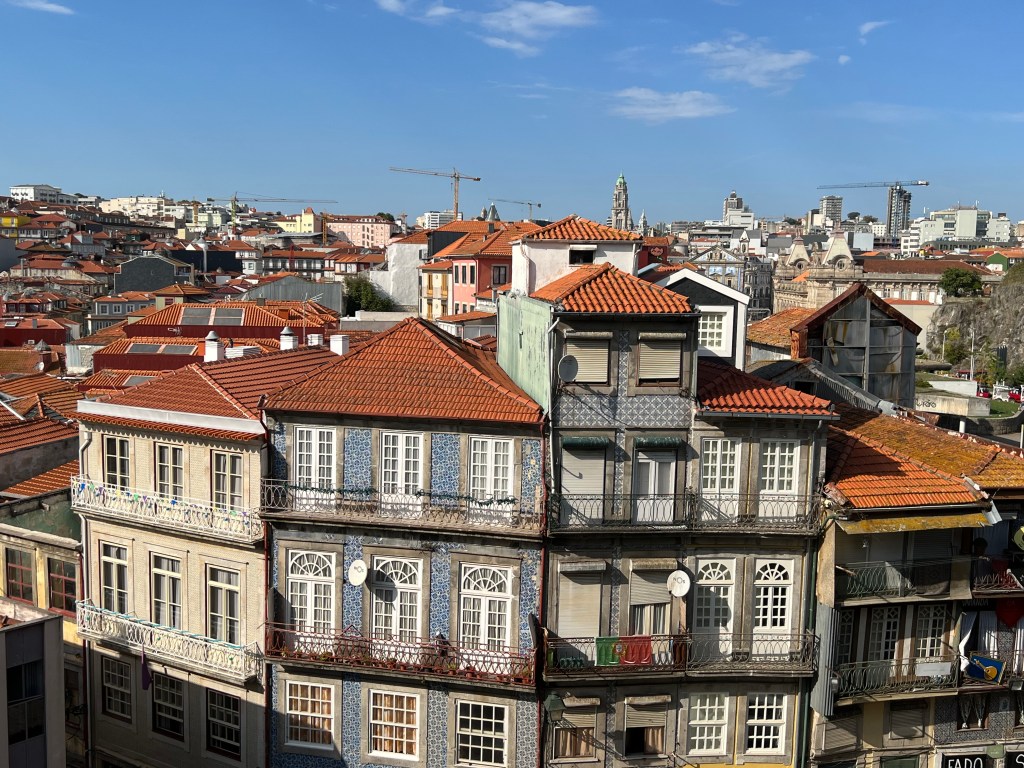

Inside the church, flying buttresses and granite columns support the barrel vaulted ceiling.
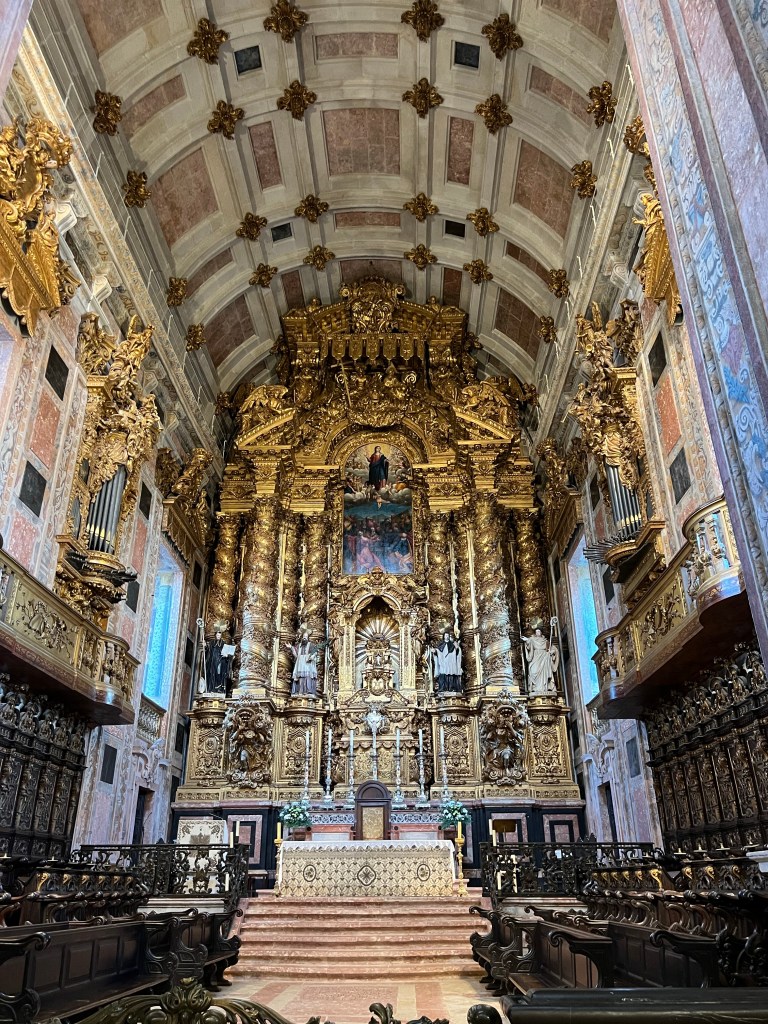
The High Altar is a masterpiece of gold. The sanctuary painted with murals and faux marble panels.
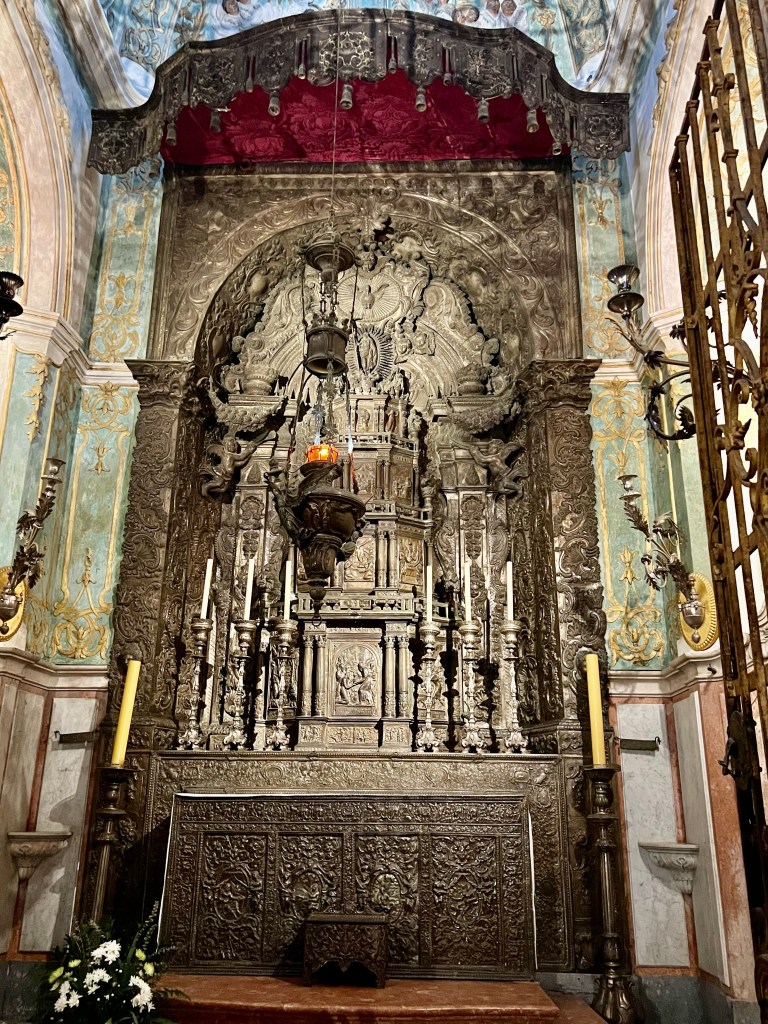
The silver altarpiece in the Resurrection Chapel was hidden behind a plaster wall for over a century to prevent Napoleons forces from stealing it when his troops invaded Porto in 1809. It seemed cleaner to me than when I last saw it. Any Altar Guild worth it’s salt would love to get a chance to polish it.
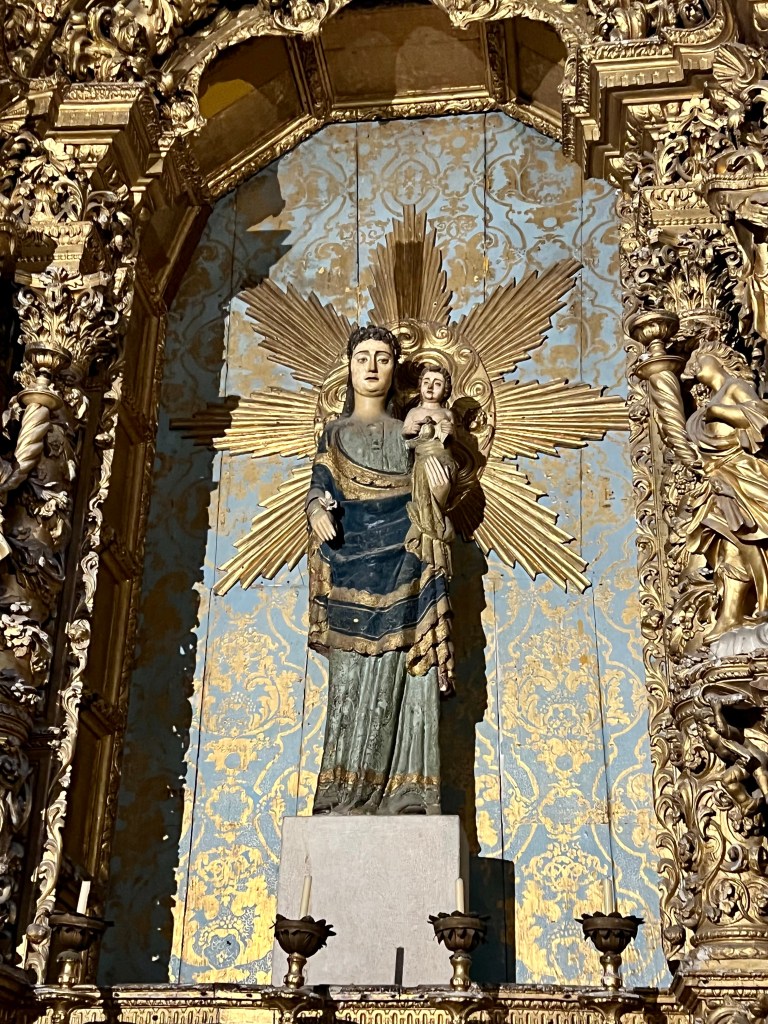
Our Lady of Vendôme is the Patron Saint of Porto. An army of French soldiers from Vendôme carried a stone statue of Our Lady with them into battle against the Moors. Following their victory, as an act of thanksgiving, the statue was given to the city whereupon she became it’s Patron Saint.
In addition to the seven tile panels in the cloister, two huge ones on the second floor terrace depict scenes from Ovid’s Metamorphoses and the Bible’s Song of Solomon.
Time ran out for us and we did not have time to visit the Sacristy, the Chapter Room and the Treasury of the Cathedral. Don’t miss them if you visit the Cathedral.

Sacristy
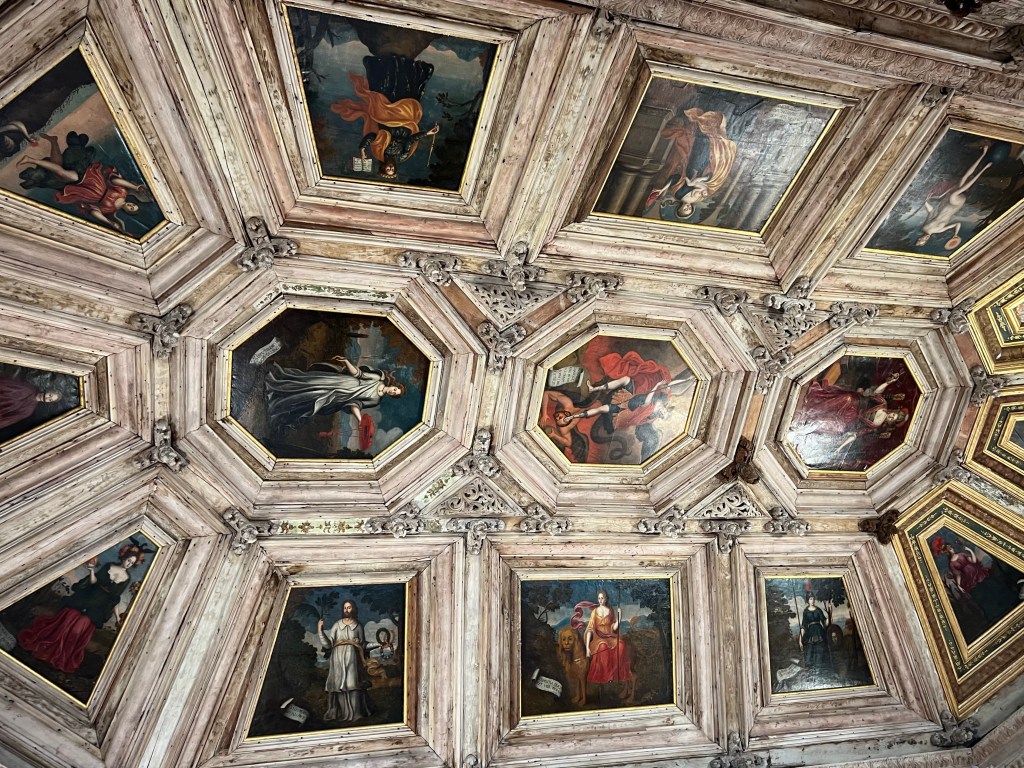
Chapter Room Ceiling
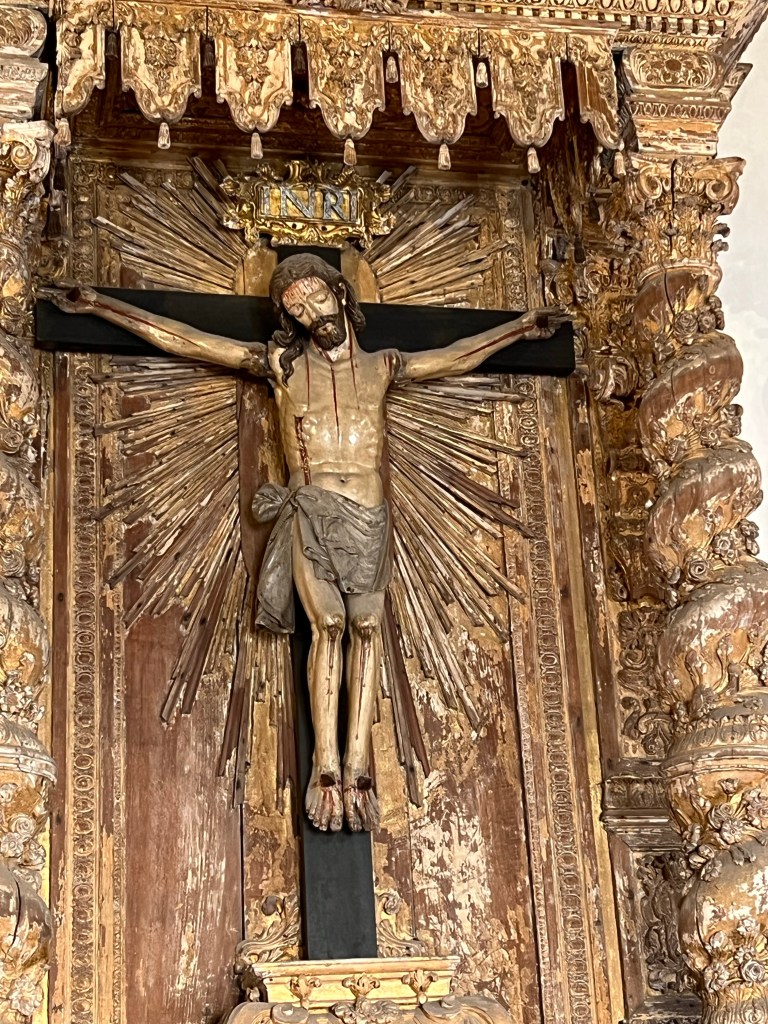
Just one of the many works of art in the Treasury
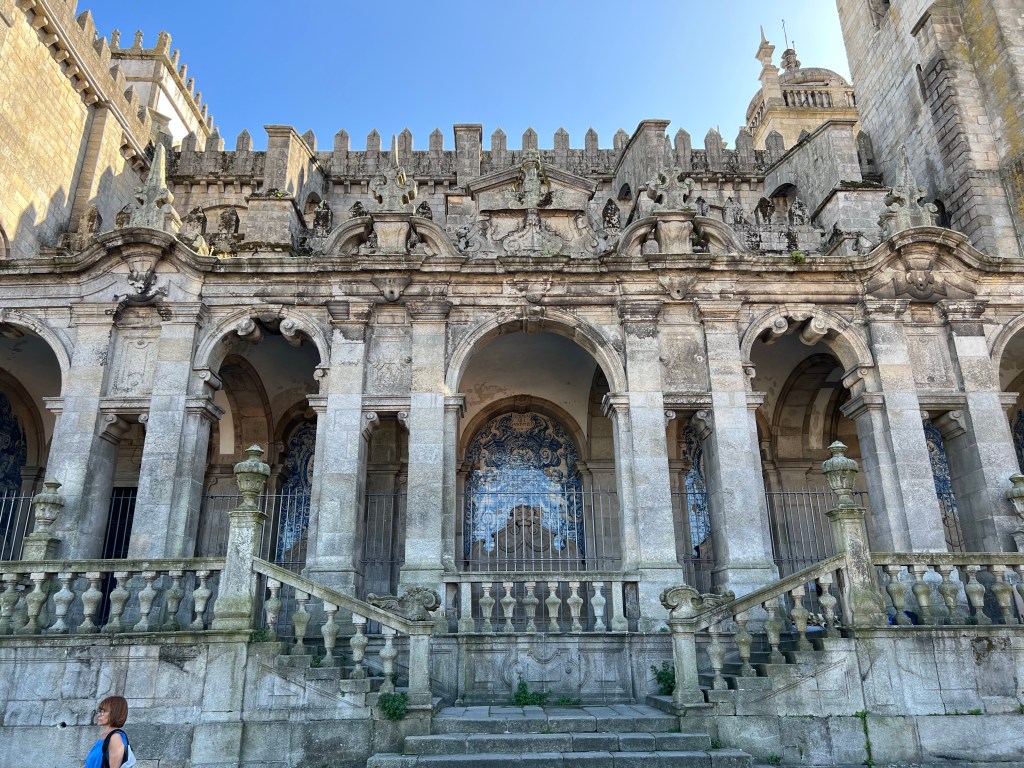
Outside before we hopped on our bus, we had one last glimpse of the azulejos on the 18th century loggia on the side of the Cathedral.
Next stop. A tour of the renowned 1890 Graham Wine Lodge Caves followed by a Port tasting and dinner. Stay tuned for a report.
Since our tour with Insider’s Travel did not officially begin until 2pm, the bibliophiles in our group bought online tickets to the Livraria Lello e Irmão, known as the Lello Bookstore and considered one of the most beautiful in the world.
The original bookstore was founded by Ernesto Chardron in 1869. In 1884, it was bought by the Lello brothers. In 1906, they opened the bookstore on its present site. Built in the Neogothic style, it was the first reinforced concrte building in Porto.
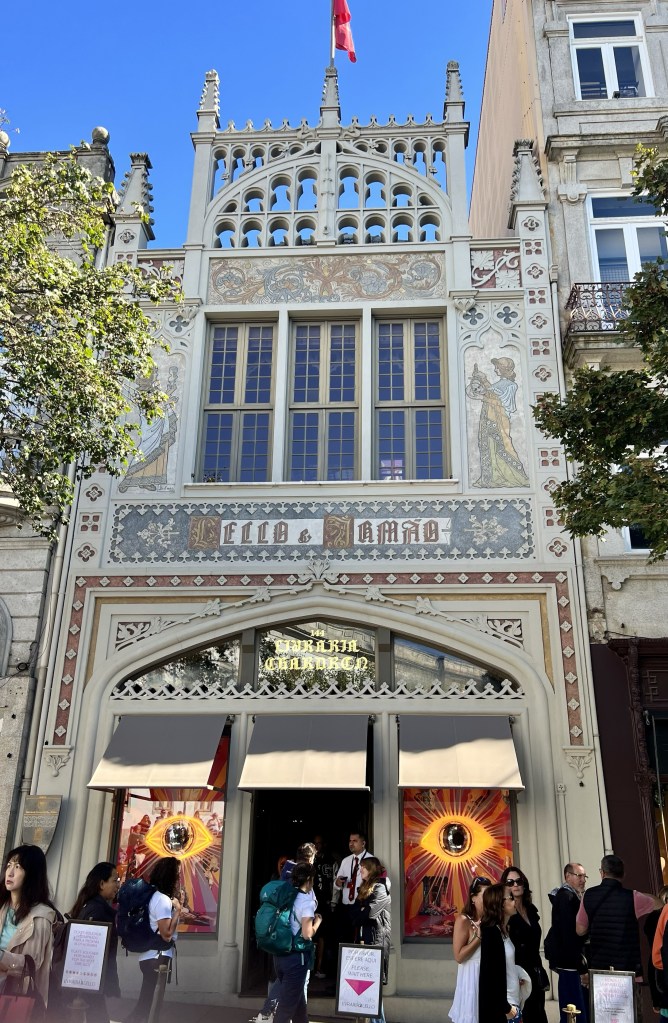
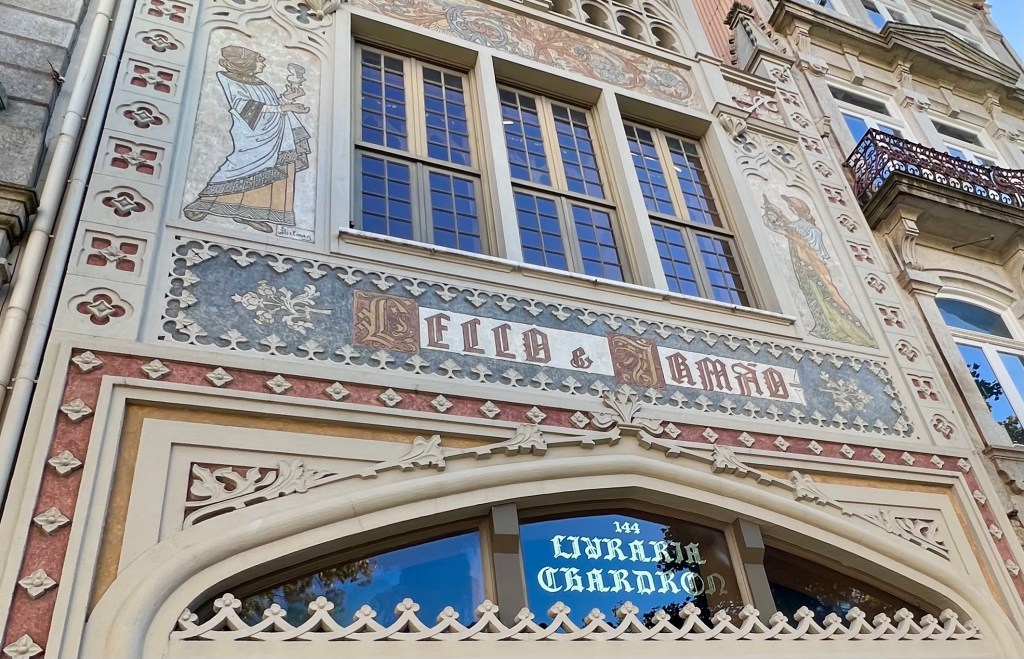
The opening was a great social and cultural event attended by famous literary figures, covered by newspapers as far away as Brazil.

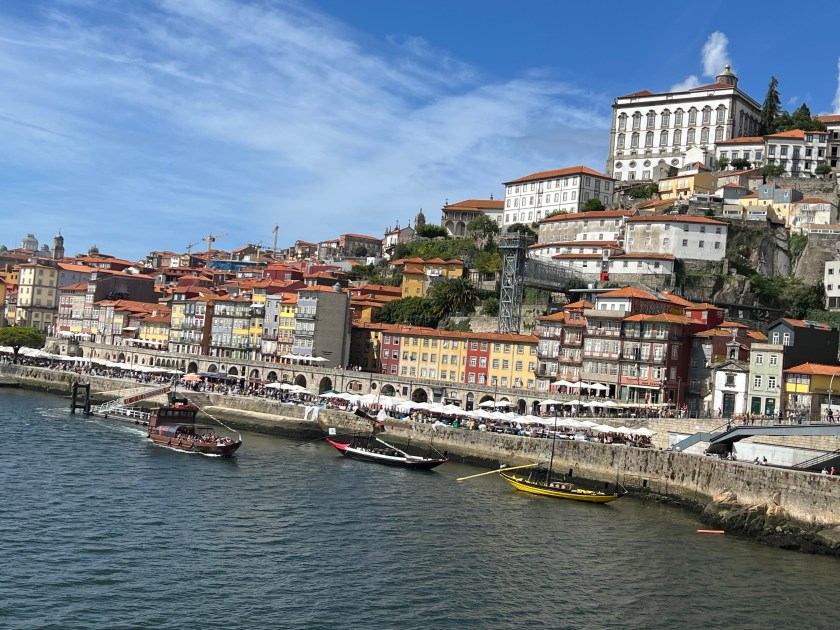
Determined to save our feet and knees for our upcoming 120km walk on the Portuguese Camino, we took a cab instead of tackling the famously hilly streets of Porto.
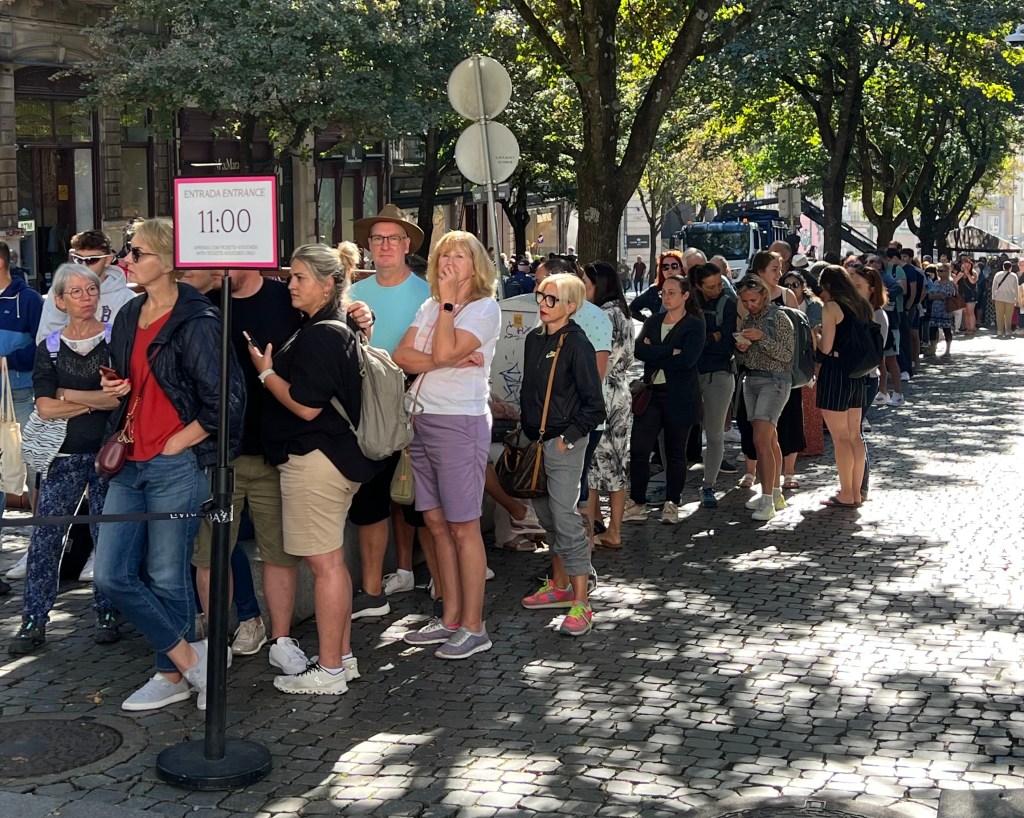
Warned in advance of long lines and crowds, we chose an early entry. With tickets in hand, we were permitted to skip the lines which extended to the end of the block.
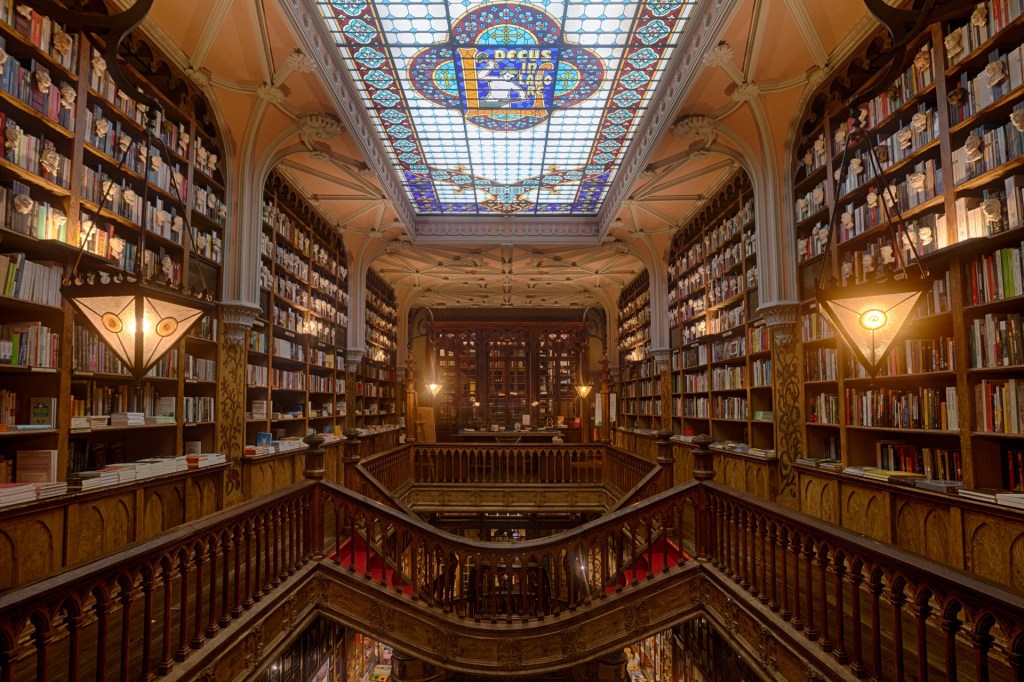
While the outside might look like a church, the inside looked like the set of a Harry Potter movie. While some say the library was the inspiration for J.K. Rowling’s Hogwarts School, she claims never to have visited the Lello in spite of once living in Porto.
Inside was as crowded as outside.
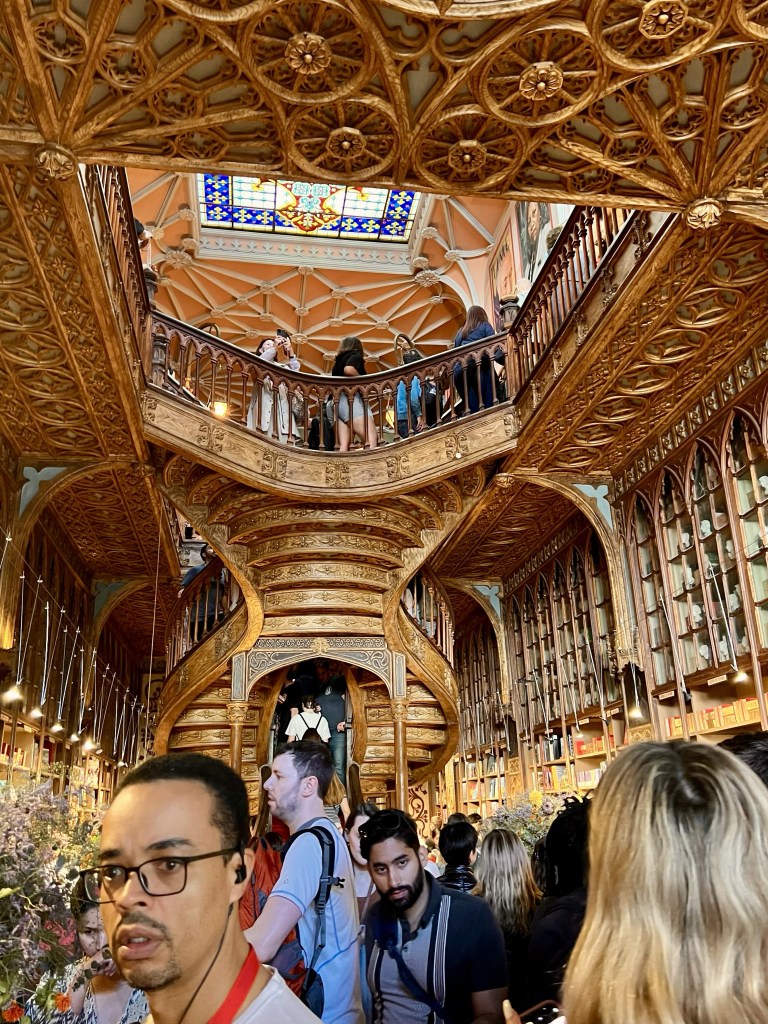
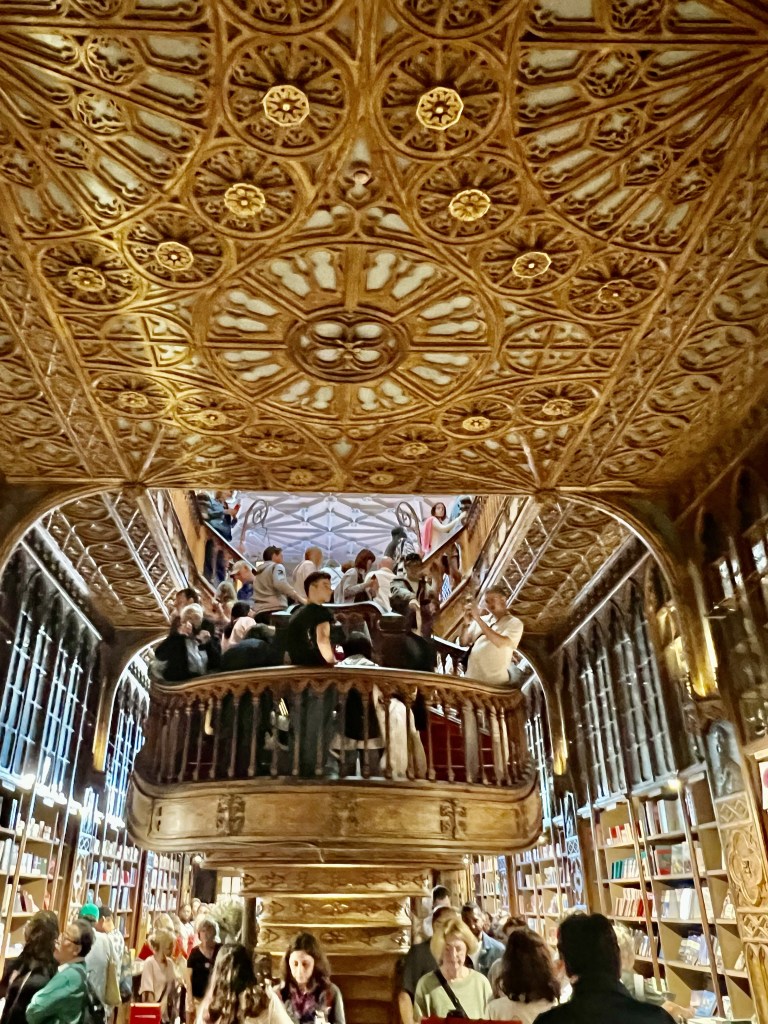
There were wall to wall people and the were floor to ceiling books, but what drew our attention was the art deco decor and attention to detail.
The curving grand staircase made of cement painted to look like wood;


A“ floating staircase” once mistakenly painted red, now beloved for its color;

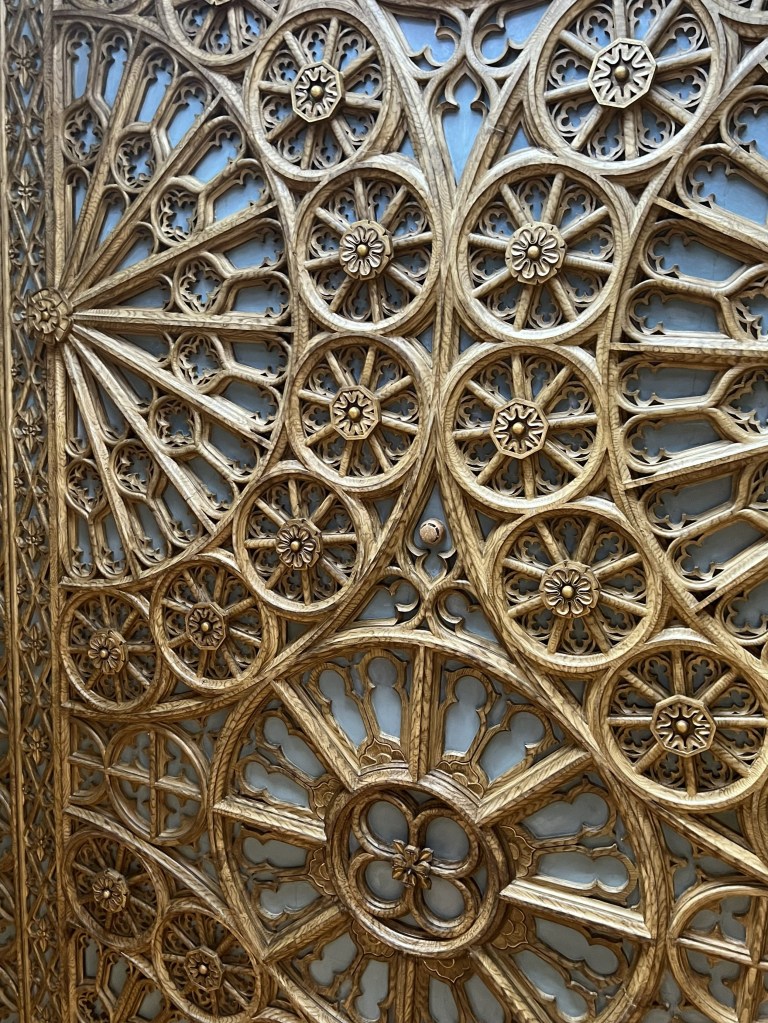
An ornate plaster ceiling posing as carved wood;
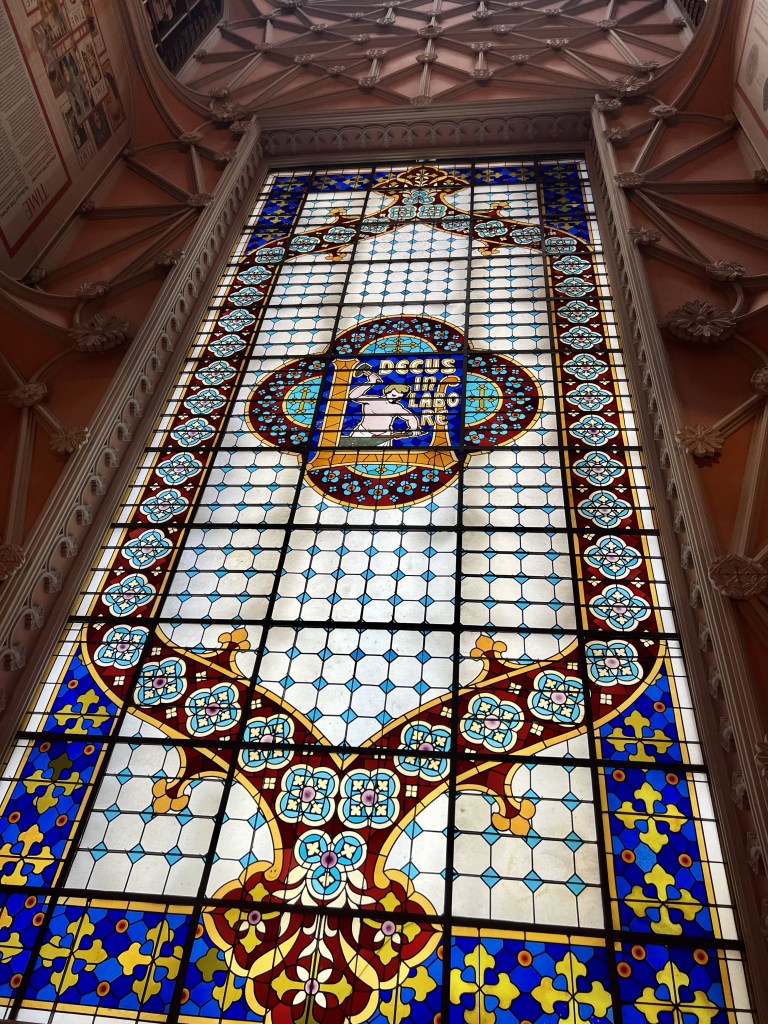
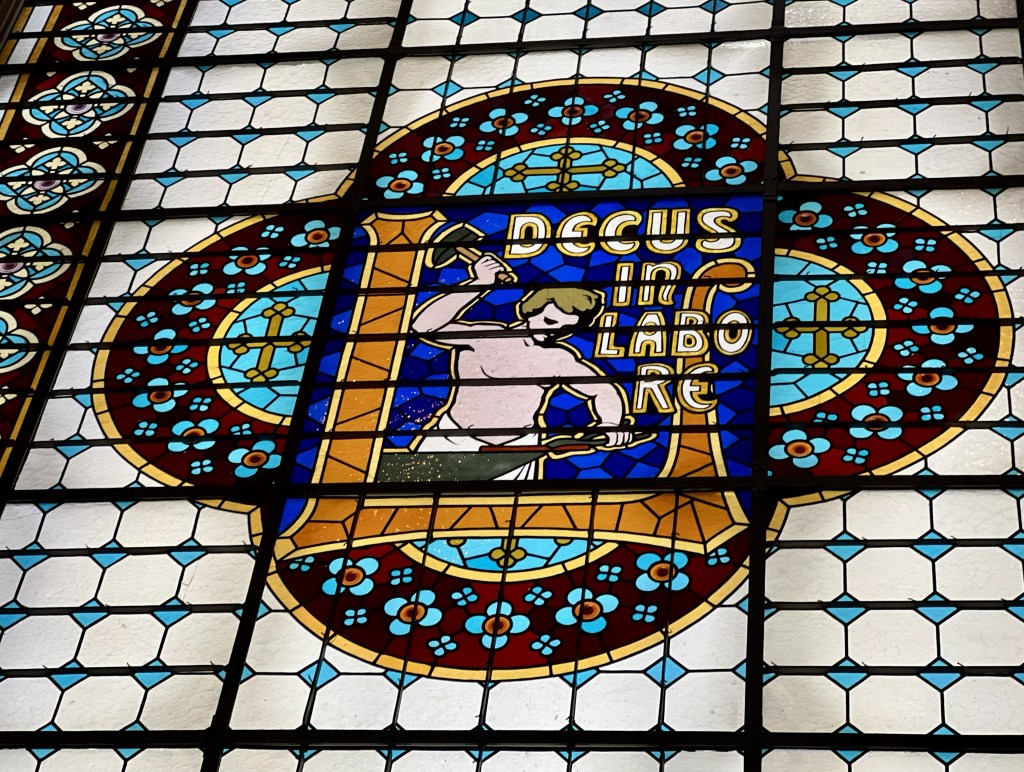
A 26×11 ft. stained glass skylight featuring the Lello brothers motto “dignity in work”.
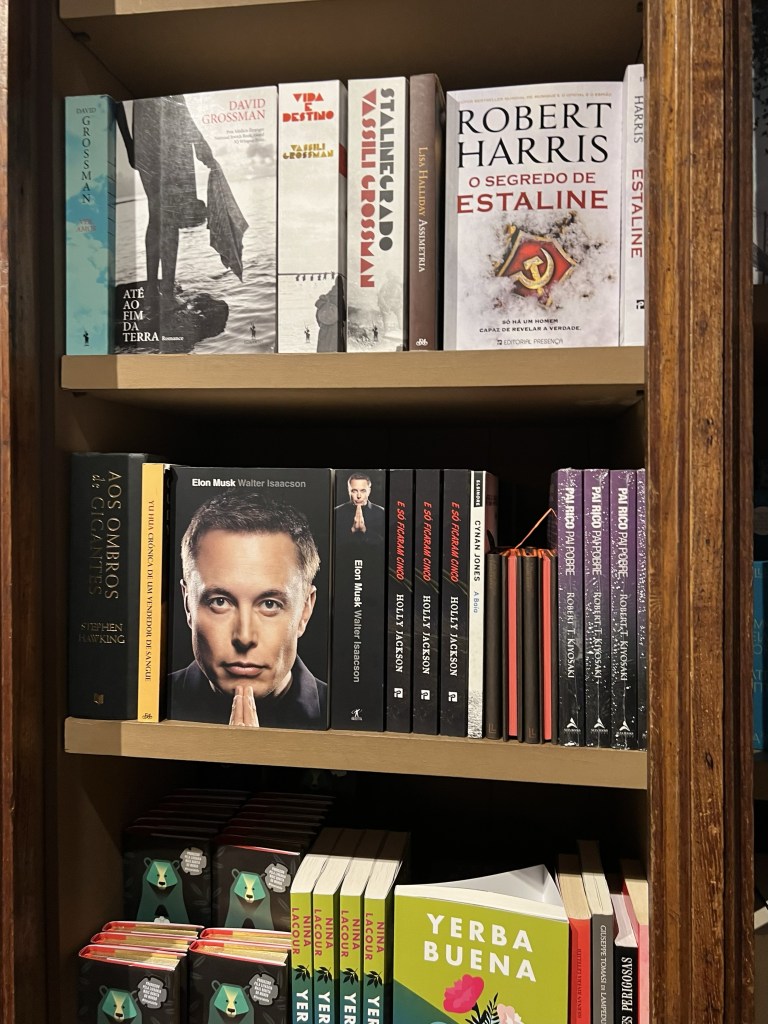
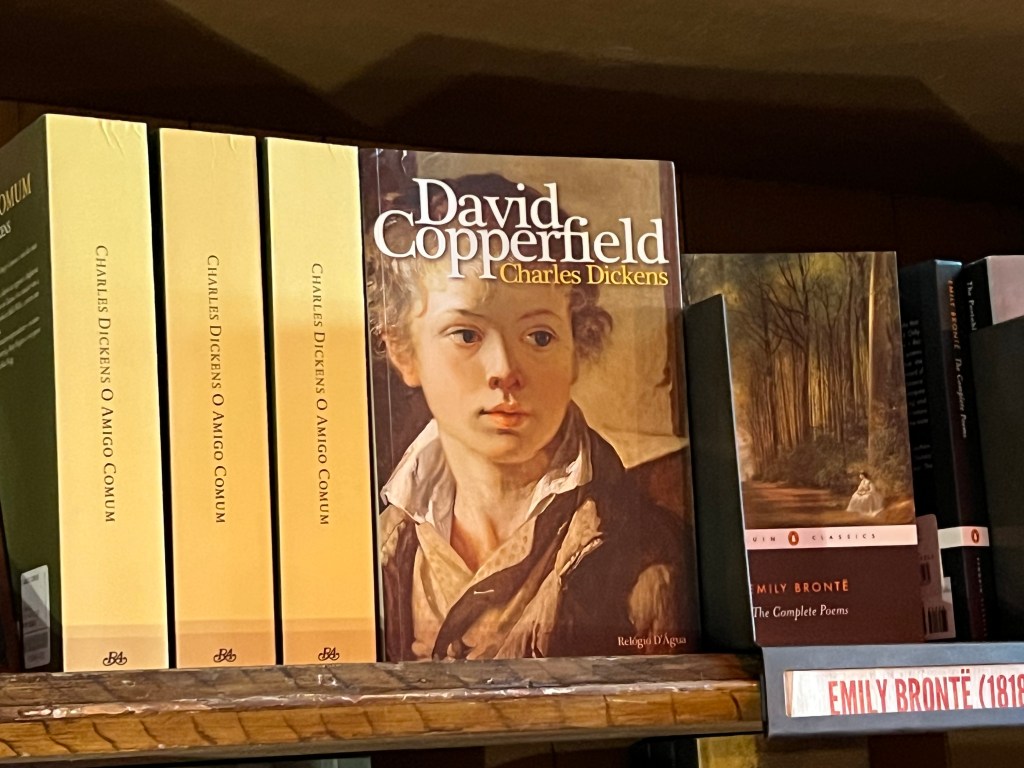
Intricately carved shelves that held books in many languages ranging from newly released titles to beloved classics classics.
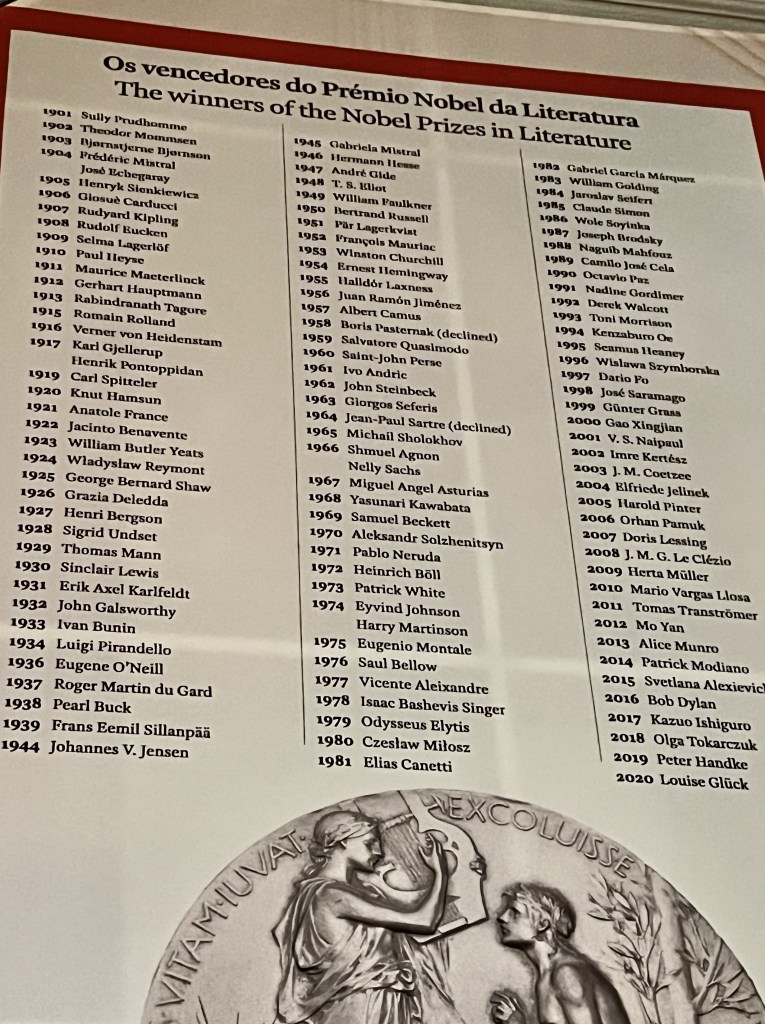
One niche was dedicated to Nobel prize winners in Literature.

Another celebrated the 80th anniversary of Le Petit Prince.

Harry Potter had his own corner complete with the sorting hat and train to Hogwarts.
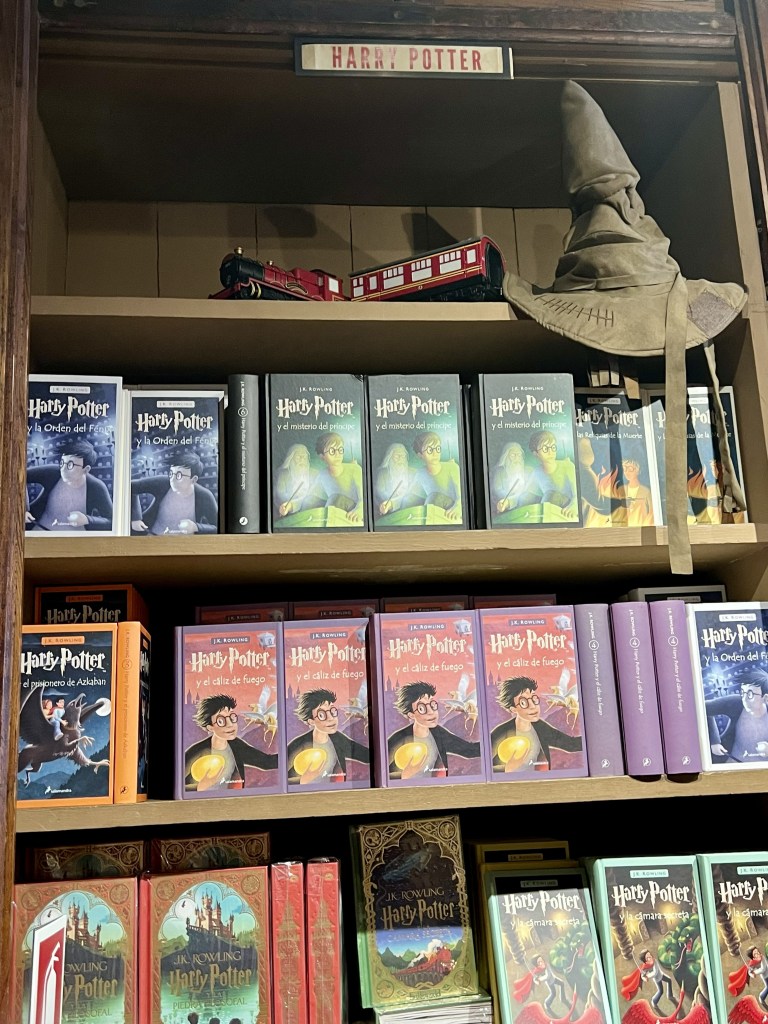
Our entry tickets entitled us to one free book from their classic collections. There were books to choose from in about ten different languages. Some of us could not buy just one. Nancy did not buy The Great Gatsby in Portuguese. She bought Peter Pan and three others. Carol chose Beatrix Potter and added Shakespeare’s Sonnets. Edie chose Le Petit Prince. I considered Don Quixote in Spanish but since I struggle reading it in English, opted for A Tale of Two Cities.

We joined the long queue to pay and agreed we will return.
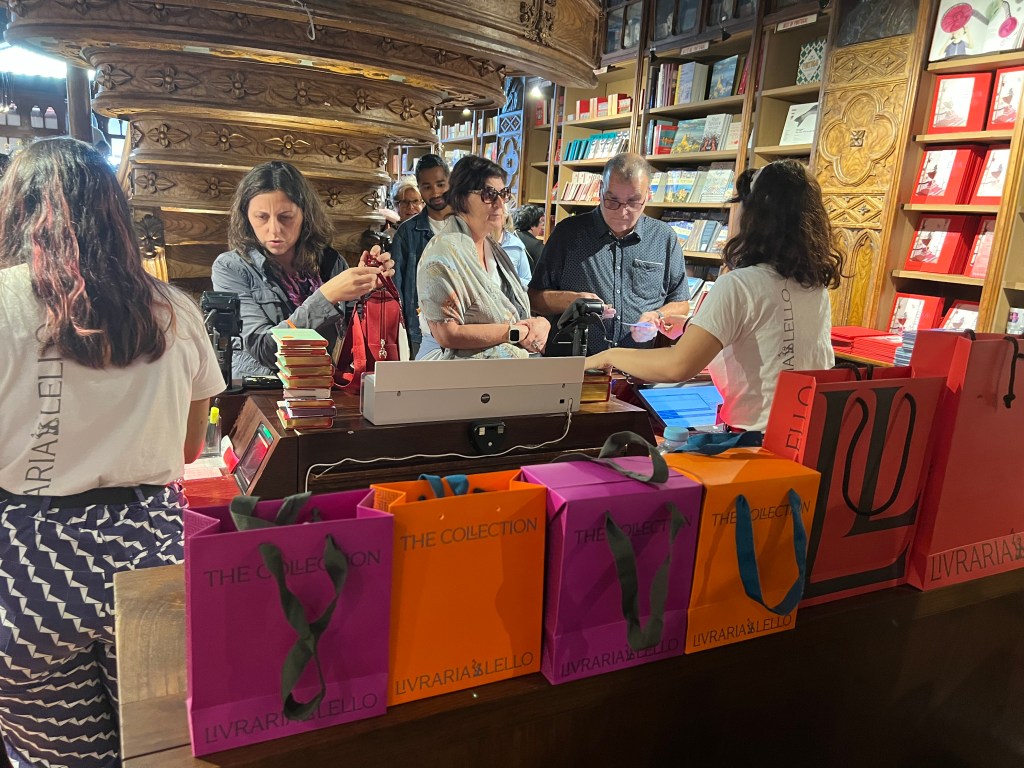
The Lonely Planet guide to Porto says the Lello Bookstore is the third most beautiful bookstore in the world. I can’t wait to visit numbers one and two.

HOW TO BEAT JET LAG September 22, 2023 Some say the best way to recover from jet lag is to keep moving until you can’t stand up a minute longer. Edie…
HOW TO BEAT JET LAG September
…
 nancyelnorte