Today was the first full day of our UTO tour. Being Sunday, it is only right that we began our day in church.
We met in the lobby and headed out at intervals.
Bishop Doug Sparks of the Diocese of Northern Indiana and all of the other clergy have been invited to vest for the service so he led the first group.

From our hotel to the Cátedral Del Redentor, the Cathedral of the Reformed Episcopal Church of Spain, is about a mile, slightly uphill.
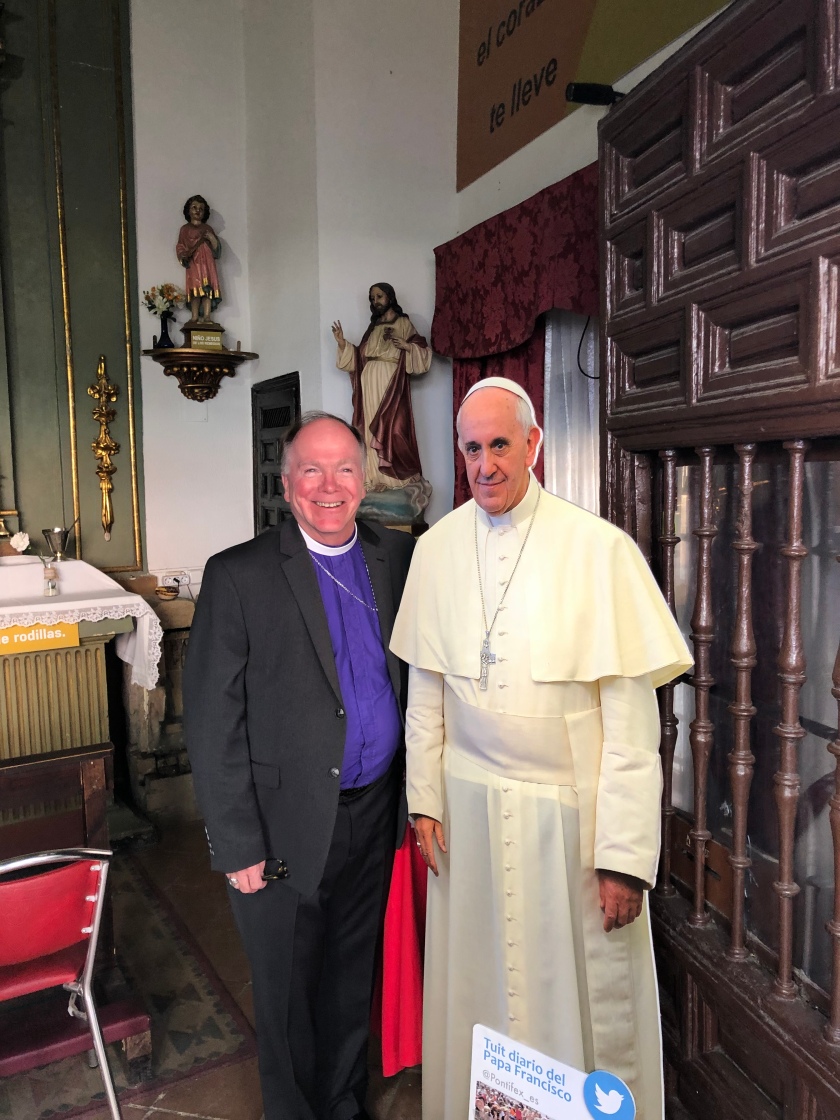
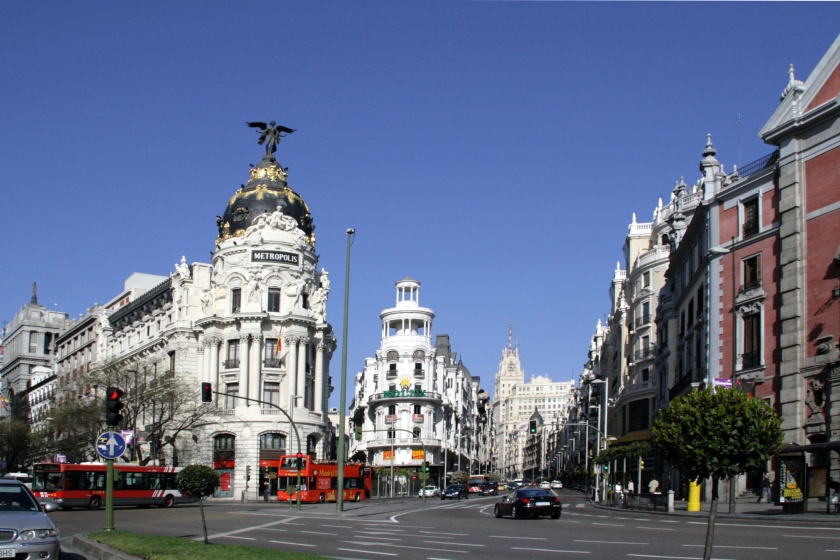
The route through the Puerta Del Sol and up Fuencarral is a mostly pedestrian zone with plenty to distract us including a surprising photo op.
Straight up the hill, a right turn at the Museo de Historia with its exuberantly baroque pink and gray facade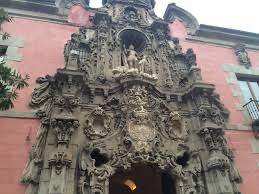
and we were on the the Calle de the Beneficencia .
The Cathedral is tucked in down on the right side and is easy to miss.
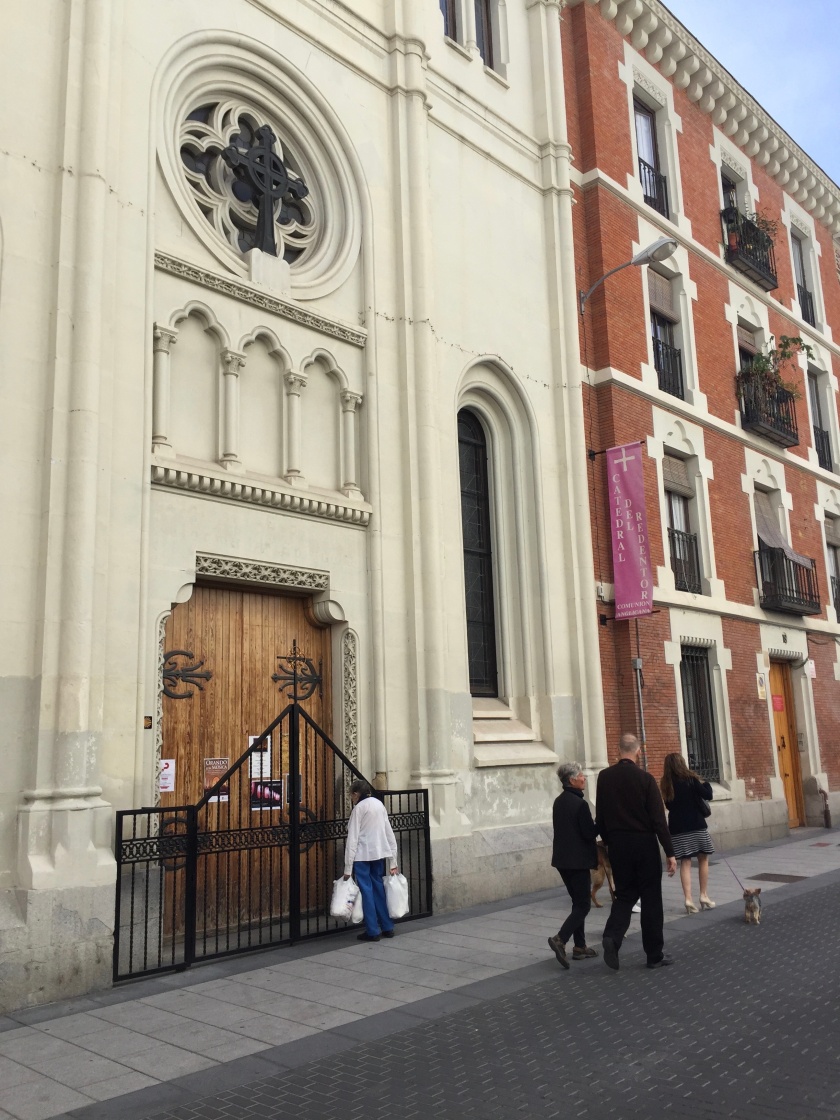 During the Franco regime a street was added in front of the Cathedral so it is also easy to be killed !
A modern building across the street houses a fine food market and a fantastic roof top restaurant so its hideous architecture and graffiti is forgiven. 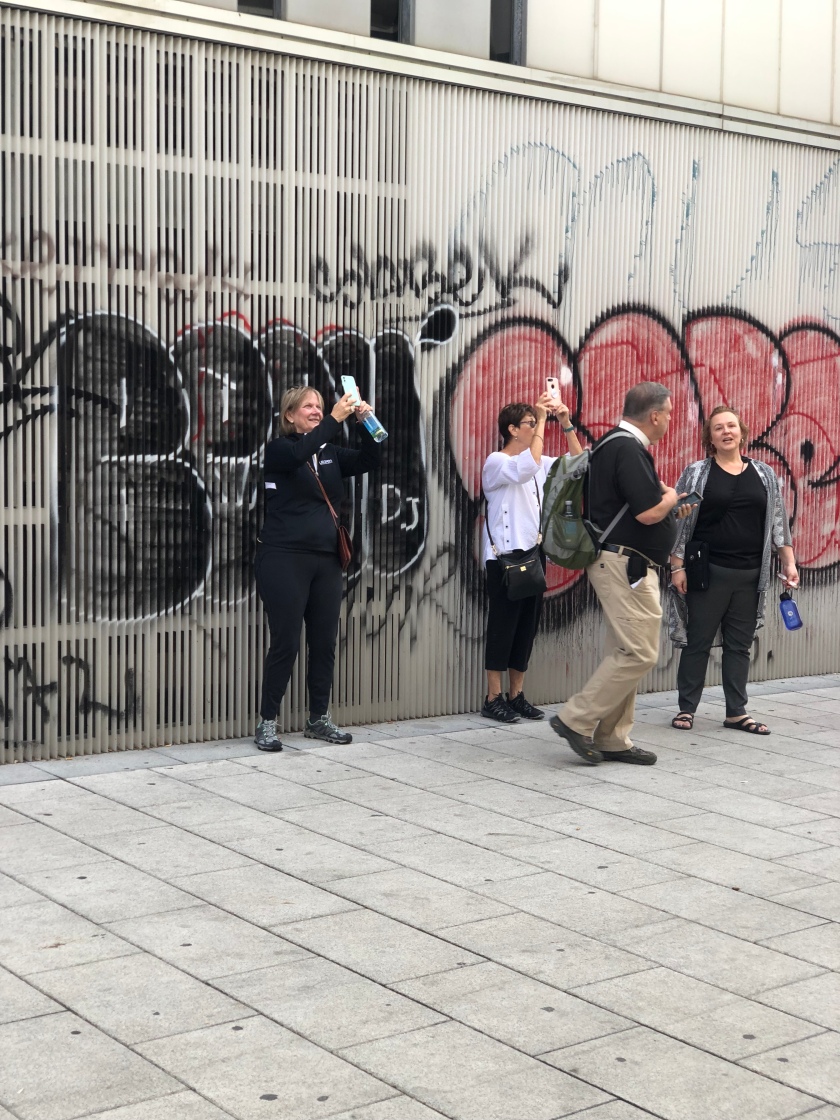
The congregation of the Cathedral has just celebrated the 150th year of its founding. The building is slightly younger.
Although ground was broken in 1891 for the building, construction did not begin until 1893.
In spite of the fact that it was consecrated in 1894, worshippers were still not allowed to enter through its main door until 1905.  Until then they had to go into the church through a small side door.
The church sits between a former parish school closed by Franco and the Bishop’s Palace.
The Palace now houses all of the cathedral clergy and the church offices.

Thanks to a generous grant from the UTO, renovations are underway for the school (above on the left) to become a cafe, a bookstore and a small pilgrim hostel. (What we hope to do in Santiago on a larger scale.)
Once at the Cathedral Spencer kitted everyone out in whatever vestements fit or mostly fit or sort of fit. No worries about matching copes cassocks here.
On a personal note, I was happy for the chance to wear my Mozzetta with its extremely fancy hood. (purely a decorative touch as you can see by the size)
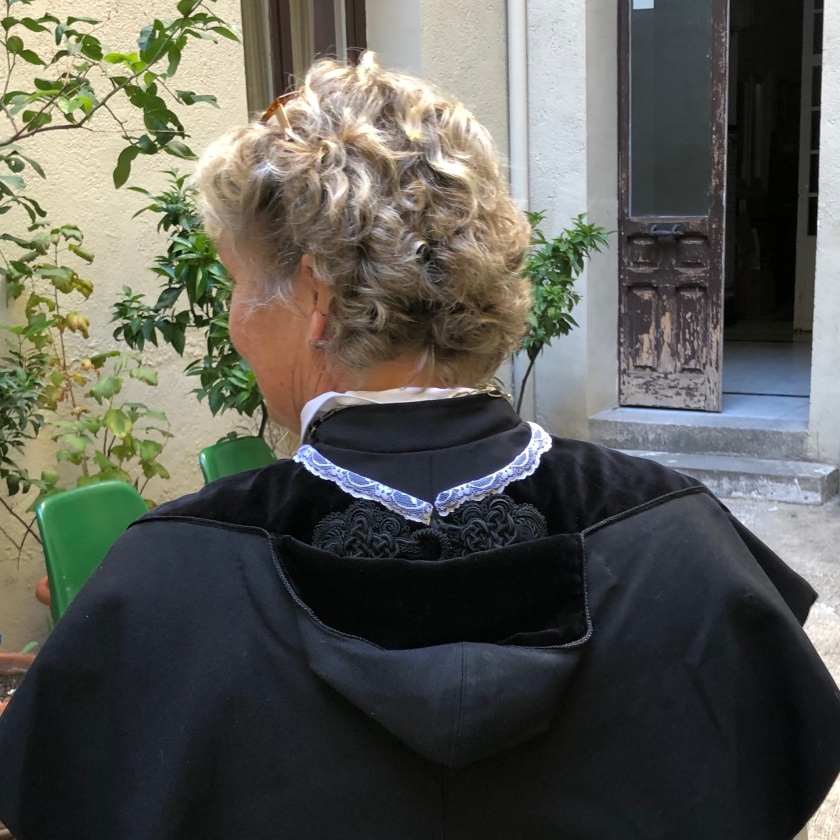
I also got to wear the silver, amethyst and turquoise cross which I treasure, given to me by my friend, Santa Fe artist Willard Shaw.
The Bishop made me a Canon of his Cathedral primarily because I am his chauffeur when he comes to America. I am honored to sit in the Chair of Saint James.
One quick picture of the Bishop with his normally camera shy tortoise and we were off to church.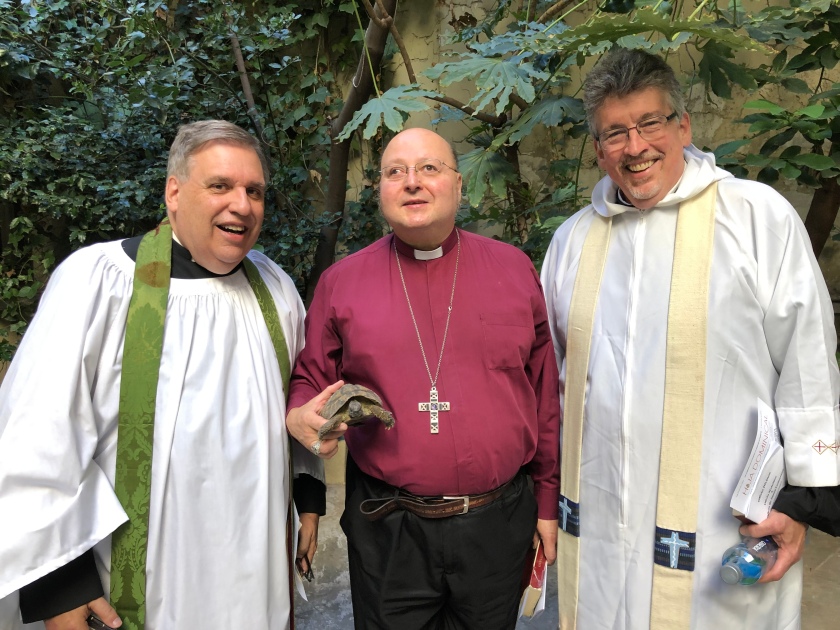
Church was as good as church could be.
God was glorified. We, the sheep, were tenderly fed by our various shepherds.
Even the MysteryWorshipper would have to have given this service a 10. 
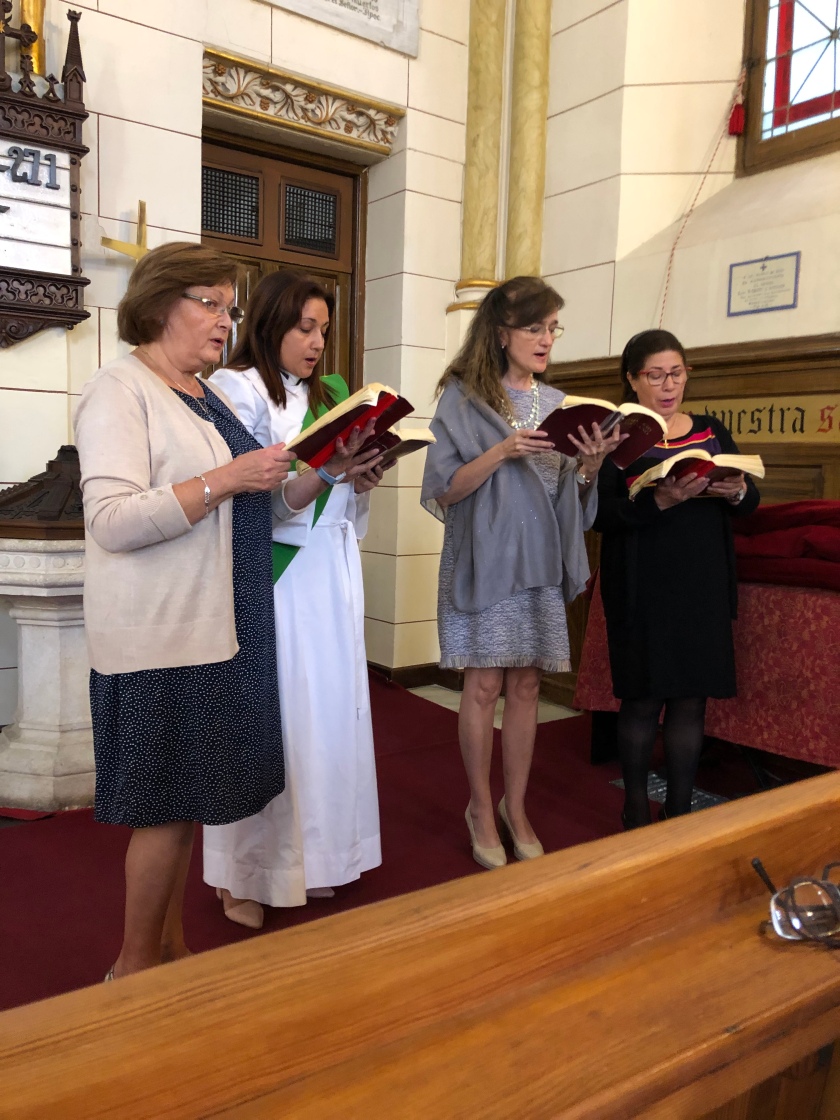

Coffee hour and one final photo (thank you UTO)

and it’s time for a picnic on the patio
 before heading back to church to receive our symbolic scallop shells, our pilgrim passports complete with the first stamp, and a final pilgrim blessing by Bishop Doug.


For some it was time for a trip to the Prado; for others, siesta.
Our day was far from over so stay tuned. More to come.
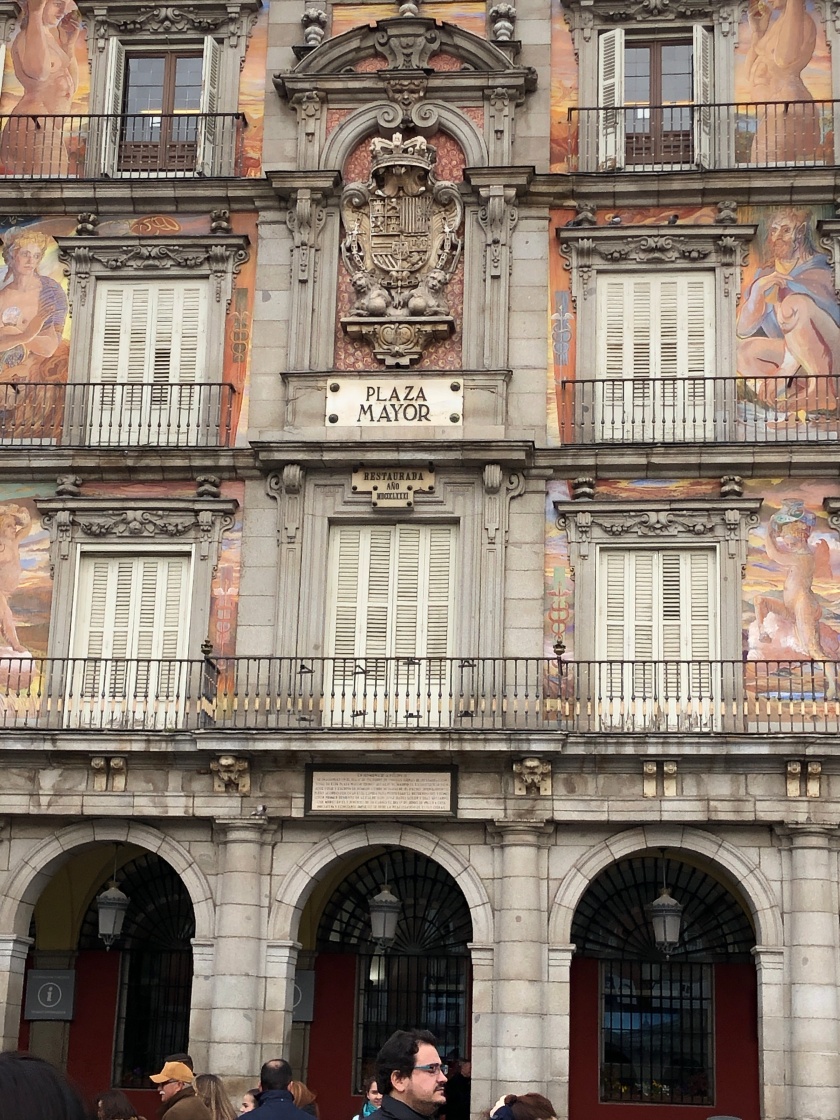

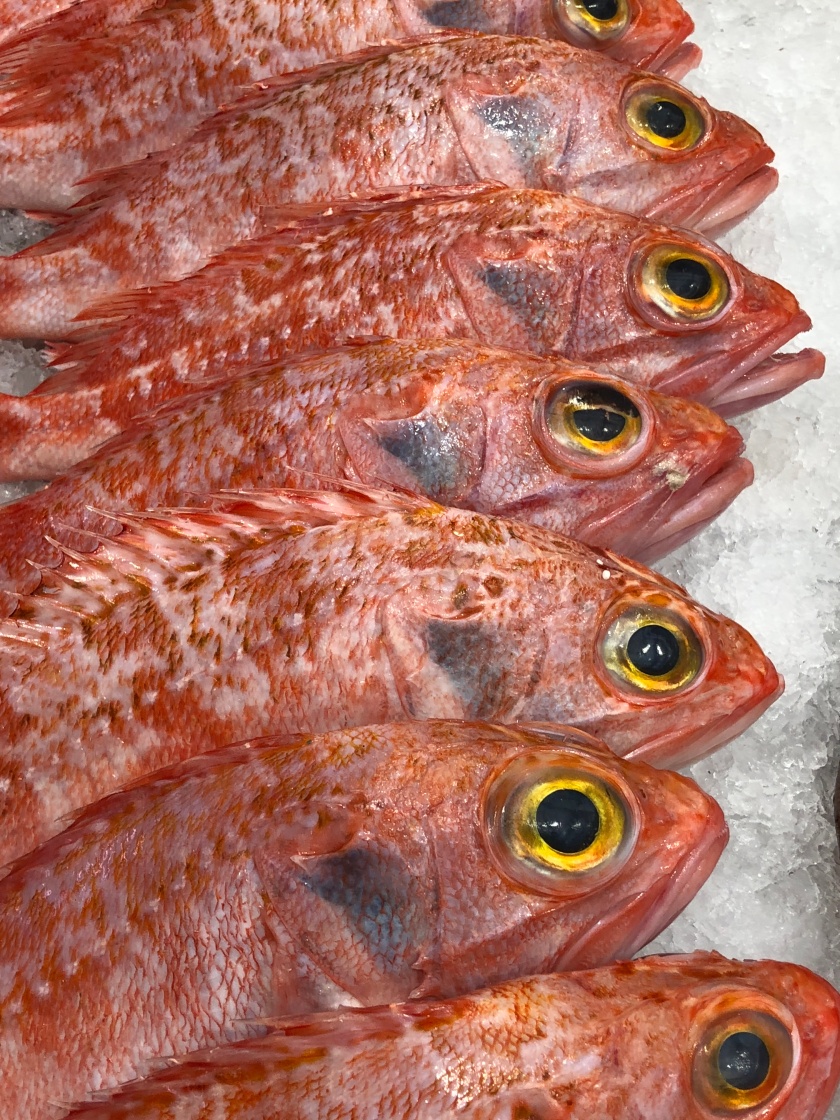


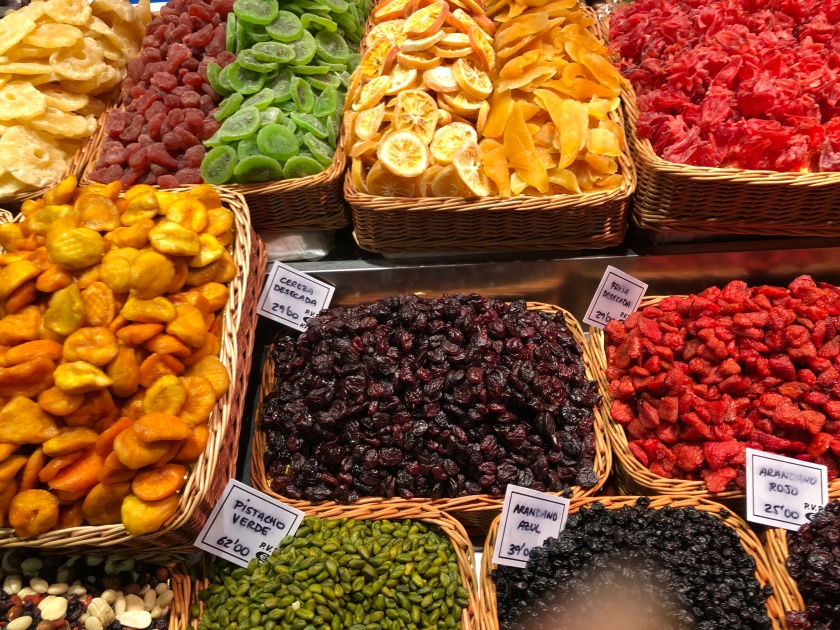
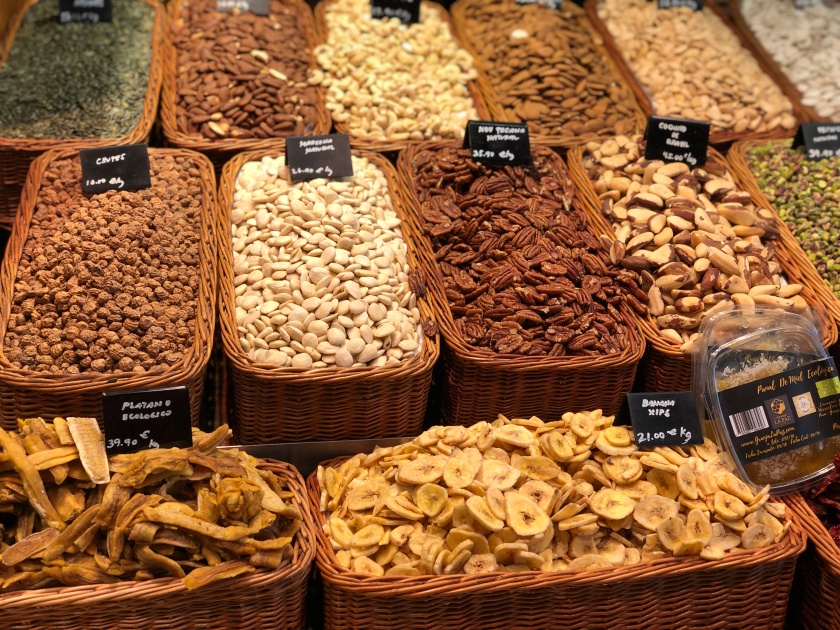
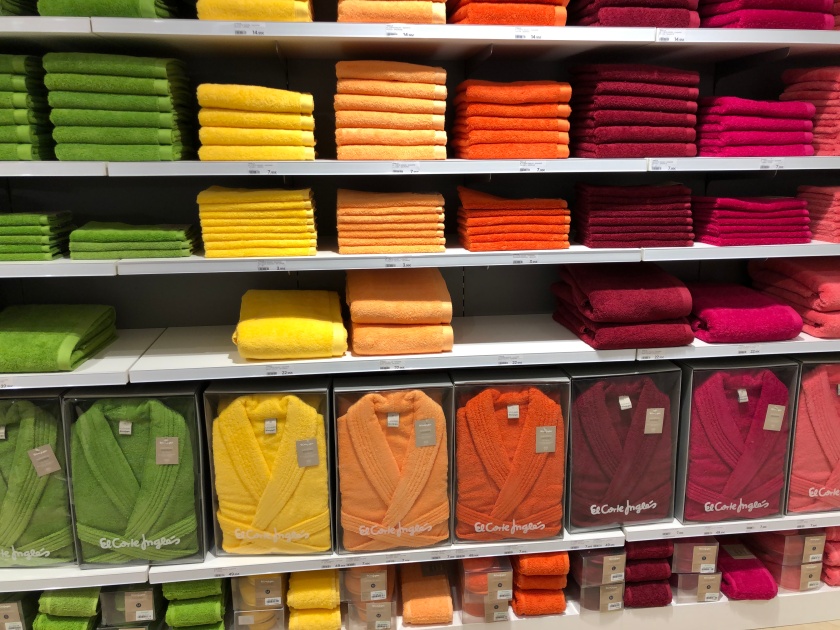
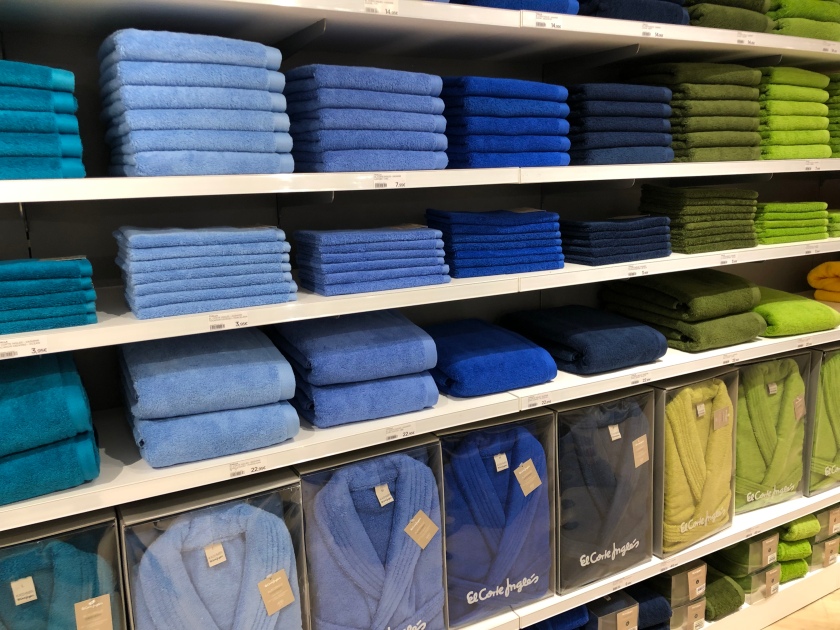
 They are also hot beds of multicolored temptations!!


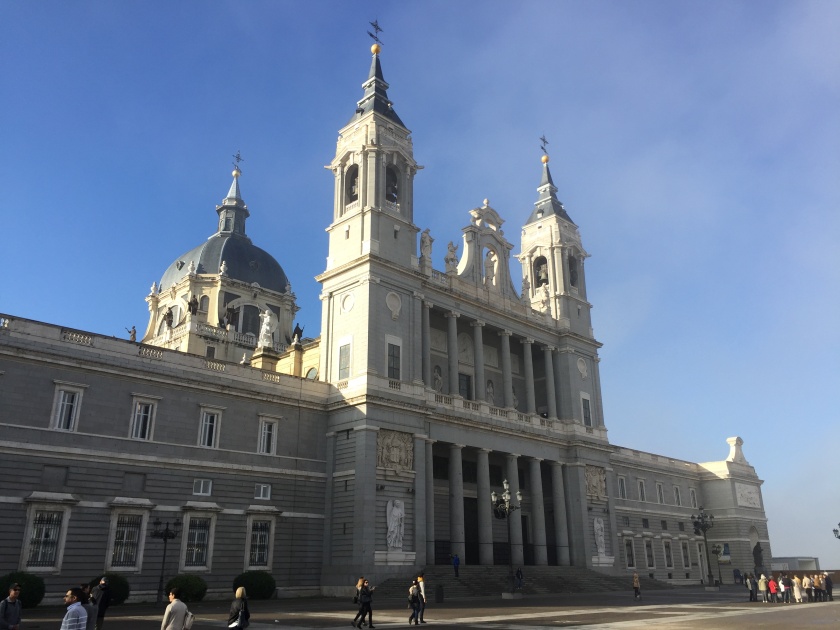 a cathedral with a curious history.

 If one pair is good, is a pair in every color better?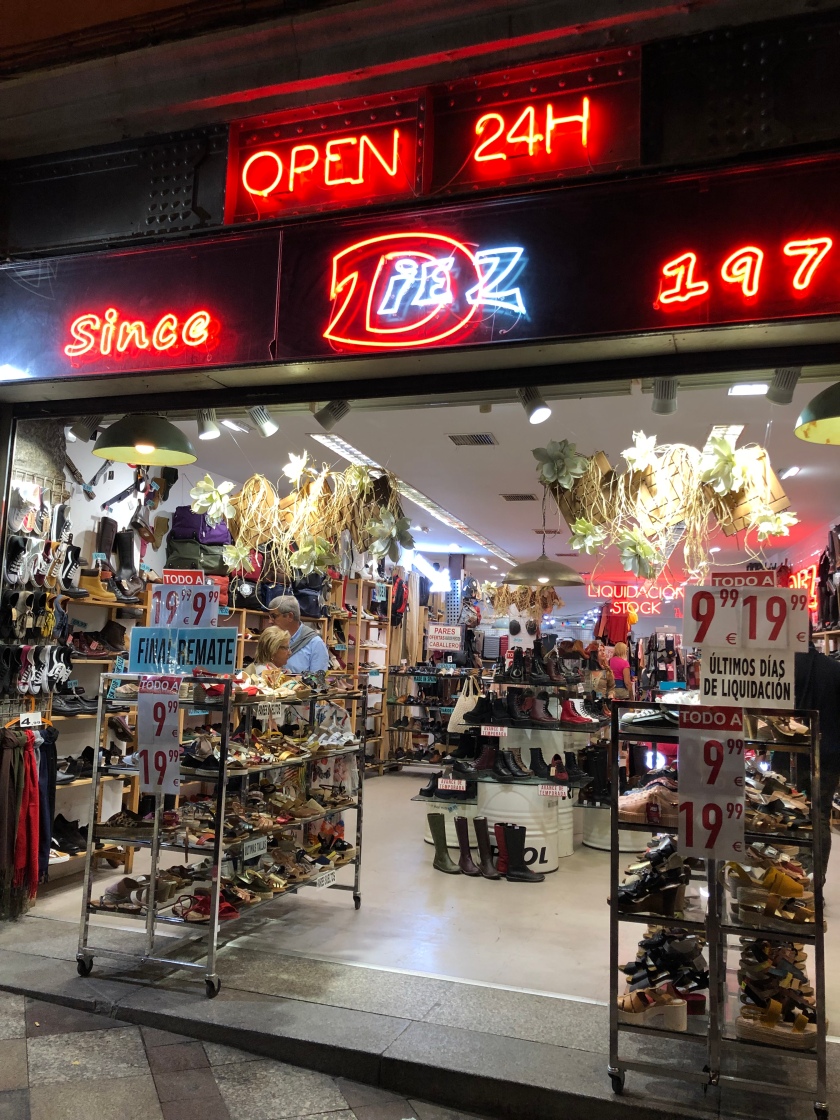



 Eleven and a half miles and 25,000 steps later, I headed back to the hotel through the botanical garden.


 This nifty zip lock box weighs less than one pound and has everything I need for eating and drinking on the road.

 and a pastry or bread with butter and jam.
 or better “chocolate con churros ”, a sinfully delicious combination of fried dough sticks sprinkled with sugar, and hot chocolate, more like the hot chocolate pudding you were allowed to scrape out of the pan after your mother made old fashioned chocolate pudding from scratch.
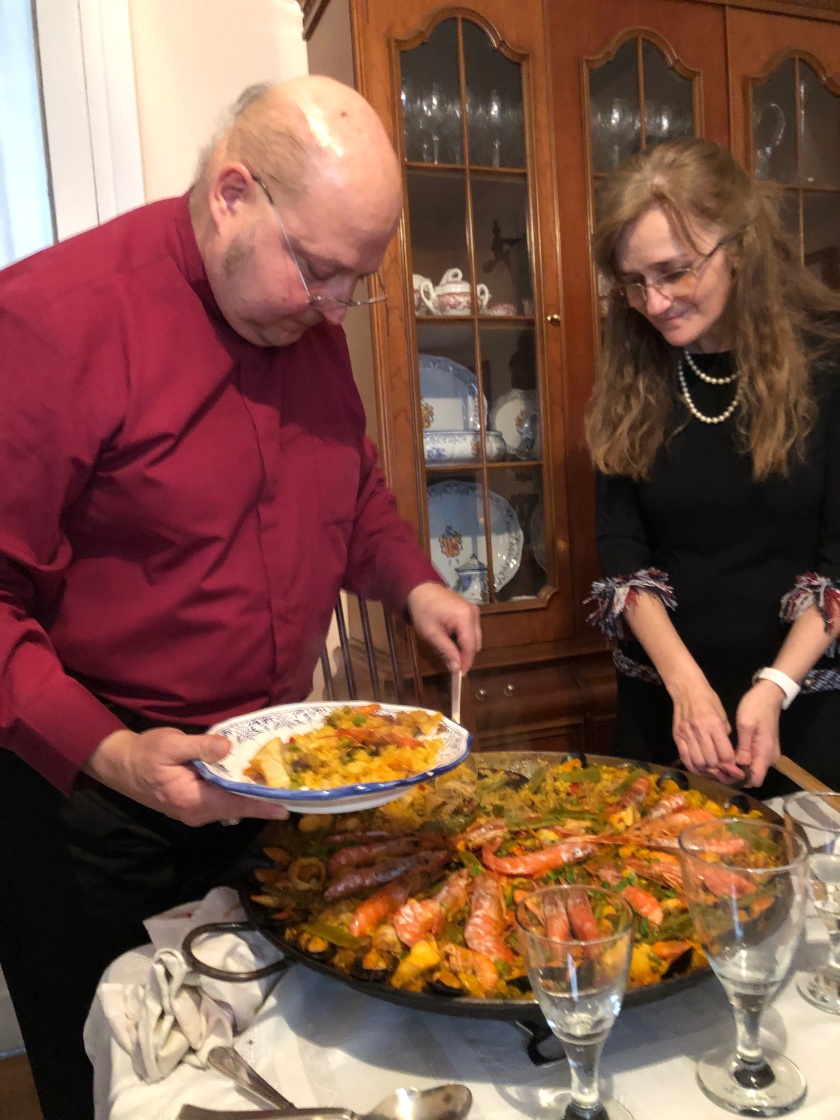
 recipe below given by chef
  or salad
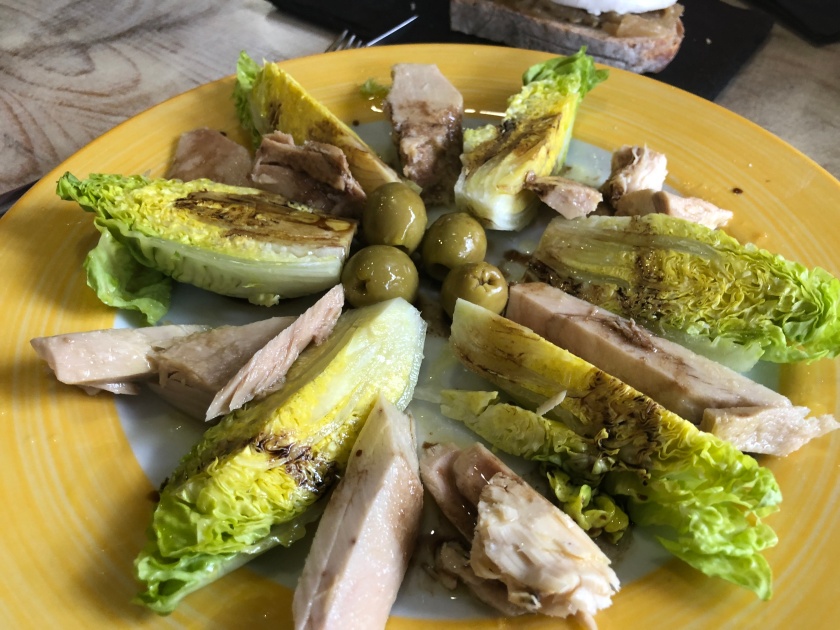
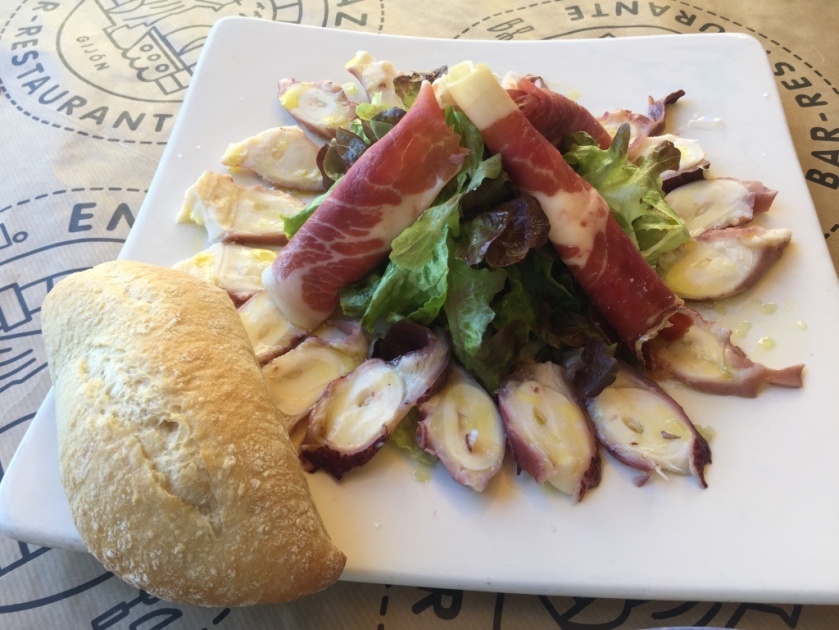 followed by a either meat or fish.
 and after
 or a nice piece of suckling pig.
 All of the above is washed down by wine and or sparkling water.
 but frequently chupito– a small shot glass of liquor that replaces dessert.
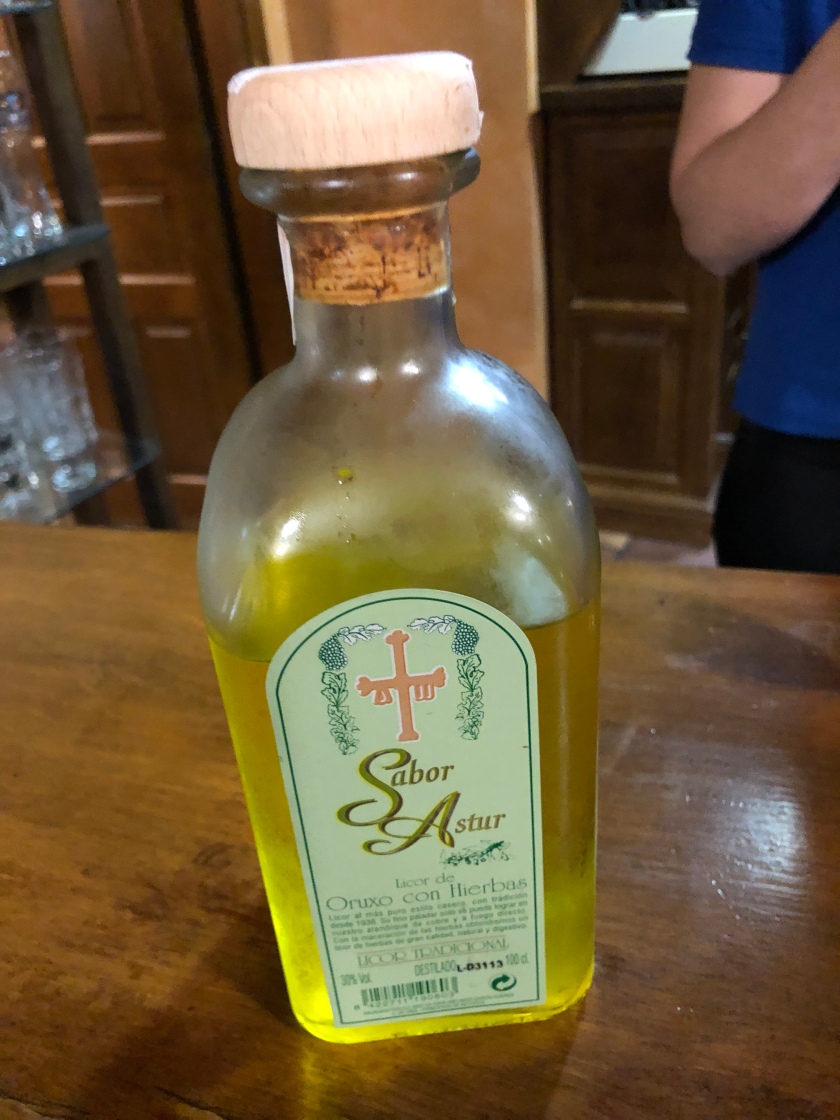
 or a bit of ice cream



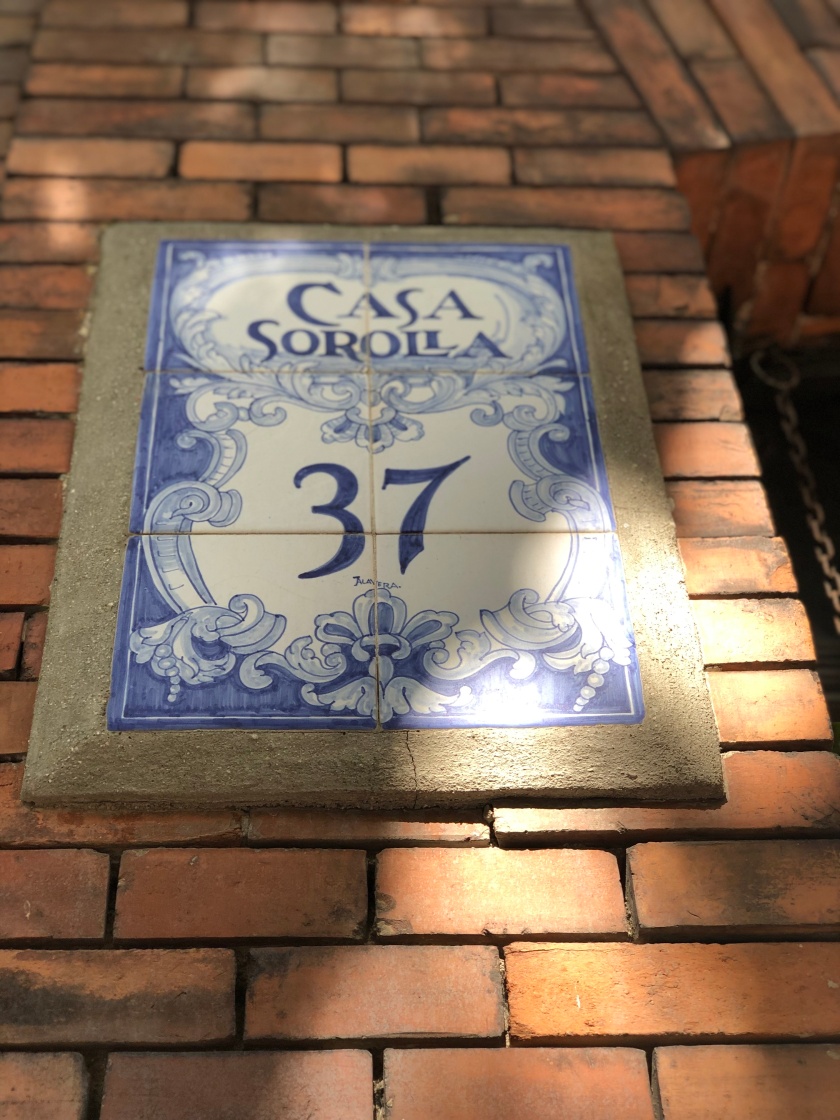
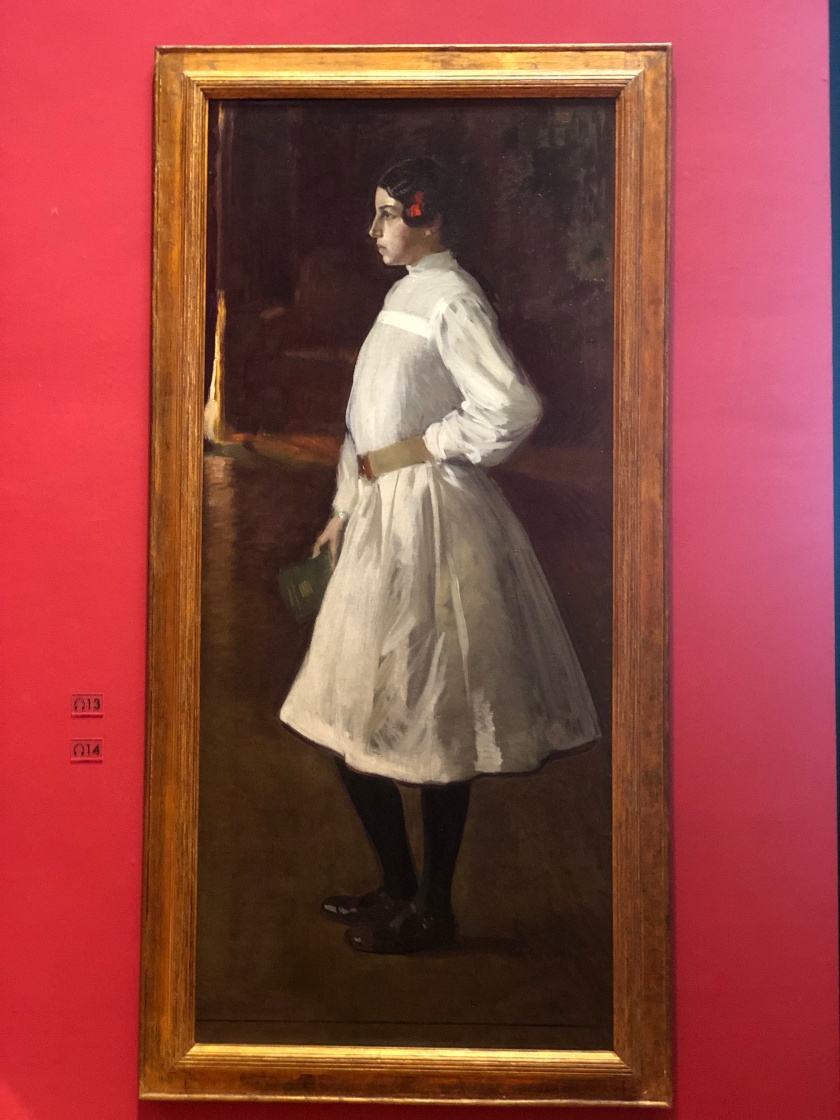
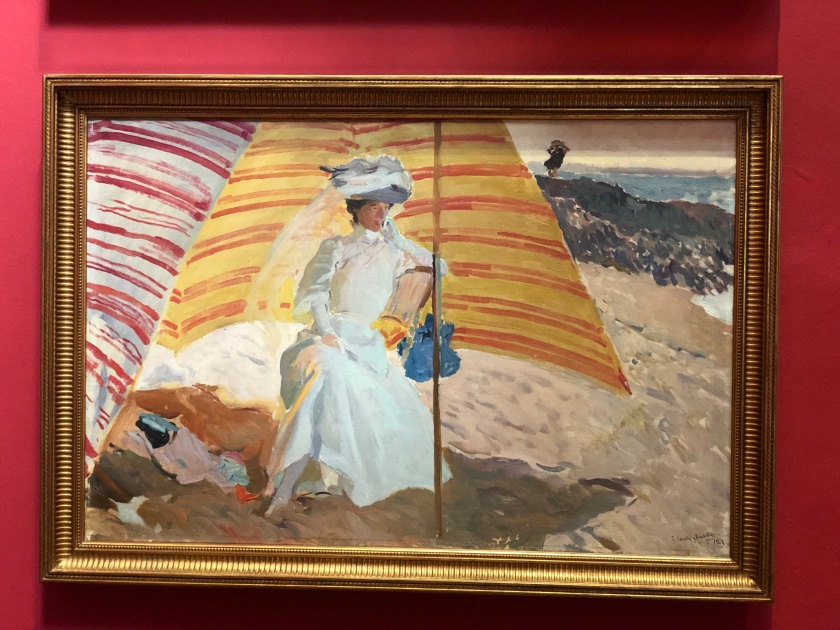
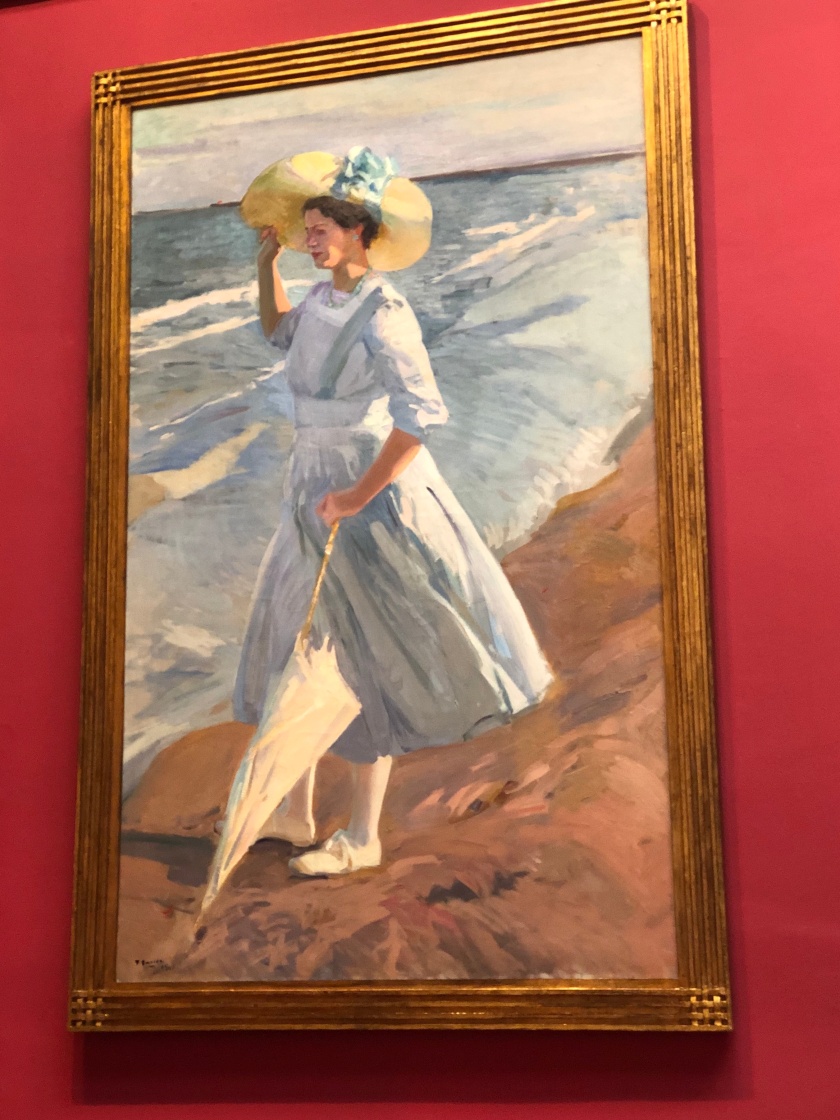
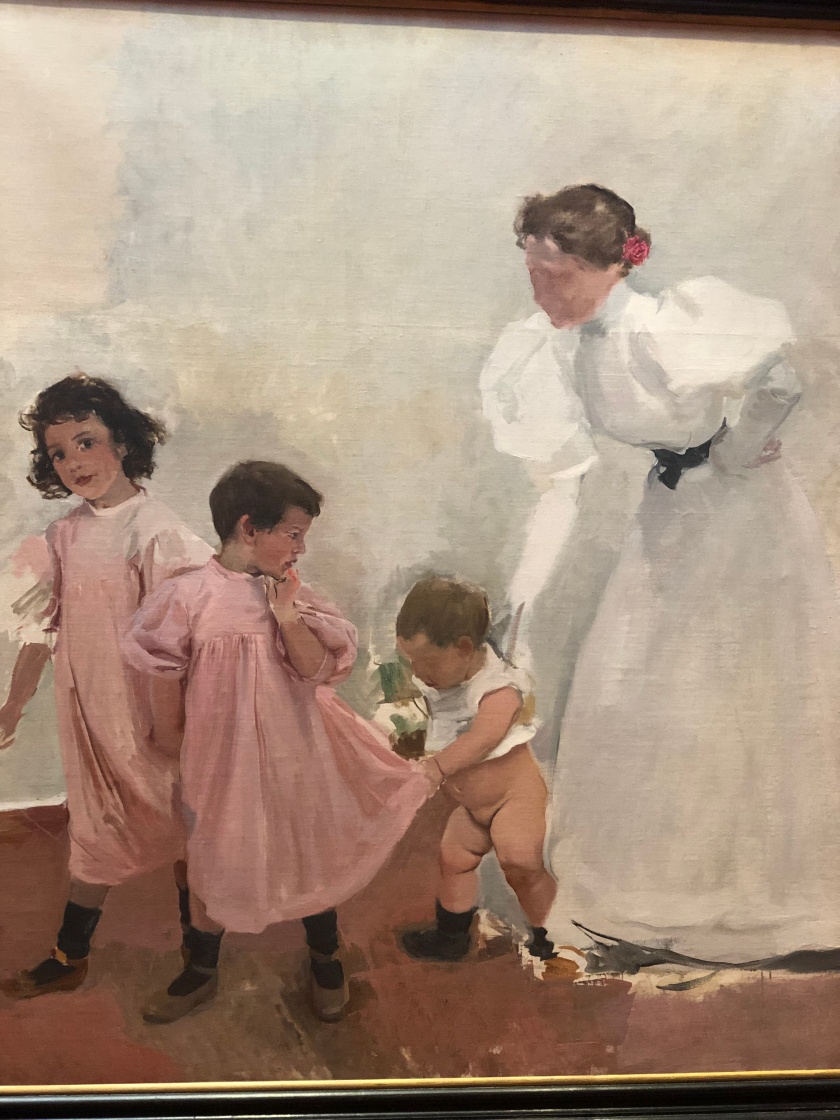
 I was a Spanish painter known for his family and society portraits, his landscapes, primarily at the seashore, and his historical and social subjects.
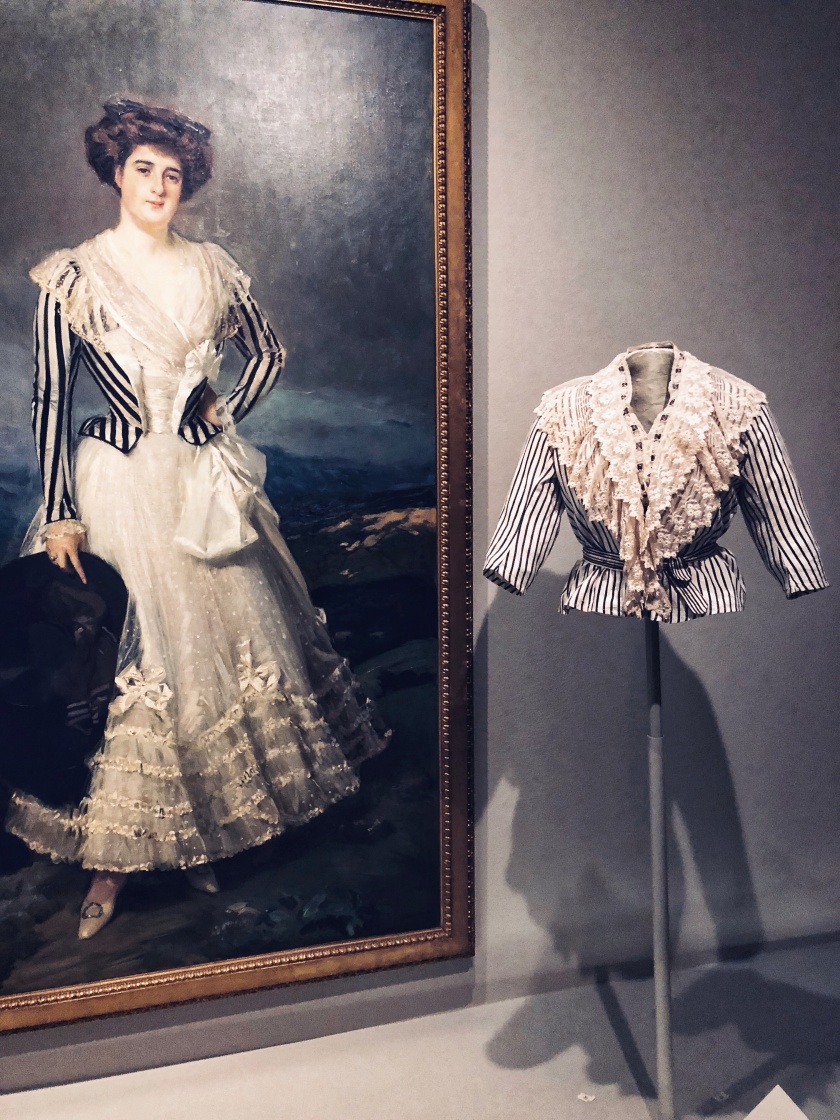
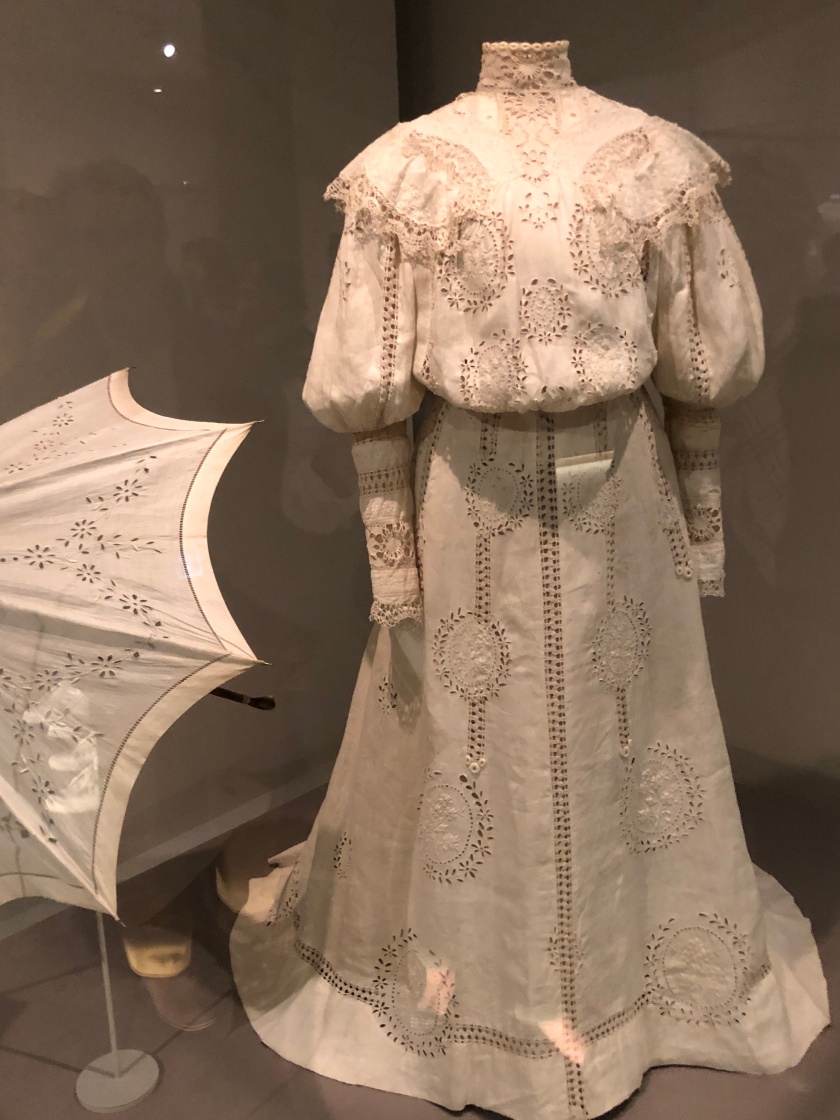
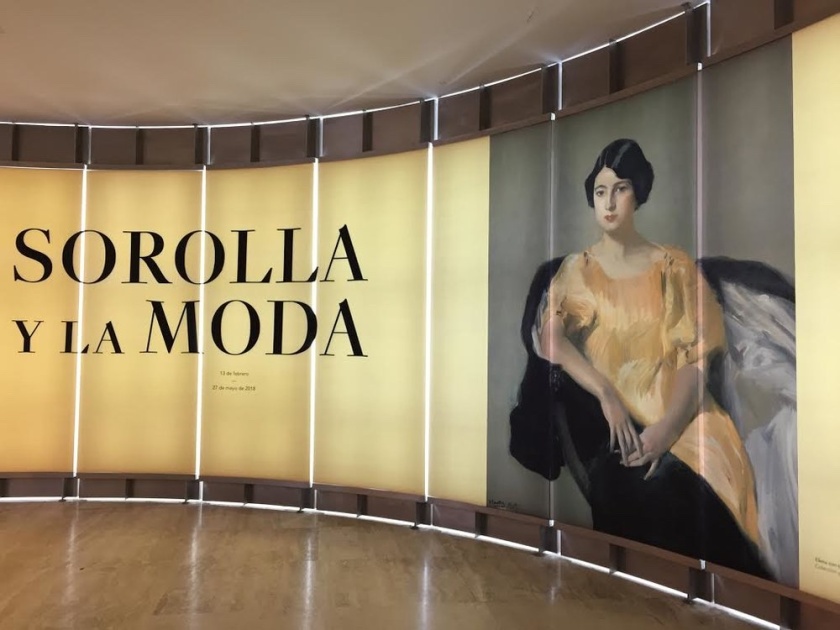 was a beautiful exhibit showing Sorolla’s paintings along side the fashions of his time which he painted with meticulous care.









 nancyelnorte