Hook a left

Oct. 7

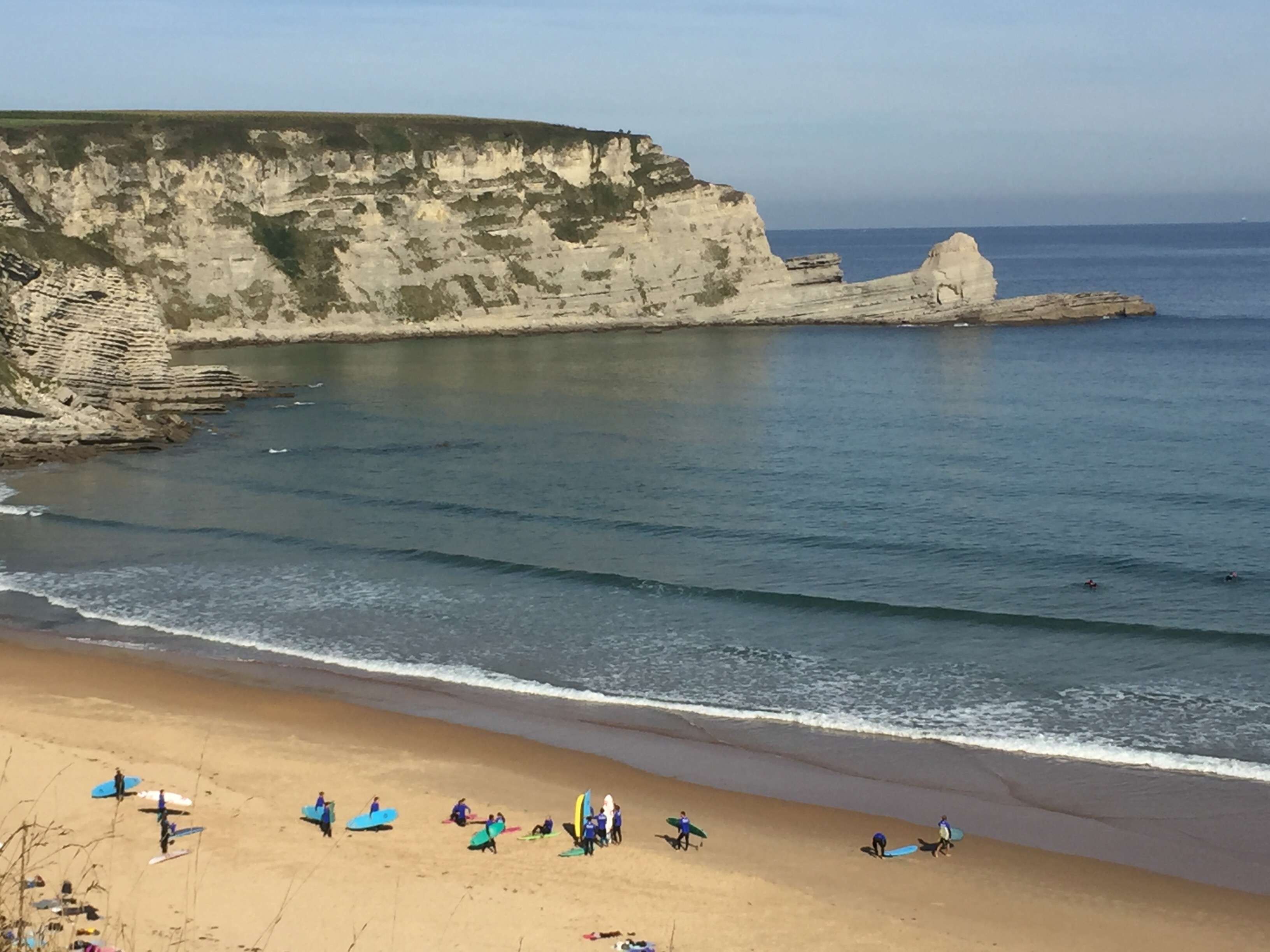
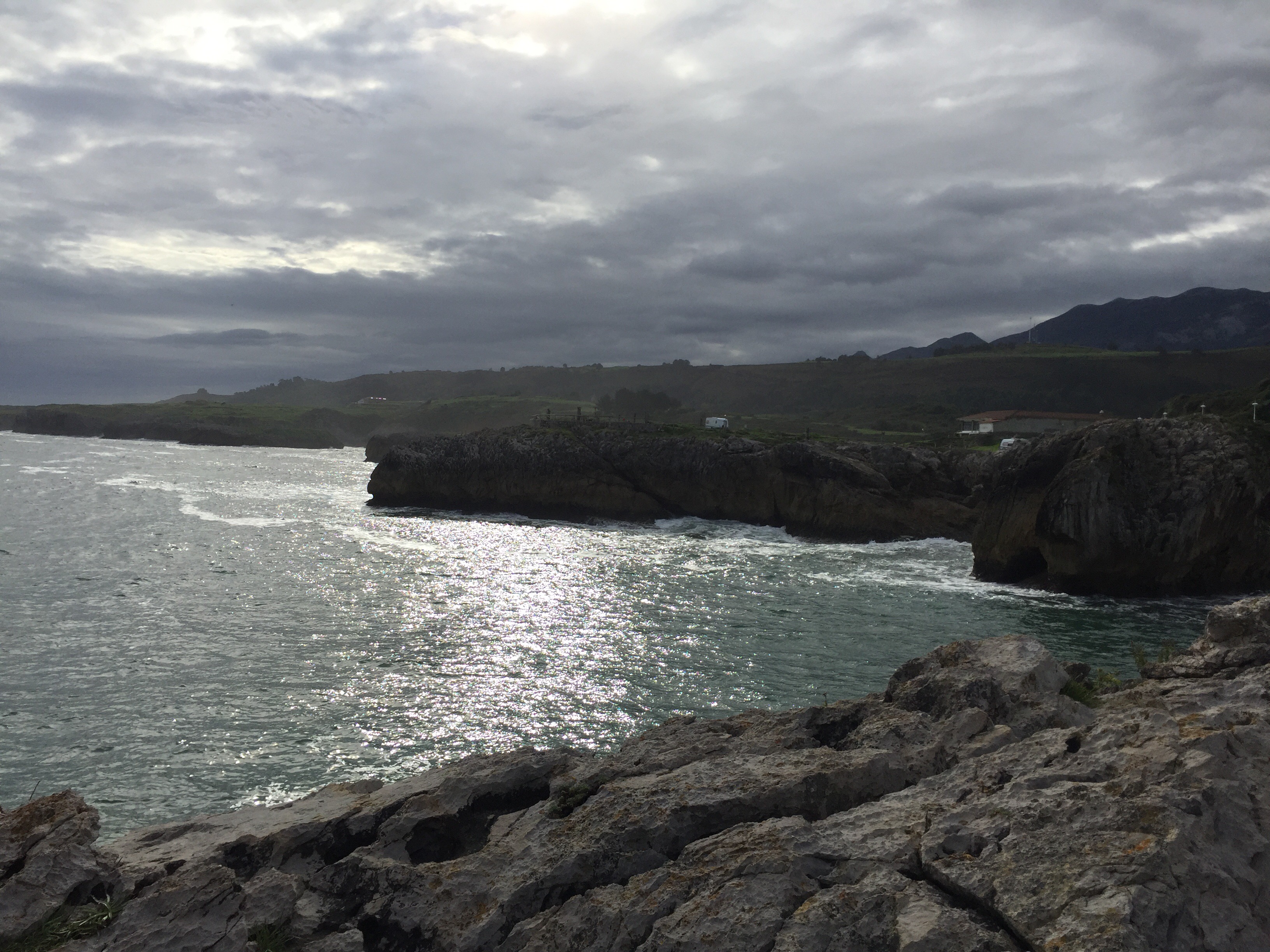
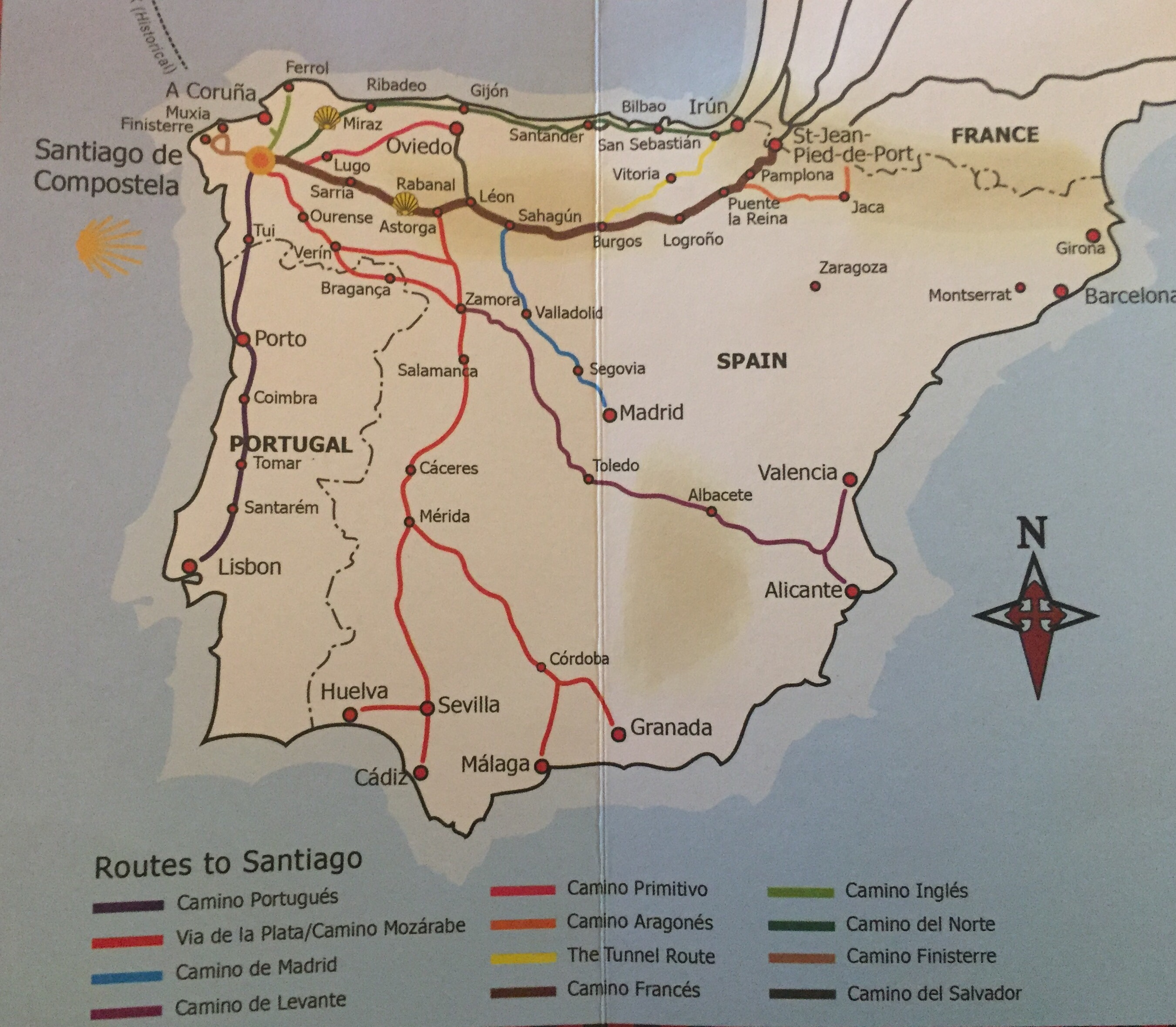
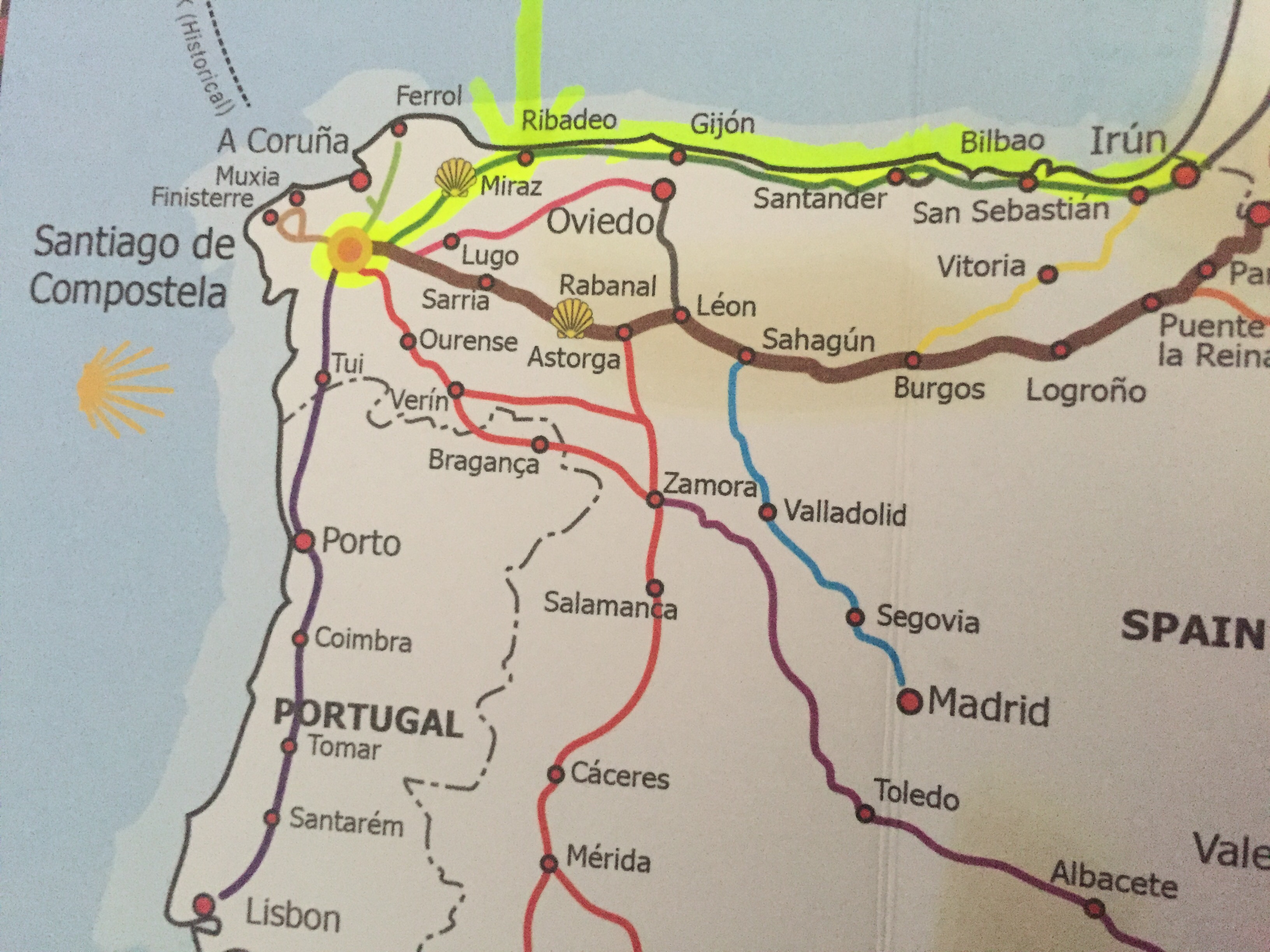
For the past three weeks we have been walking along or near the coast of Spain- first beside the Bay of Biscay and more recently  next to the Atlantic Ocean. 

We have passed through the Basque Country, Cantabria and Asturias. Although we dipped away from the sea from time to time it was always on our right. 

Three days ago that changed.

We left the province of Asturias and walked into the province of Galicia.

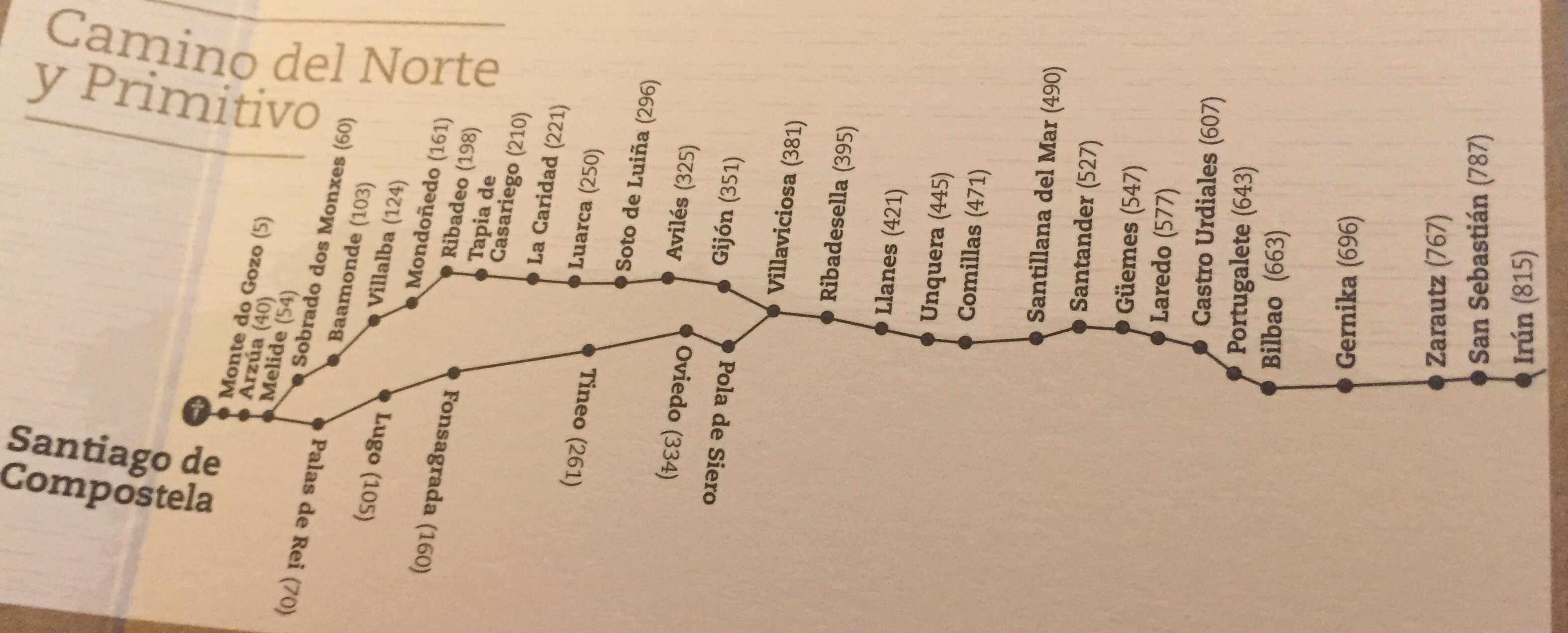
At Ribadeo, we hooked a left turn and are now heading southwest to Santiago de Compostela. 


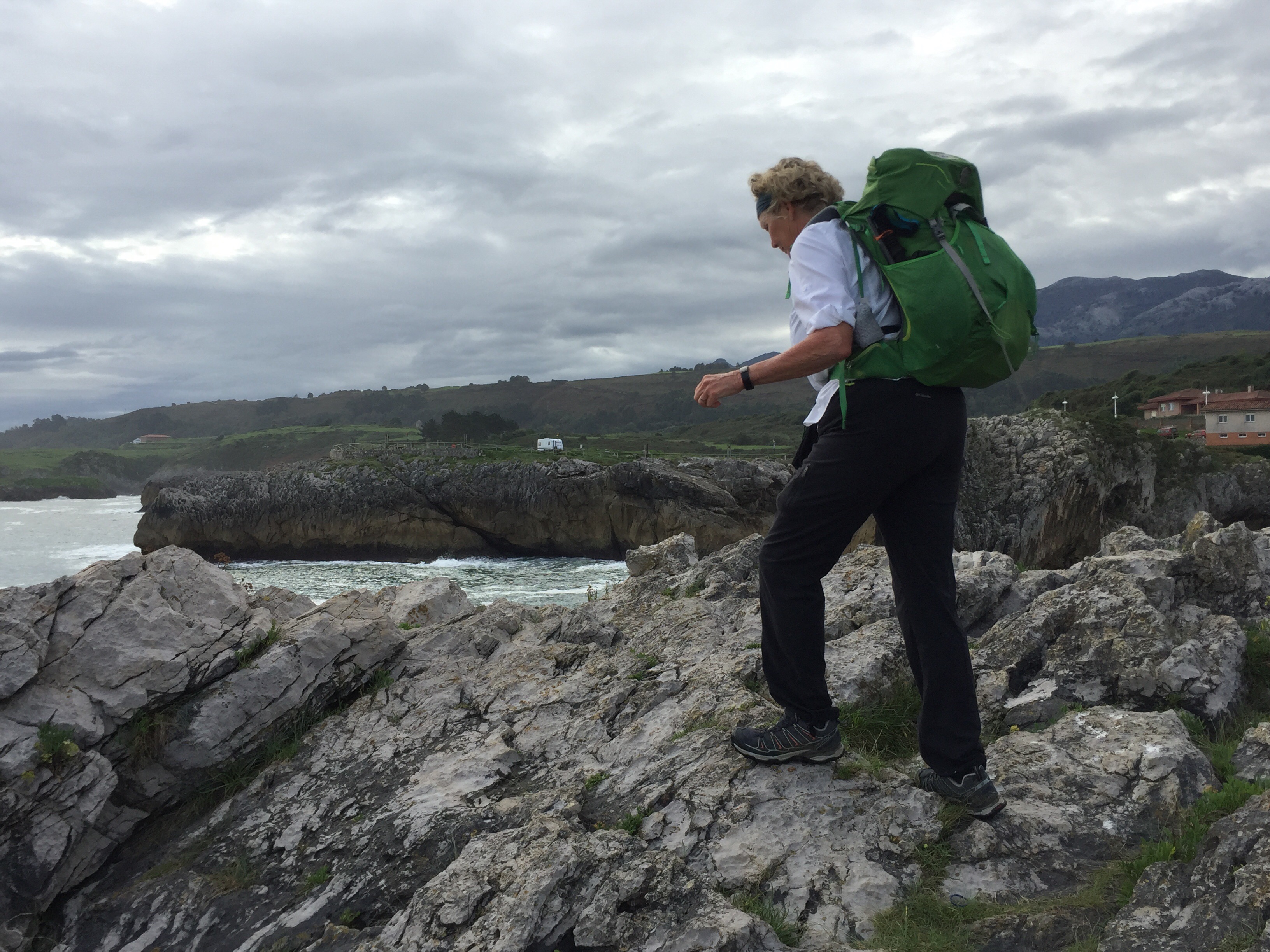
We have left the cliffs and the surfers and summer behind us.
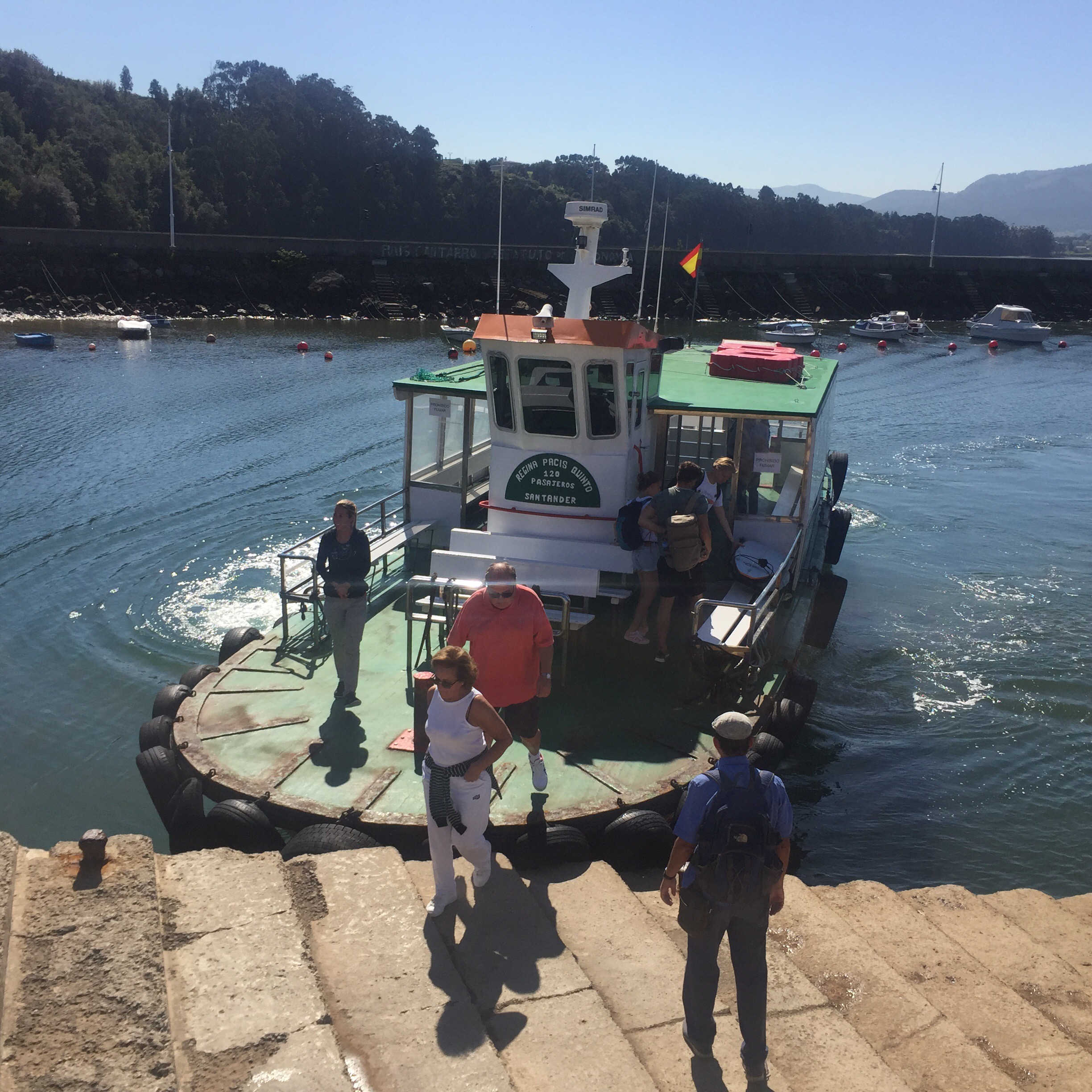
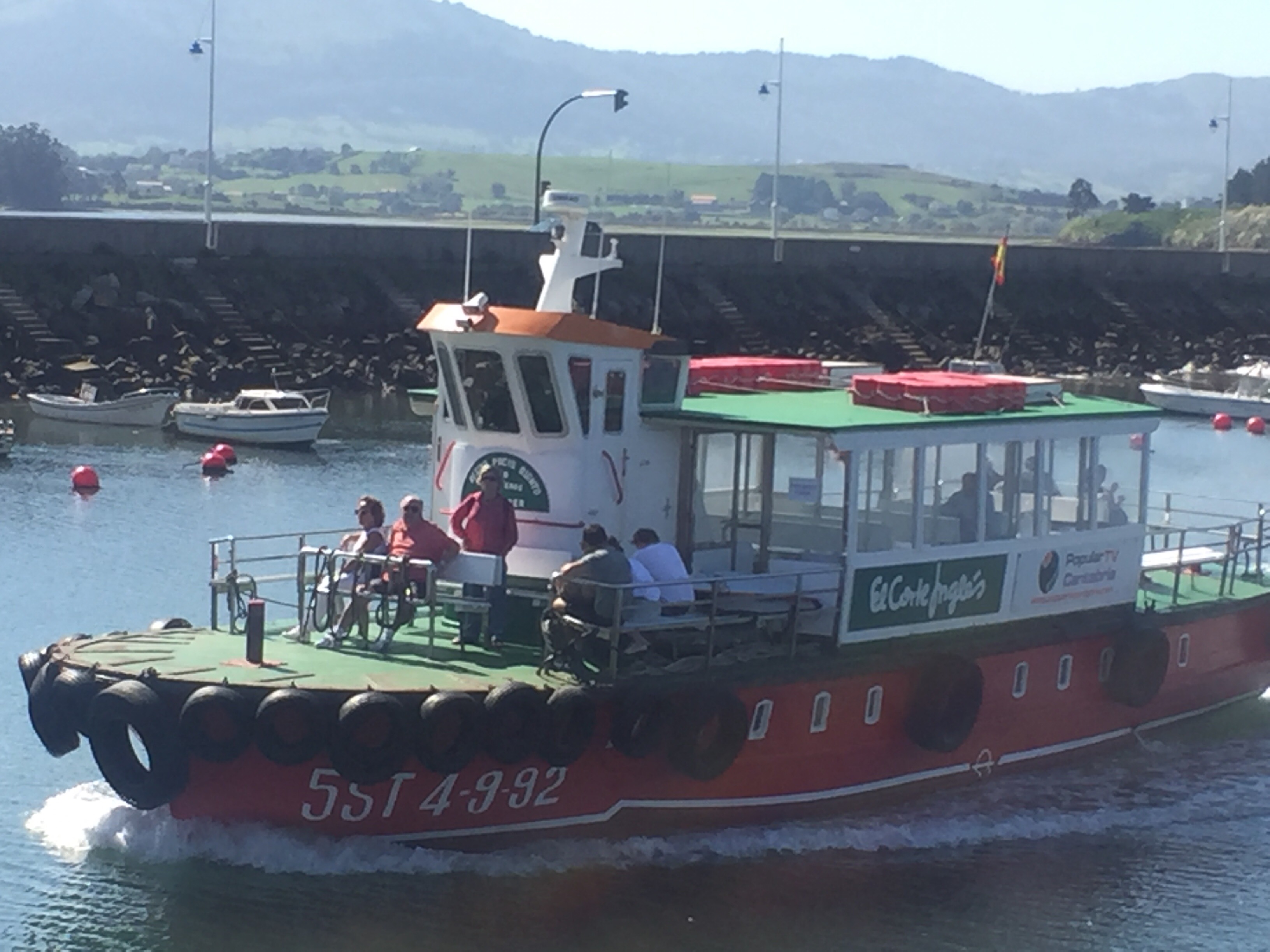
No more speedy little ferries to whisk us from one spit of land to another.
No more death defying bridges either.
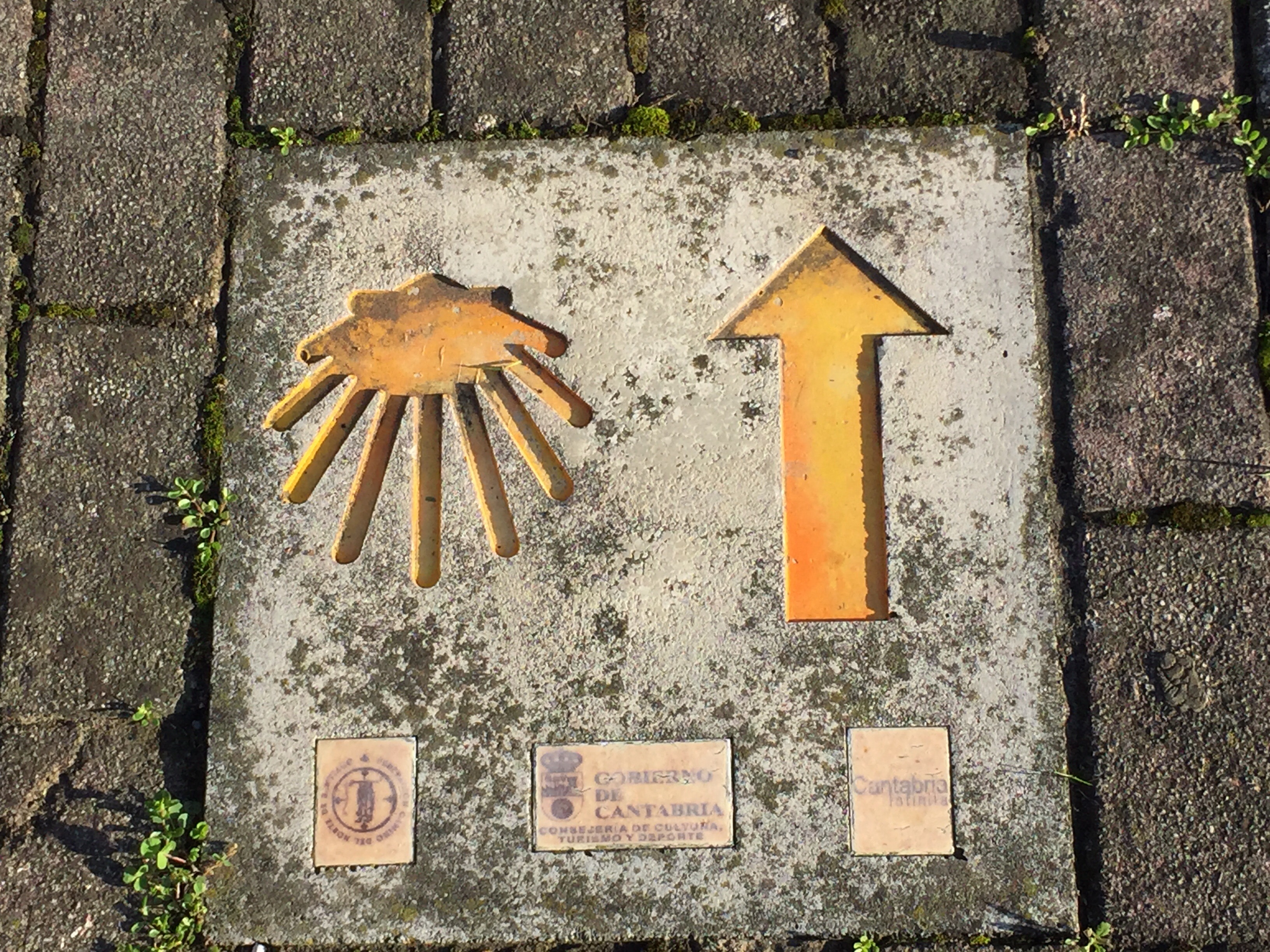
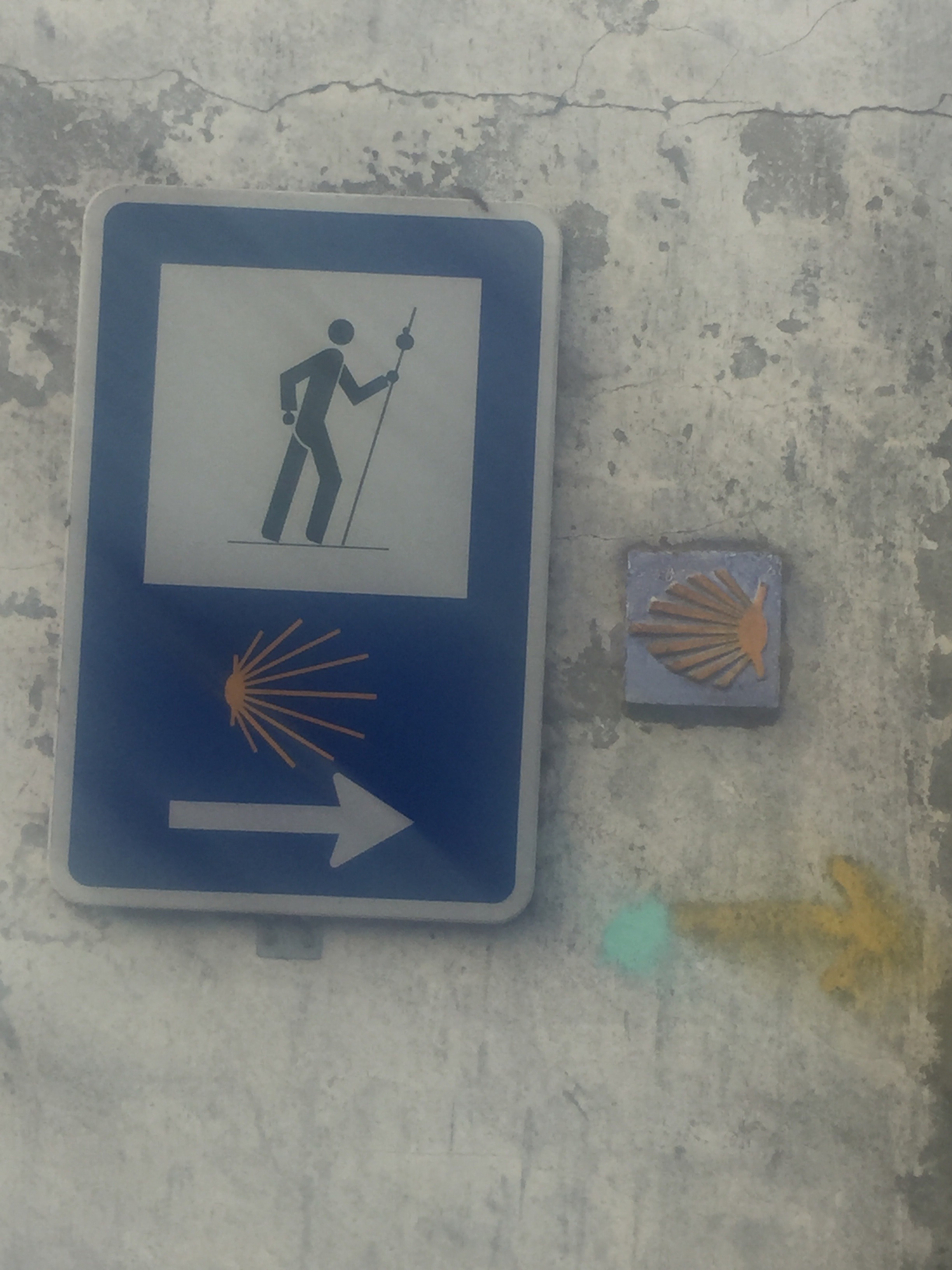
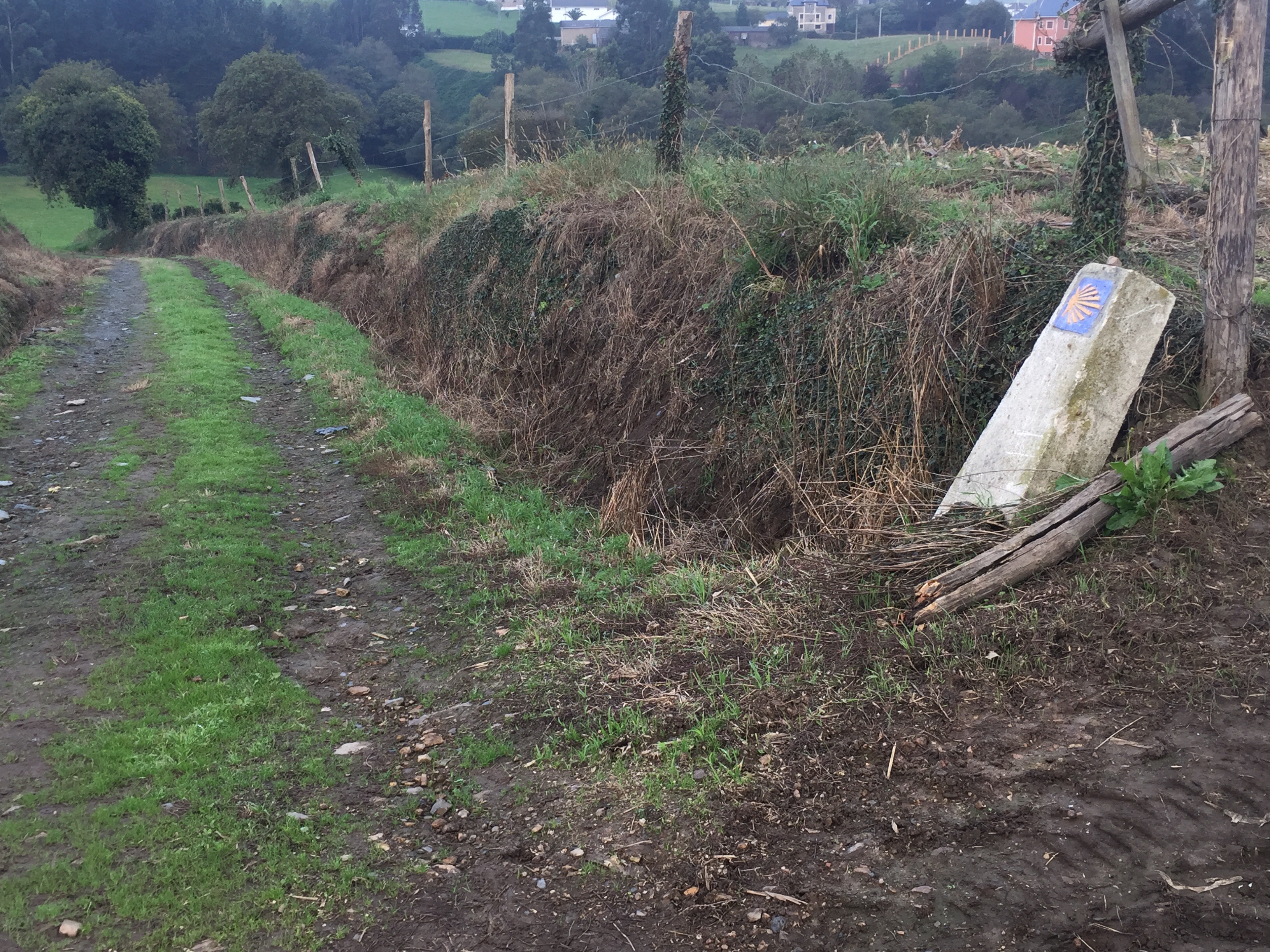
For more than three hundred miles we  have followed markers on which the “back”of the scallop shell has pointed us in the correct direction. 
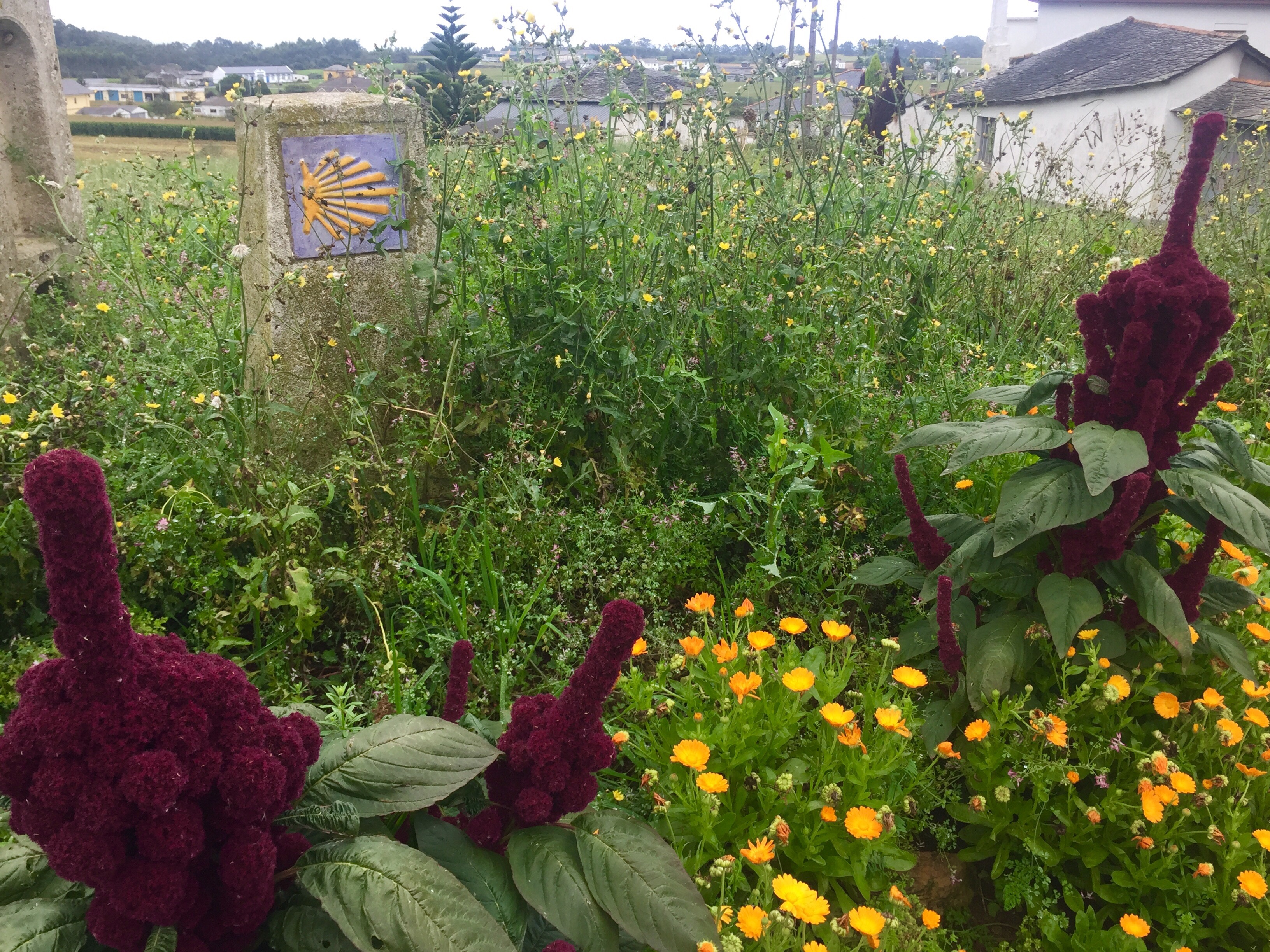
Go left

Go straight

Go left again
And suddenly  in Galicia the signs are switched. We now go in the direction in which the “fingers” point.
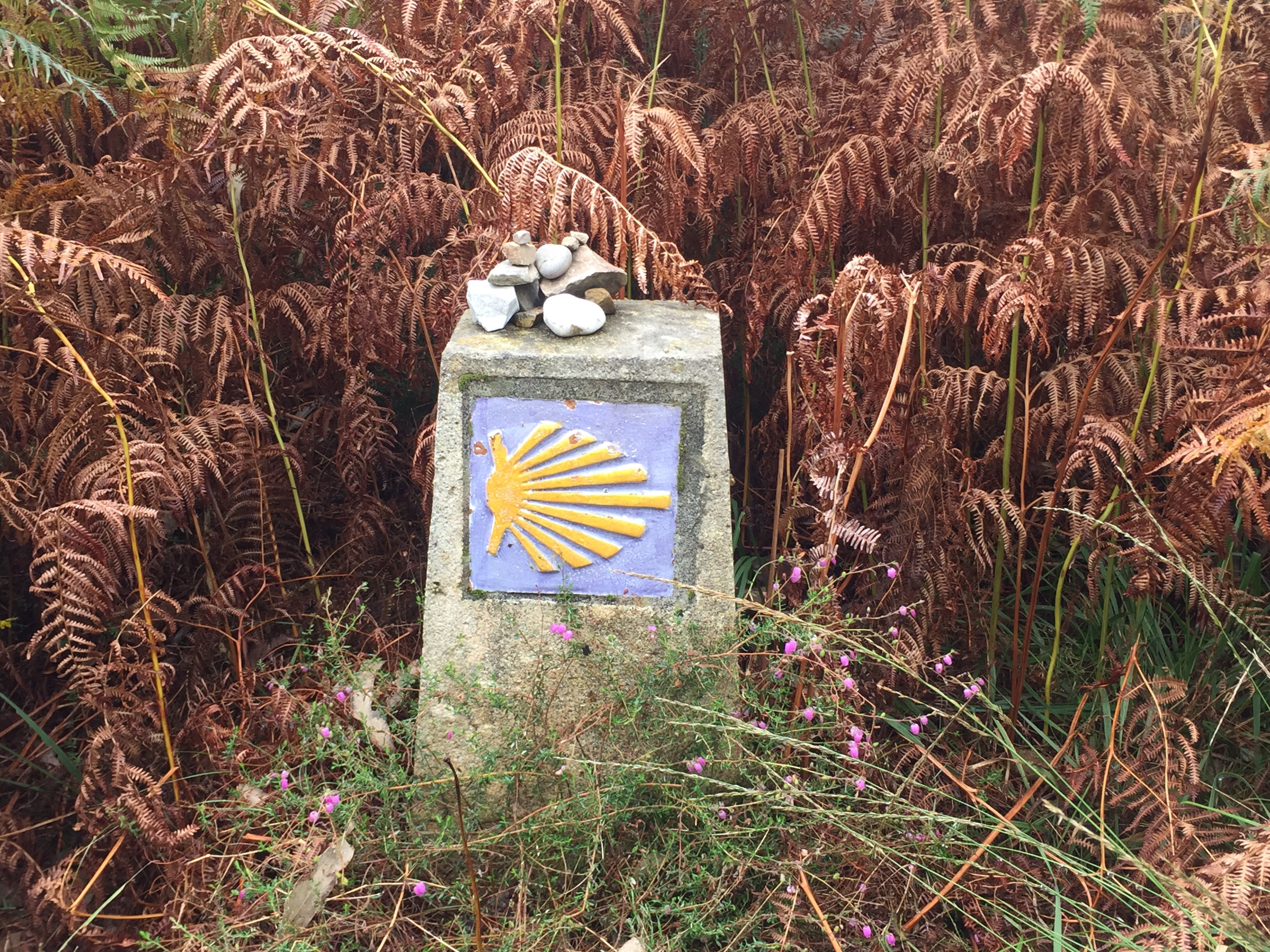
This now means go right.

And sometimes two contradicting shells point you in the same direction .
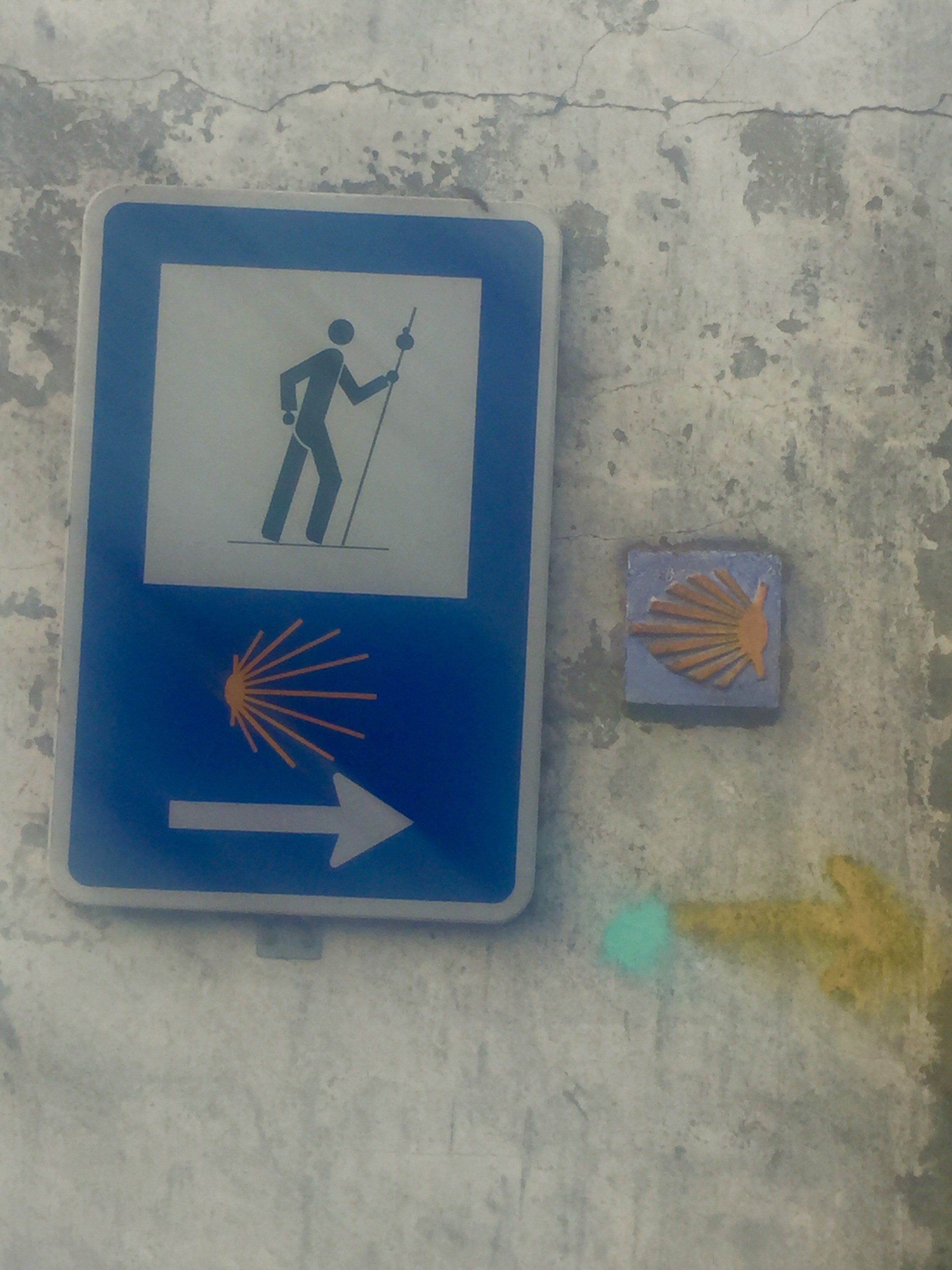
Suddenly it is easy to get lost if the mind is wandering. And it is and we do. 

However this problem has been mostly solved by a new set of concrete markers that tell you not only the direction to go but also gives the distance left before you arrive at Santiago.

  Very clear, very visible and very satisfying to see the progress we are making .  

Very demoralizing to believe you are nearly done for the day and discover the distance given for that stage is off by 10 kms!
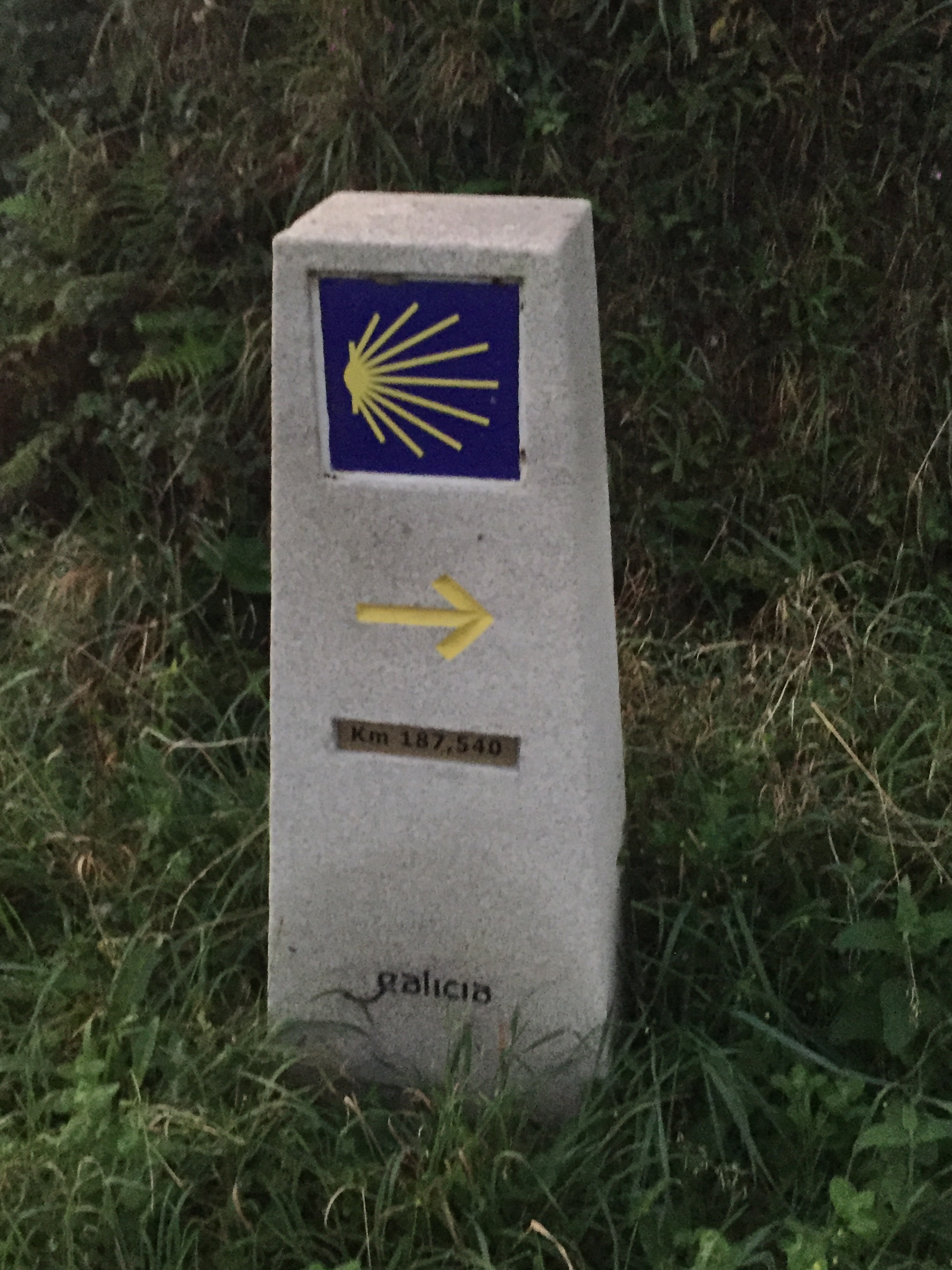
 Very nice -everything matches!

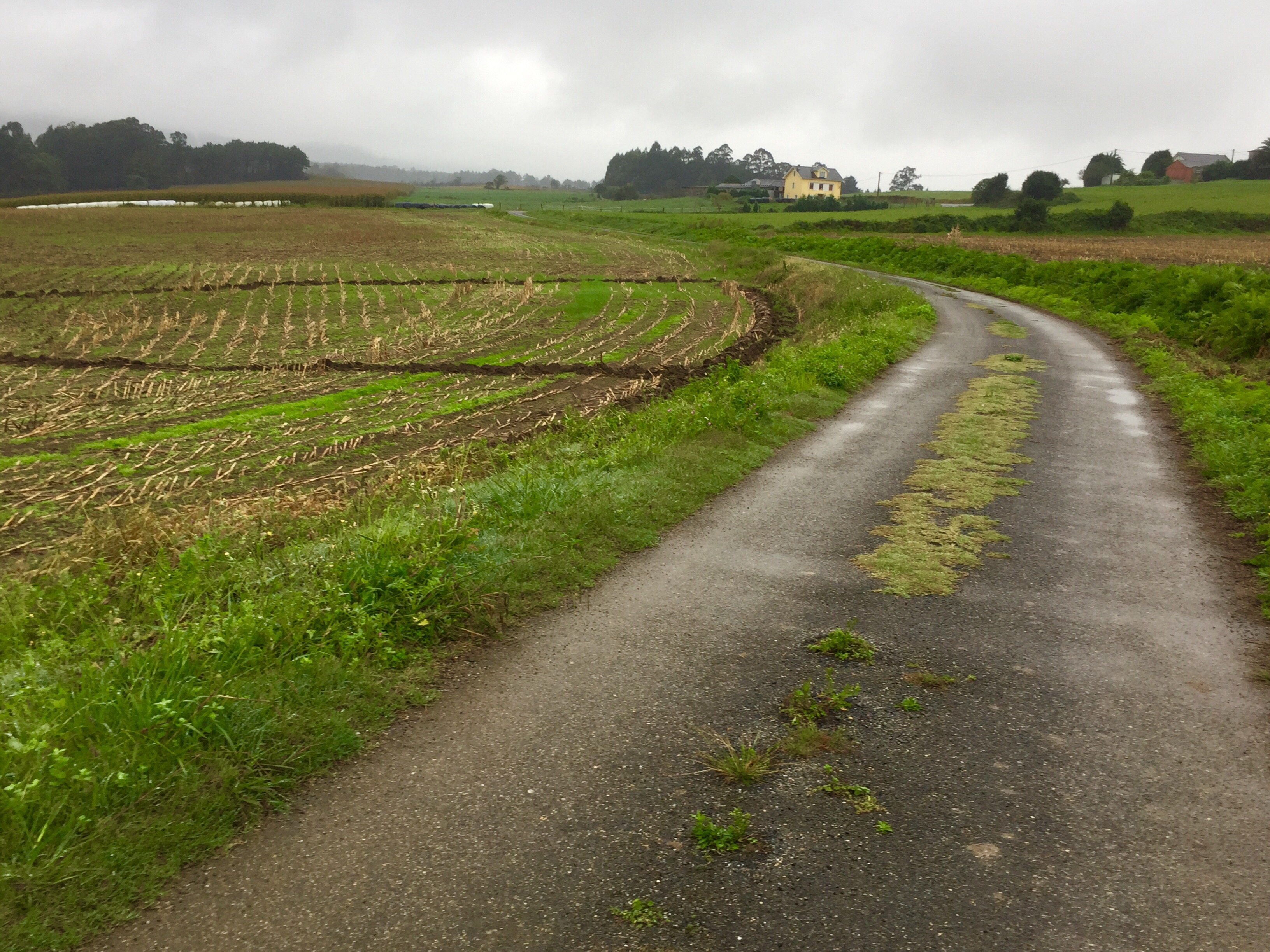
But even more noticeable than a change of province or direction or of marker style, is that autumn has come to Spain.

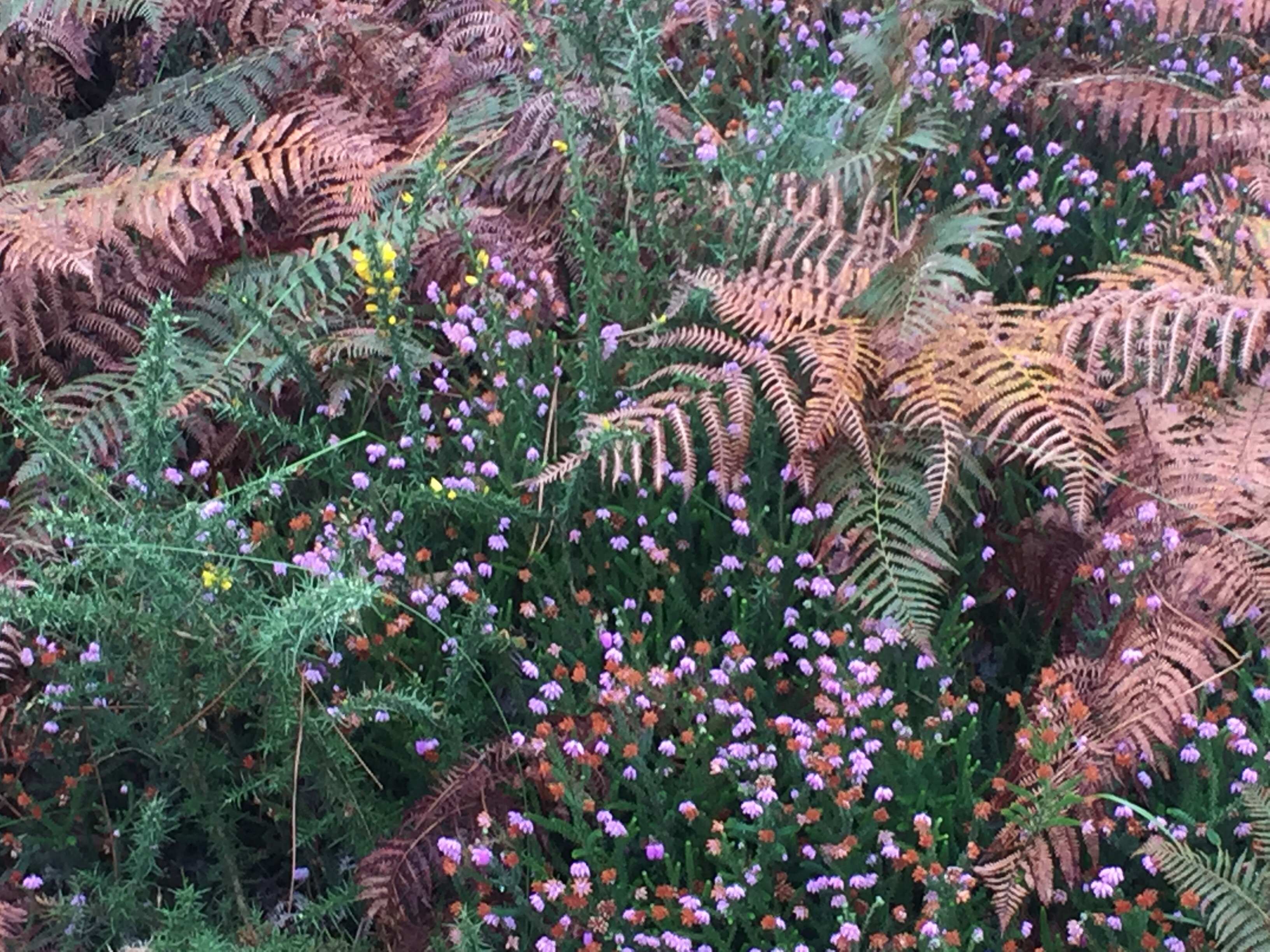
The green ferns of a month ago are now rusty red. 
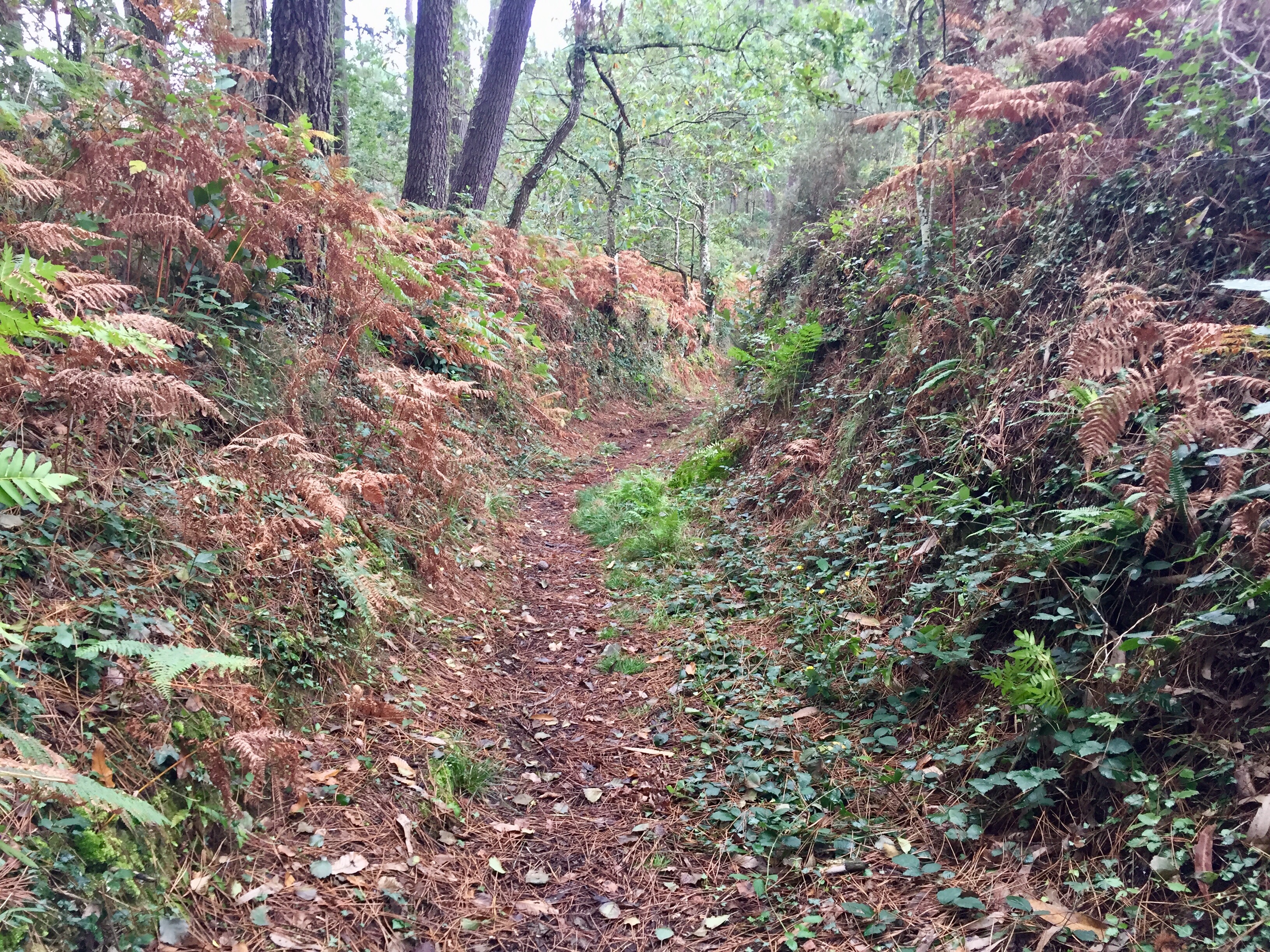
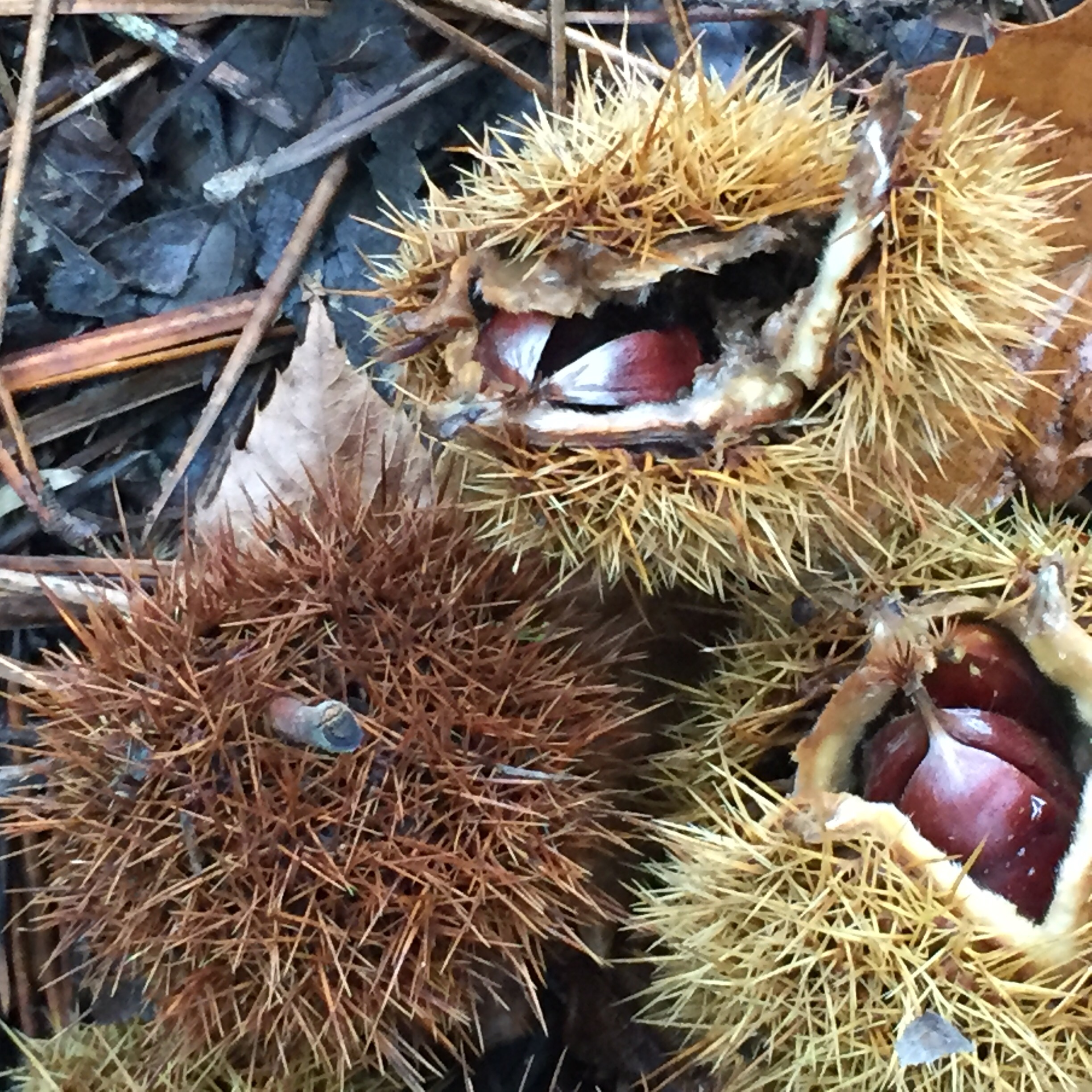
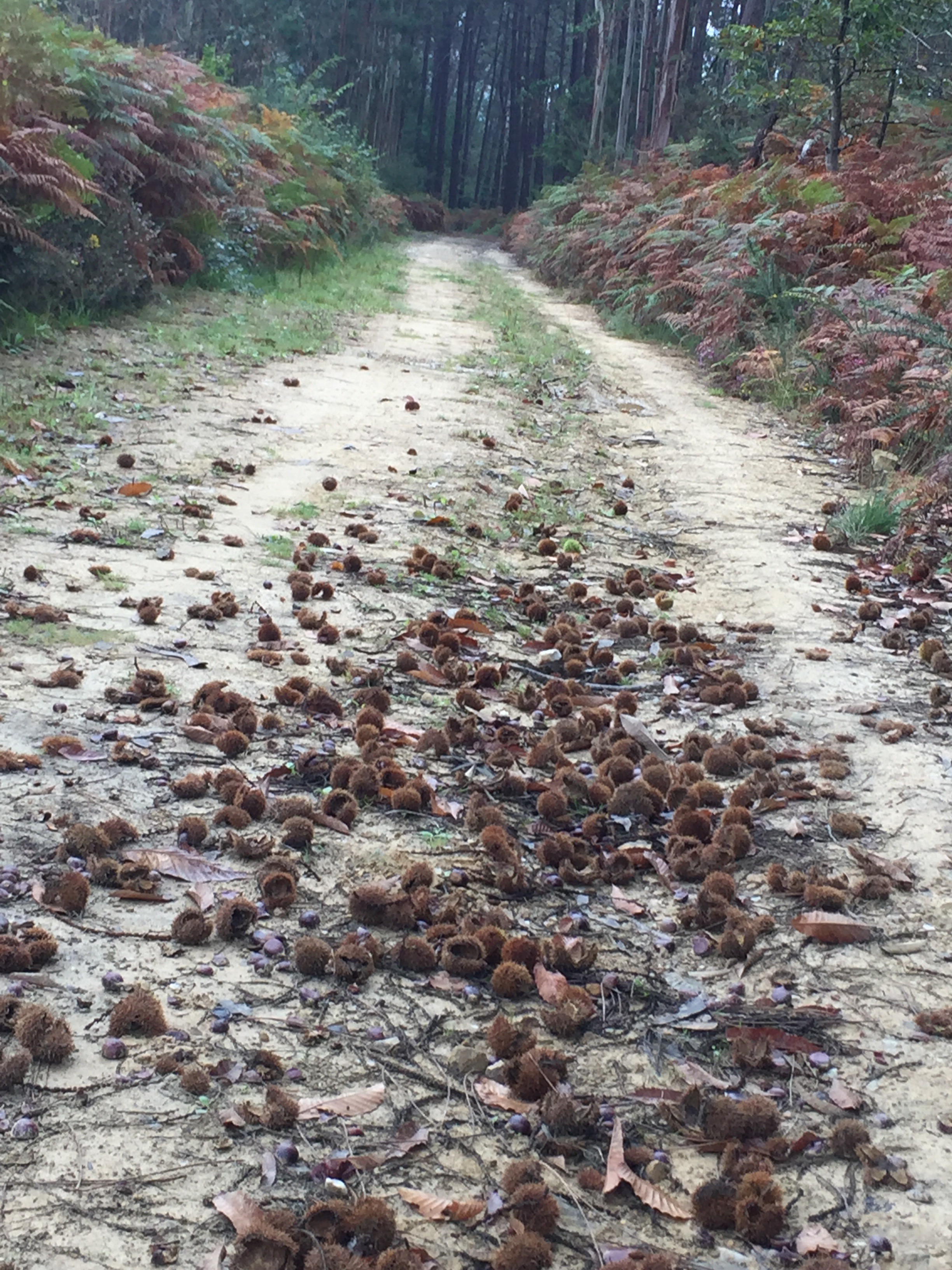
The lime green chestnut pods of three weeks ago are a dull brown and litter the path. The shiny chestnuts are glistening and popping out of their skins. 
 

In the woods, the lush greens of summer have been replaced by the muted shades of fall. 
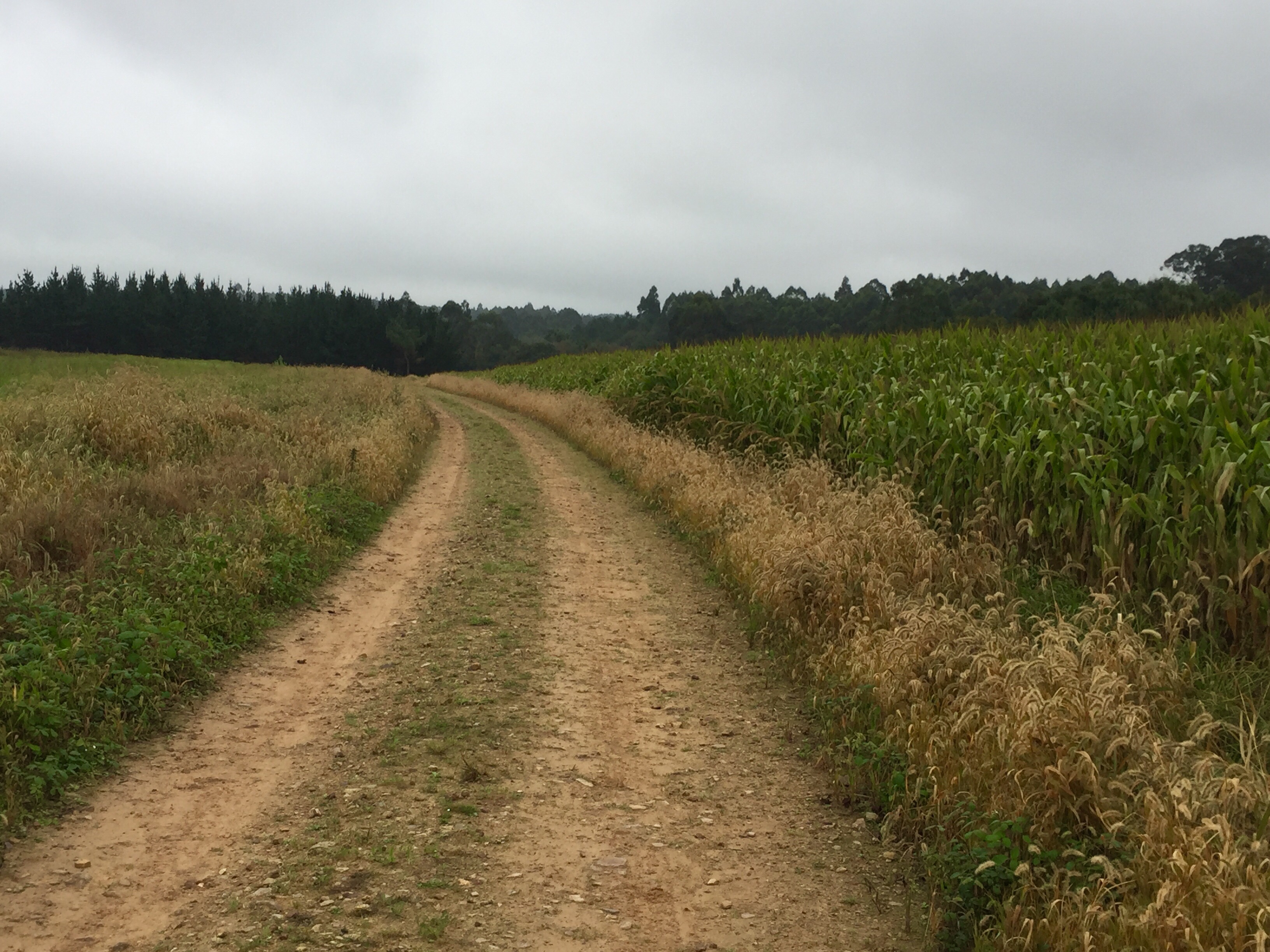
The grasses  are turning golden and the corn is being cut. Even the color of the clay under our feet has changed. 
And as the seasons have changed, we have changed also. 

Tanner, maybe a little fitter, maybe a little more bruised and blistered, hopefully a little wiser. 
Morning 

October 5 

Morning on the camino is not your typical morning in the US.  The sun does not rise until about 8:30.  Until then, to quote B, ” Outside is as black as the inside  of your hat.”

This suits me just fine. I am Newton ‘s First Law in the Flesh.  “An object at rest stays at rest unless acted on by an unbalanced force.”

B is the unbalanced force. By 6am she has made coffee with our nifty immersion heater and the Folgers coffee bags- coffee “tea bags”. After a coffee or two and a cookie or two I join the human race. 

When it is light enough to see, we are off. 

Whatever problems kept us awake last night look insignificant in the light of day. 

Pilgrims like me worry about mosquitoes. Mark Twain was tormented by a mouse in his travel book A Tramp Abroad.  Usually we  are too tired to worry about anything at all. 

Outside the morning is generally cool and quiet. Whether we are in the country or on the shore the colors are beautiful. 

The only things moving are the chickens, the cows, the cats, and the pilgrims.

Somewhere I read that in Spain morning was from 11am until 2pm. 

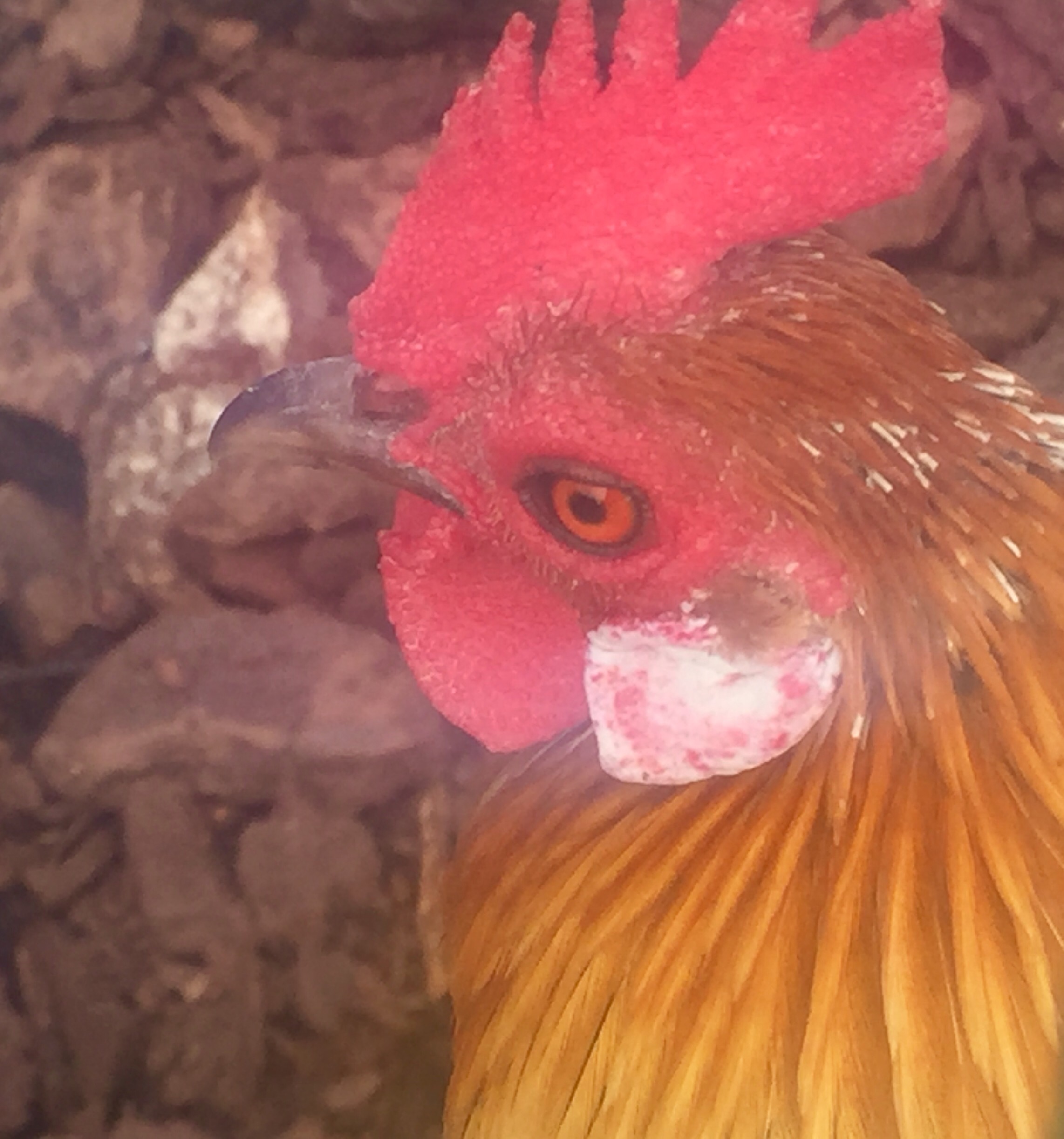
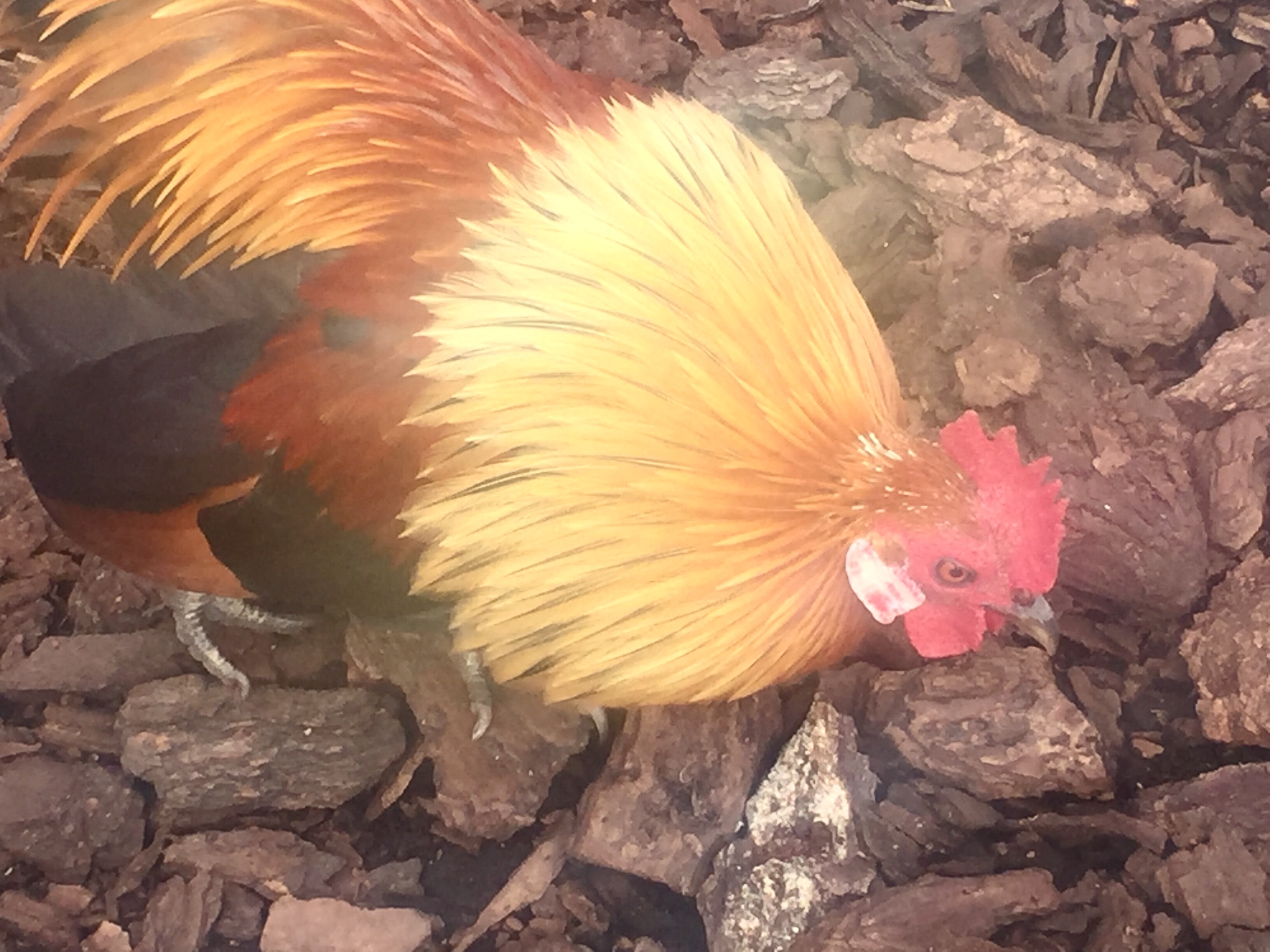
The roosters did not get this memo. They crow all day long. They are everywhere and quite loud and quite colorful.

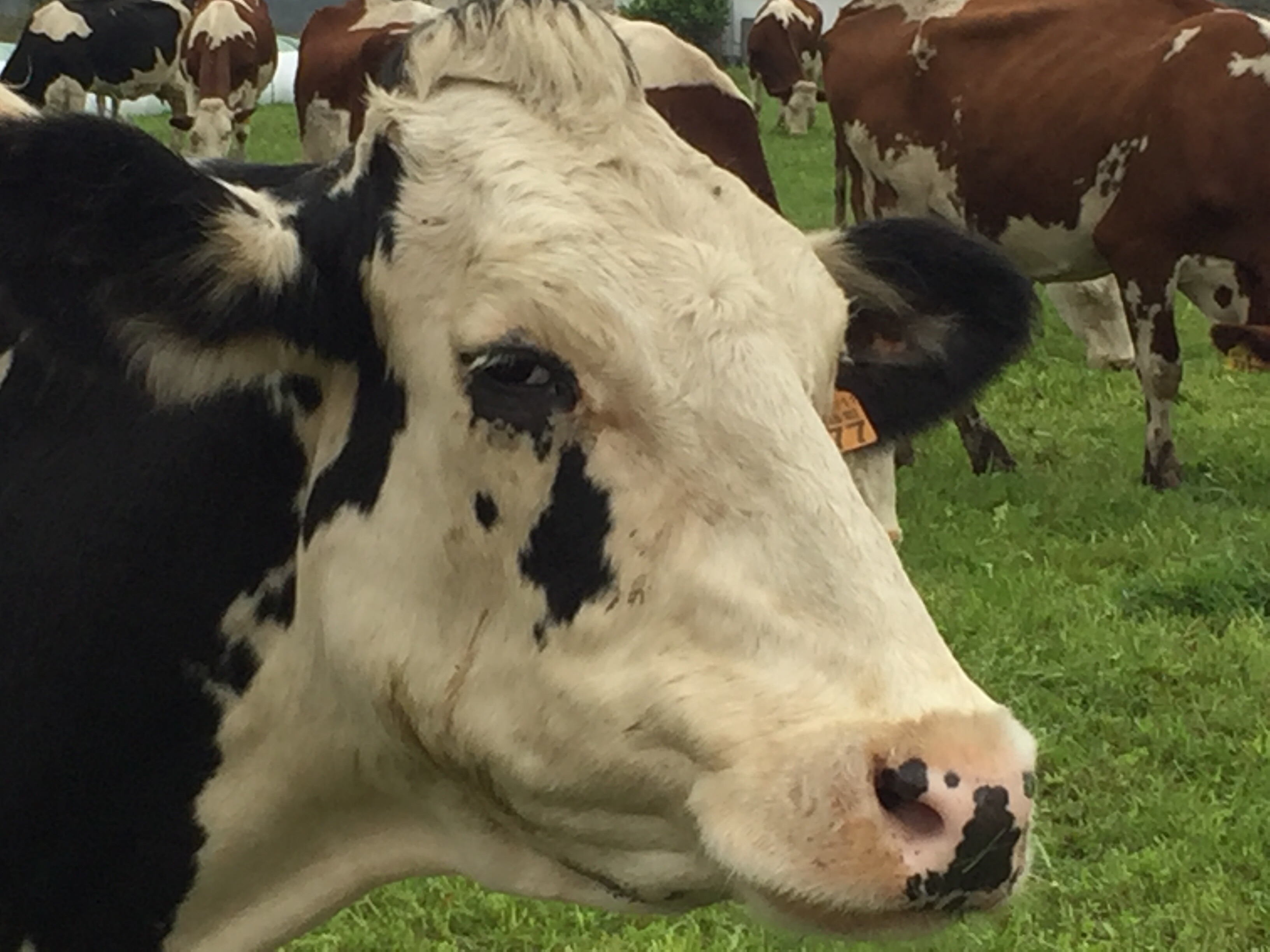
The cows have seen a lot of pilgrims and give us a jaded “stink eye” and the odd bellow.

And the pilgrims?  Today it is raining and there is not a walker to be found. Normally they pass us every few minutes until we are the last people on the path. They are missing one of the pleasures of the camino- walking in the rain.

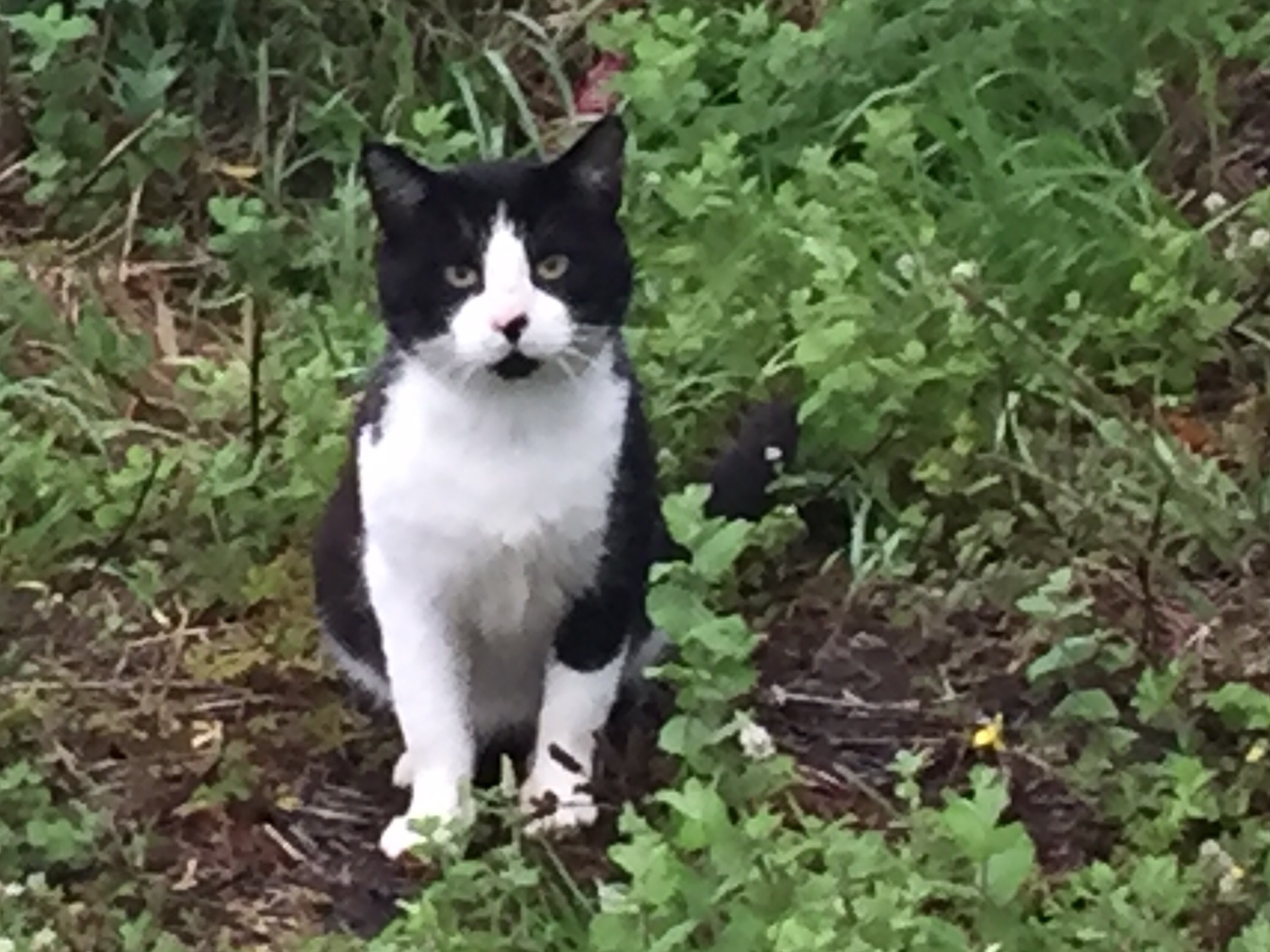
But this morning it was the cat who had my attention.

My thoughts turn to my fat faced, one eyed, black feral cat, Schwartzy.  I think that what I love about him is that he is such a survivor. 

When we moved to Rhode Island we inherited the cat. He has survived outside for at least fifteen years.

 In the winter he sleeps in the warmest part of the loft; if he doesn’t like my food he tries the neighbors; if he doesn’t like theirs, he catches a chipmunk. When he gets in a fight with a fisher cat or a coyote, he disappears for a week or two and come back less than perfect but still alive. He is a survivor.

I think of the Jewish survivors in the concentration camps and their incredible will to survive under the most horrific circumstances. 

I think of Salvador Alvarge, a San Salvaforian fisherman who drifted 6700 miles for 438 days when the engine on his boat failed. 

I think of friends who have survived cancer not once,not twice, but three times. 

I think about what makes these people survivors. For some it is their deep faith but others have no faith and yet they too are survivors. 

Once when I was going through a bad patch a friend gave me a sheet of paper, black except for two white eyes. At the bottom it said. “When you are going through hell keep going. “Winston Churchill.

That paper lived  on my refrigerator for years until I passed it along to a friend who needed it more than I did. 

Survivors. One step at a time. Pilgrims one step at a time. Life one step at a time. 

All this thinking and we took a wrong turn and ended up going about ten miles out of our way. Our short day turned into a testy long slog.

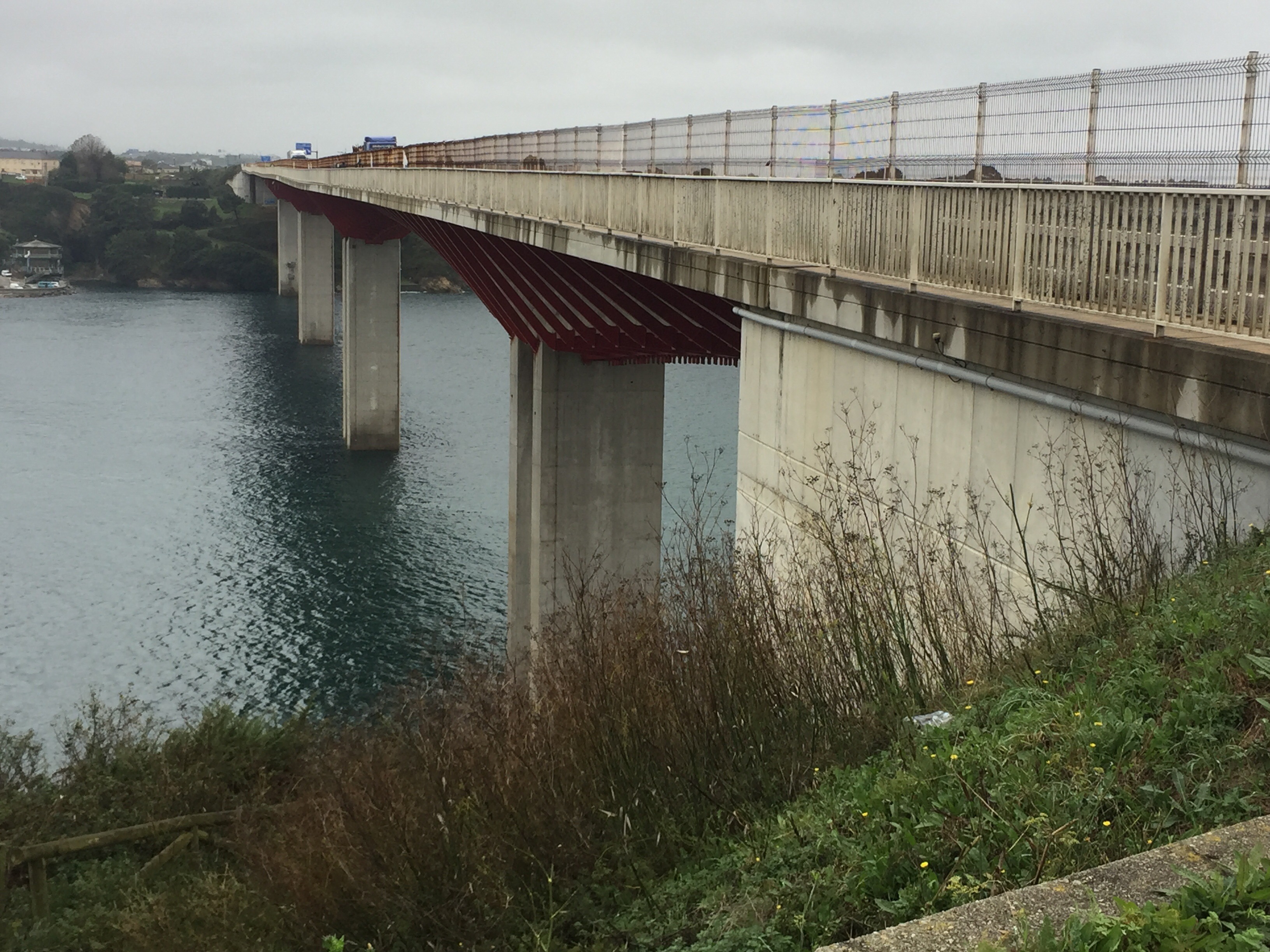
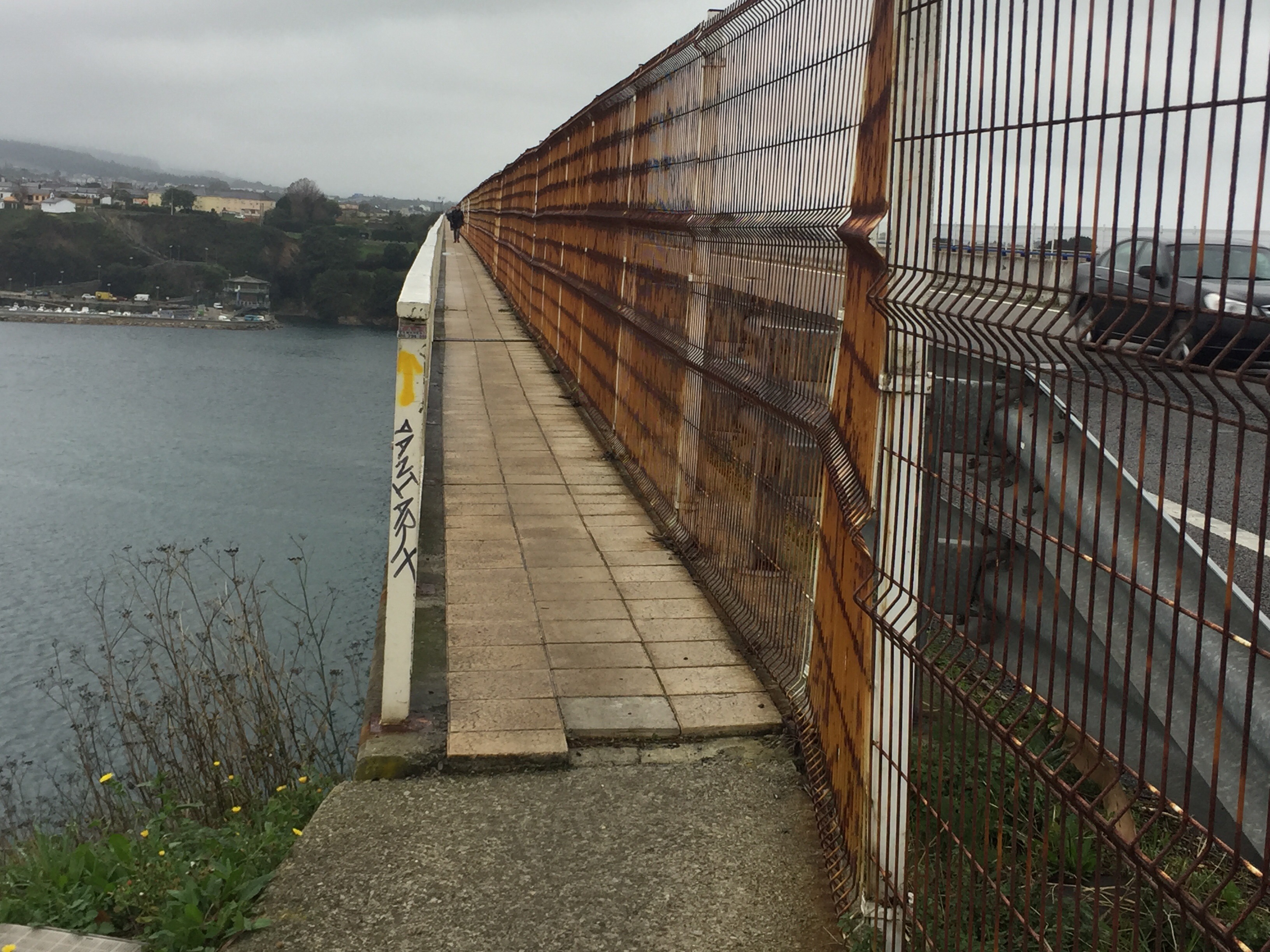
The last thing we had to do was cross a bridge into town on a busy highway. 

Roads cars and pilgrims are a bad combination and when it came time to cross B was far ahead. 

Those who know me know there are two things that terrify me. Snakes and heights. 

When I got to the bridge I realized the cars were not my problem. 

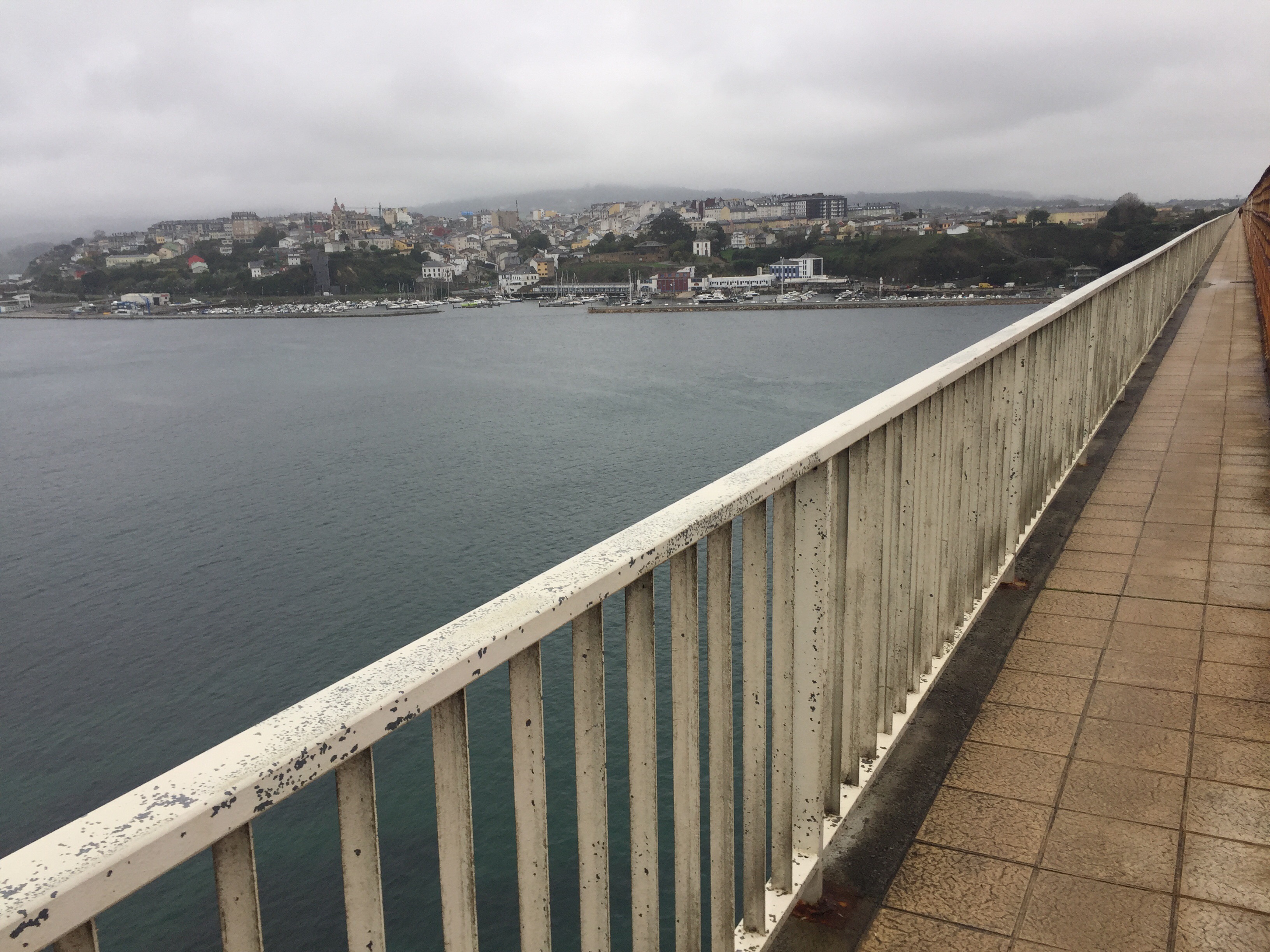
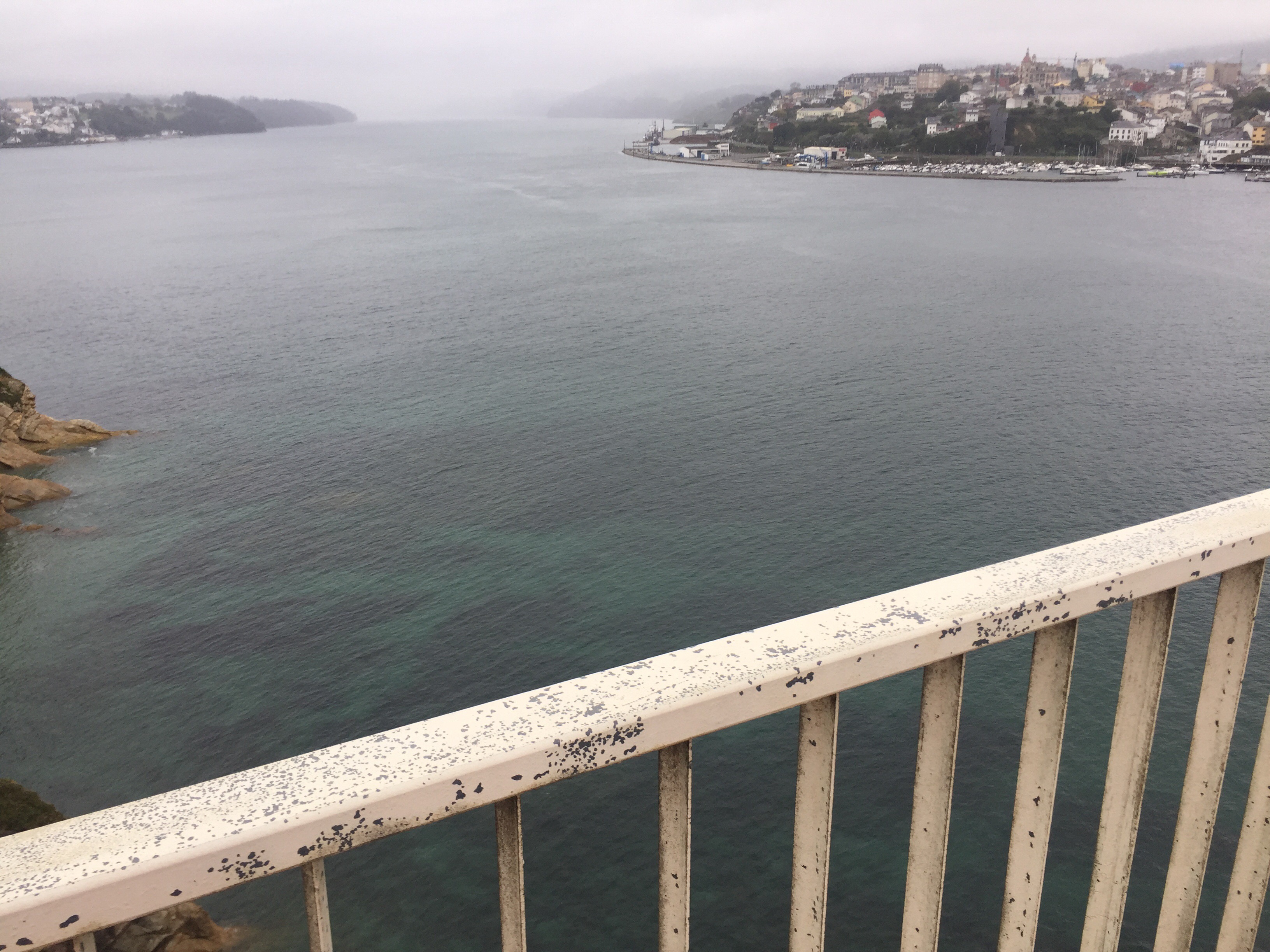
The pedestrian bridge was three boards wide with a three foot high  see through railing. It was about a half mile above the sea and about a have mile long. 

Shaking like a leaf, I remembered all the real survivors and their real problems and their real heroics. Fool.

I took a deep breath and repeating Churchills’words,I crossed the bridge. 

Orviedo

Oct 1- off the path

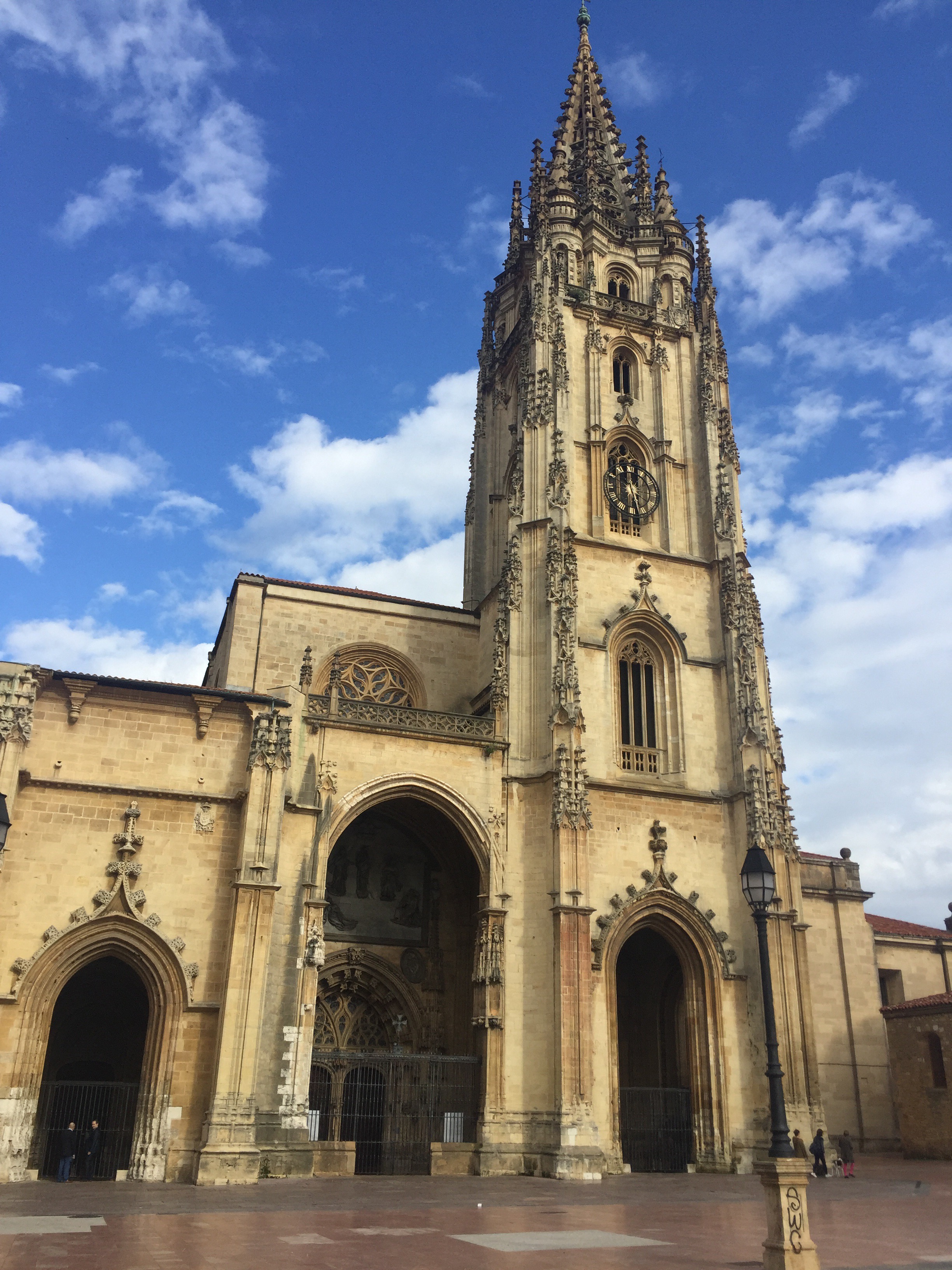
On Sunday morning we jumped off the path and took a field trip to Orviedo. 

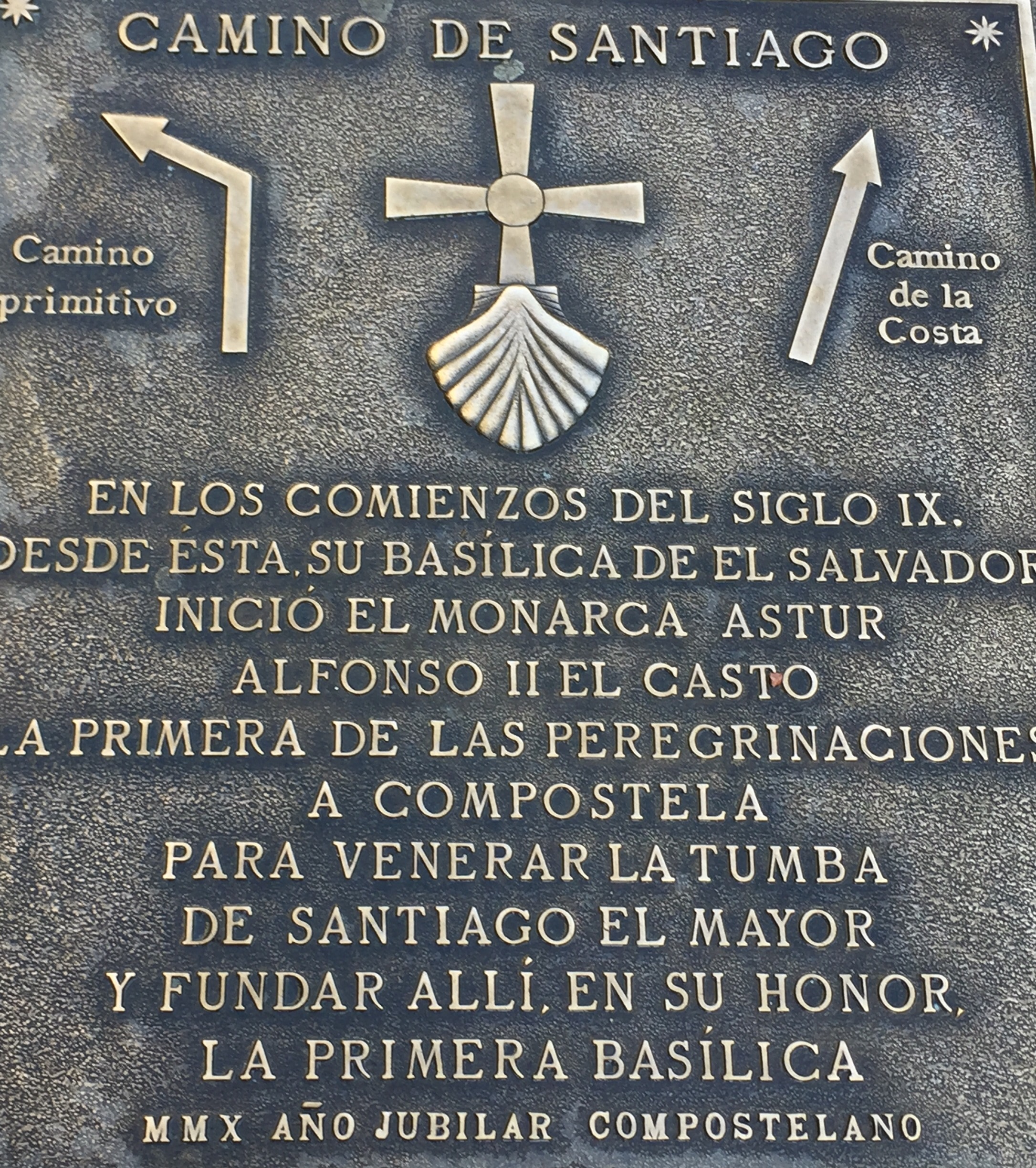
Orviedo is an  important city in the history of the Camino de Santiago because it is the start of the Camino Primitivo or the “original” pilgrimage route. 

Orviedo is the capital city of Asturias in northern Spain. King Alfonso II  (also known as Pius King Alfonso the Strong ) was allegedly the first person to walk to Santiago de Compostela.

Alfonso was the King of Asturias when the bones of St James were unearthed and he went to Santiago in 814 to verify this miracle.

His first steps were from the Cathedral of San Salvador as they are for pilgrims today. 

His route known as the camino Primitivo or “original” route follows his identical path to  Santiago. It is said to be the most difficult of all the paths. 

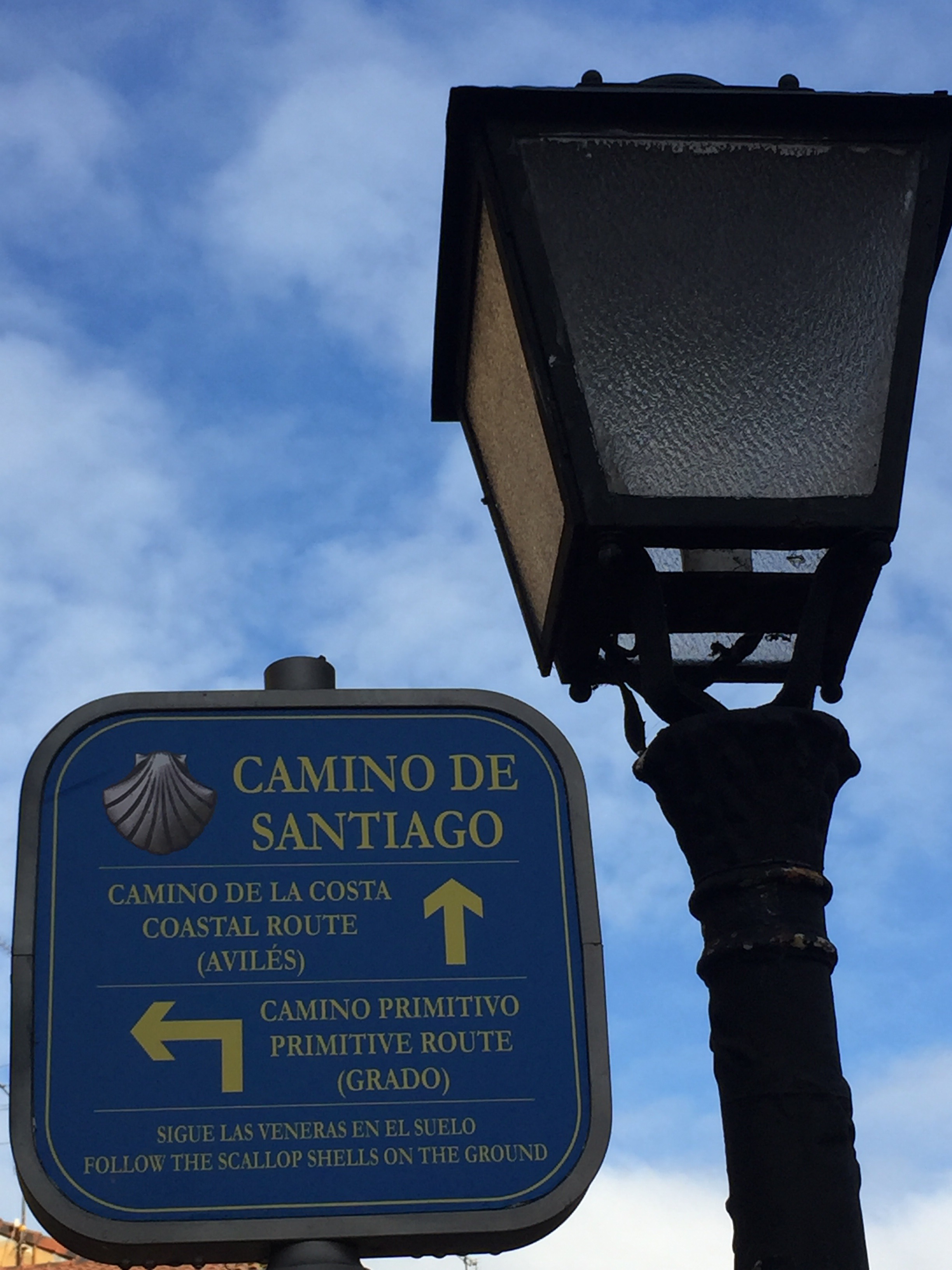
The Camino Norte and the Primitivo join in Orviedo.  Pilgrims have a choice which route to follow, whether to stay on the coastal route and go through Galicia to Santiago or to head over the mountains to Santiago. We weren’t sure which route we wanted to take. But we were sure that we wanted to see Cathedtal  of San Salvador in Orviedo.

King Alfonso is alleged to have said,  “He who goes to the shrine of Santiago and does not go first to the Church of San Salvador visits the servant and not the Master. “.  

Good advice to this day. 

A church has been on this site since the mid 700s. The father of King Alfonso built the first church. It was destroyed by the Moors and rebuilt and enlarged over 500 years and even restored in the 1300s. It is said to have one of the finest interiors in the world so we were anxious to see it.

We were not disappointed

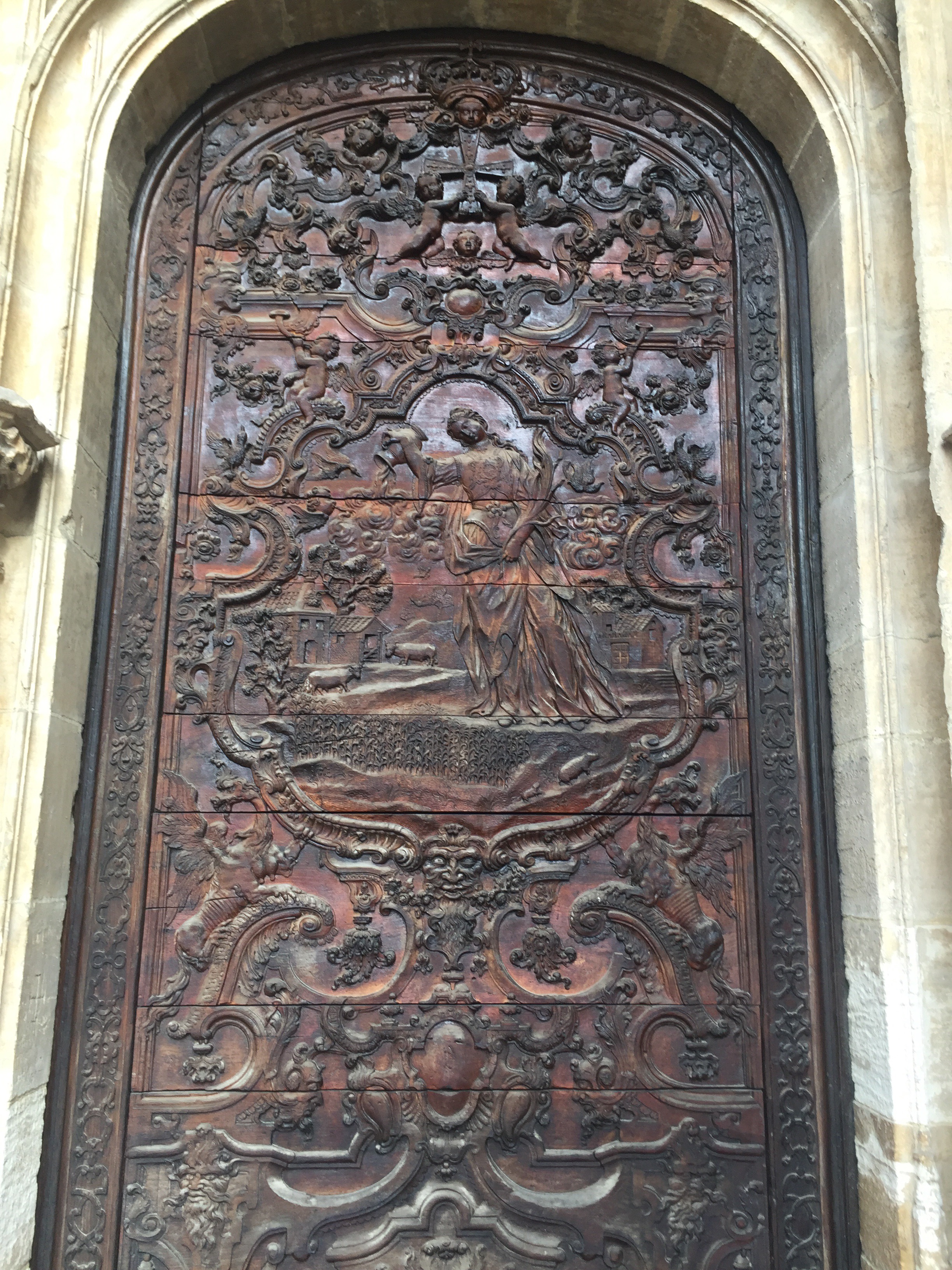
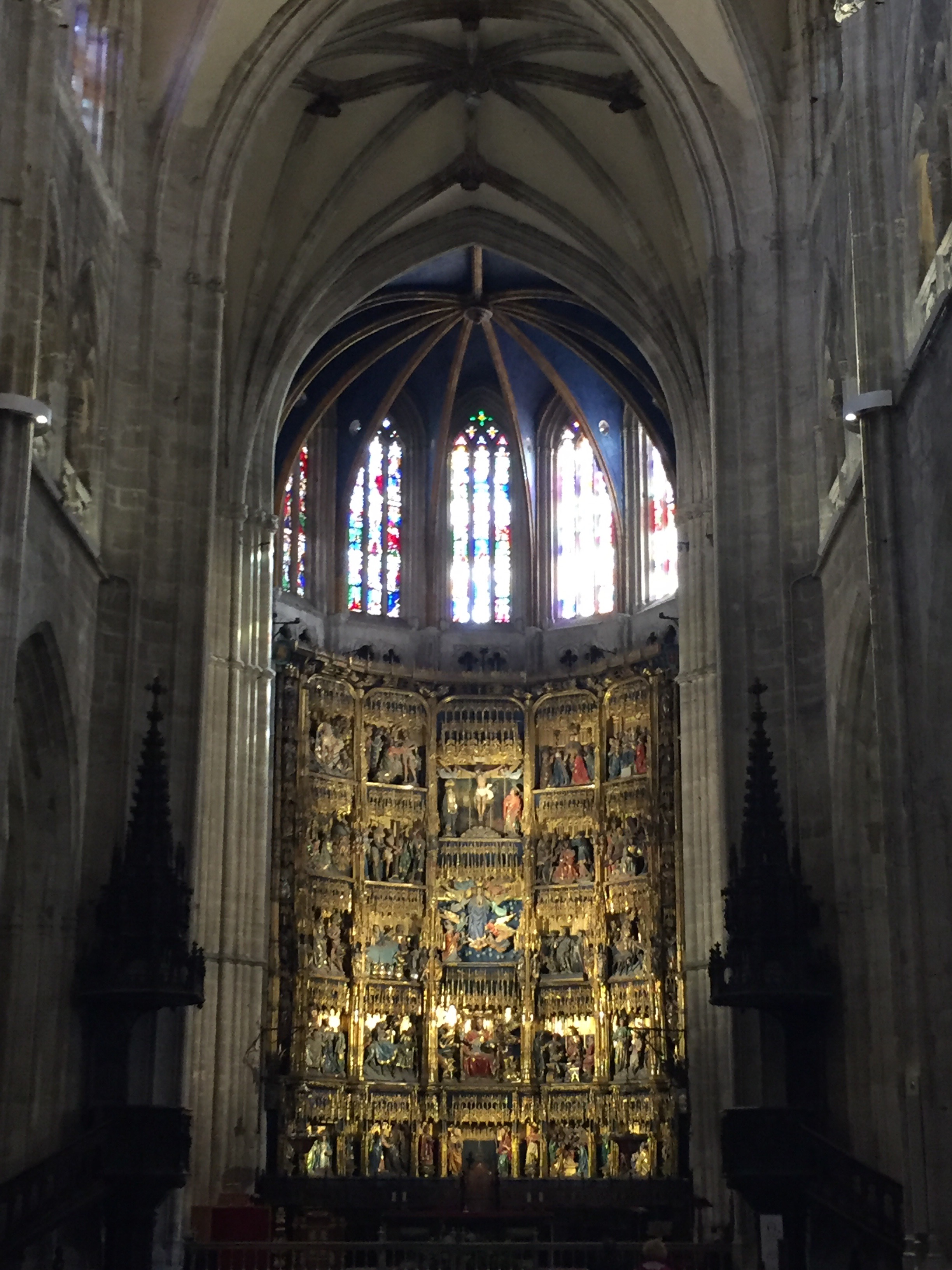
This cathedral is superb. From the second we walked through the doors we were swept away by its beauty and power.


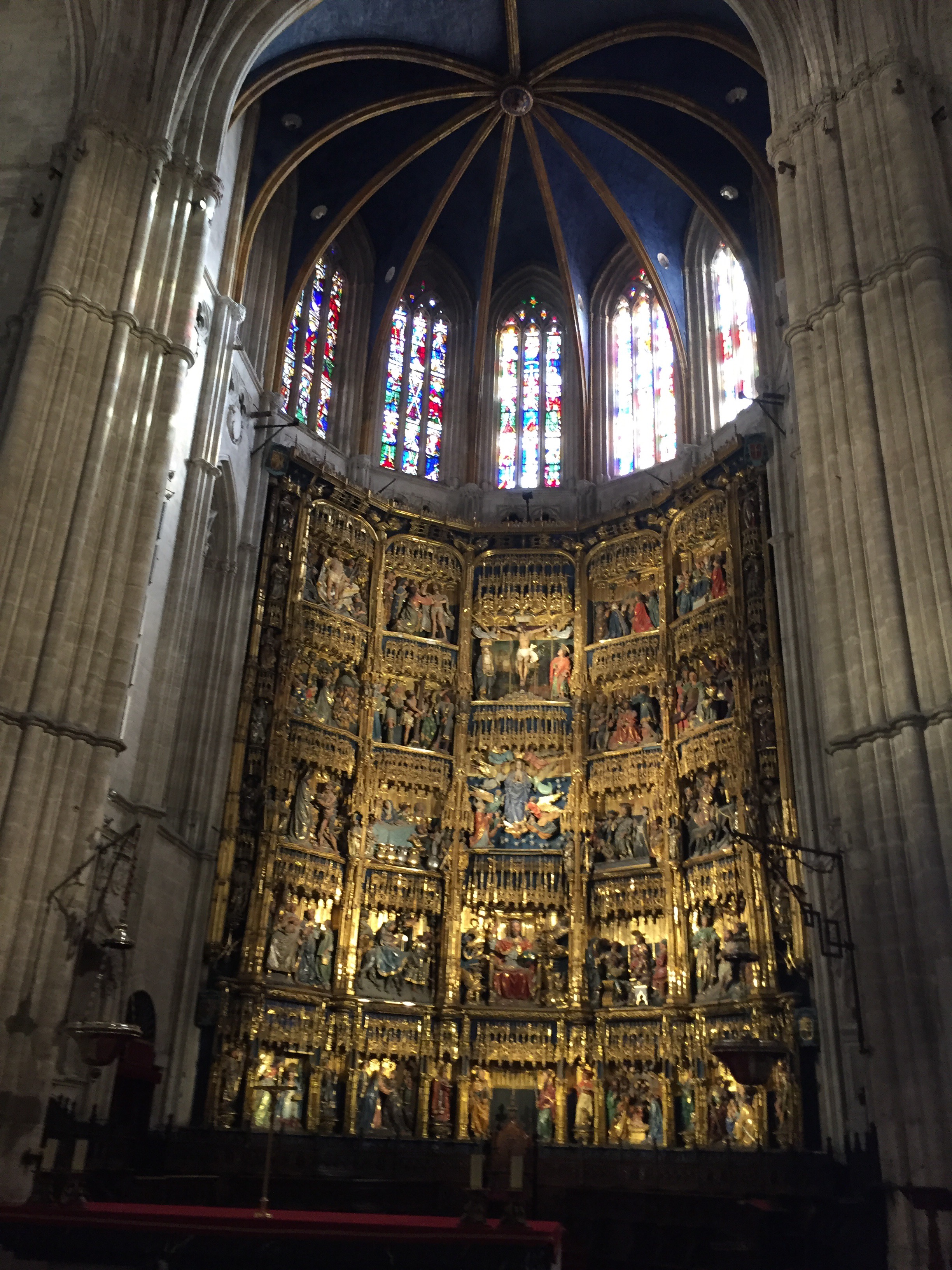
Inside, after our initial look at the reredos, we were led on one of the best ever audio tours of the cathedral, each of its ten chapels, the Holy Chamber, the museum the cloister, and various shrines. The guide was interesting, clear and in English, but our eyes were our best teacher.

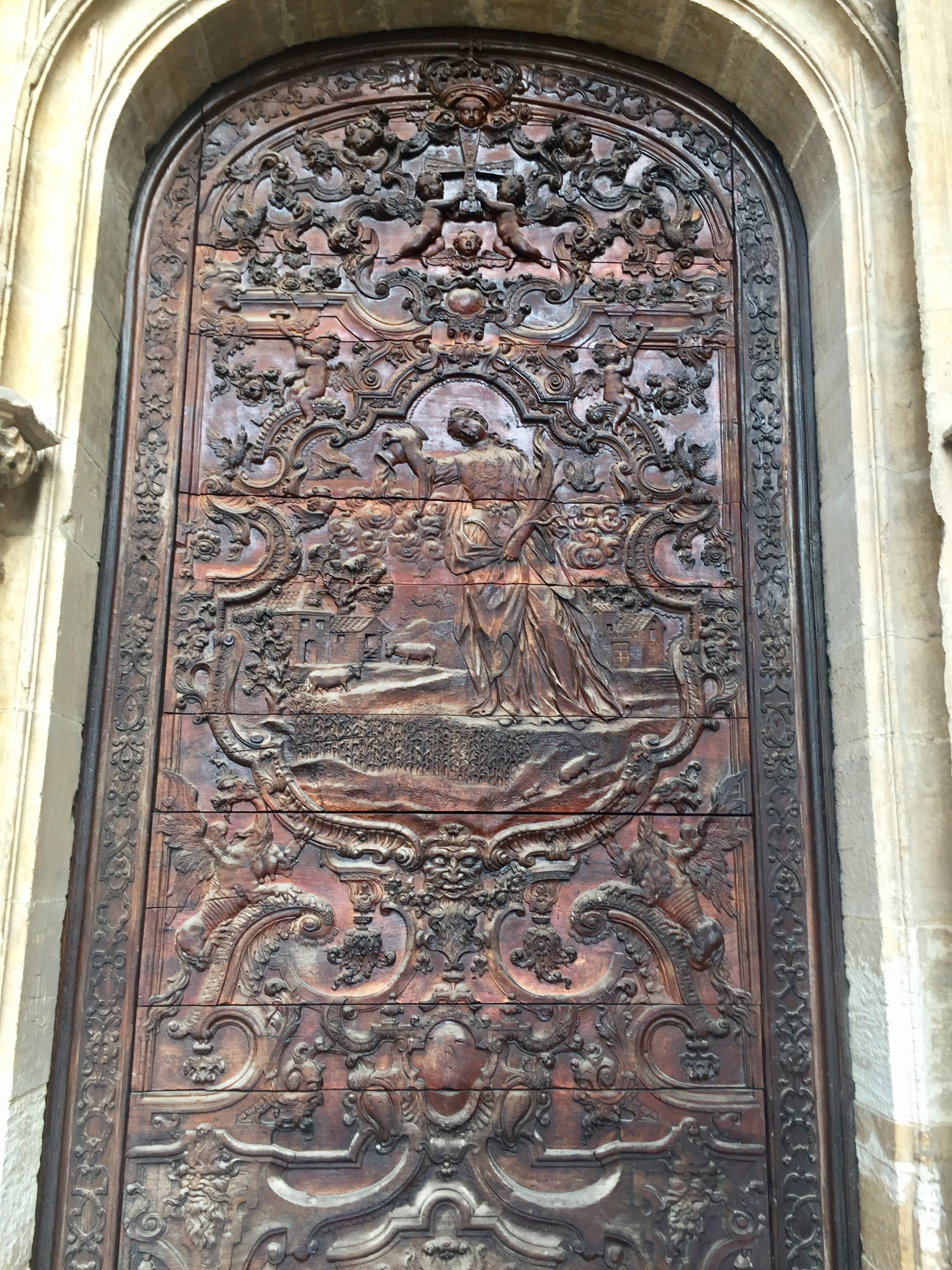
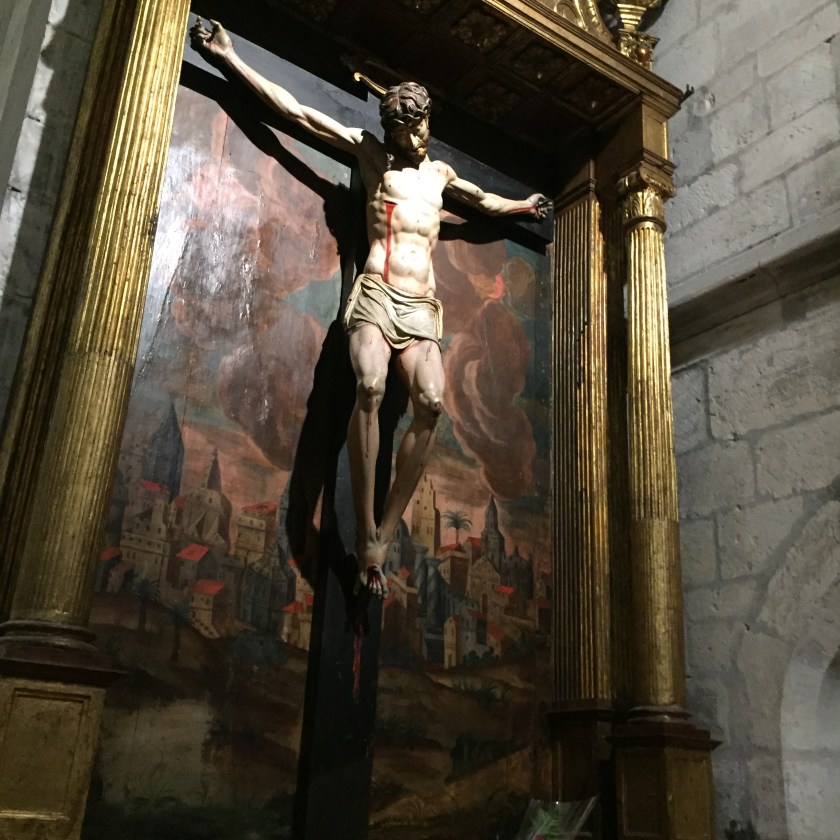
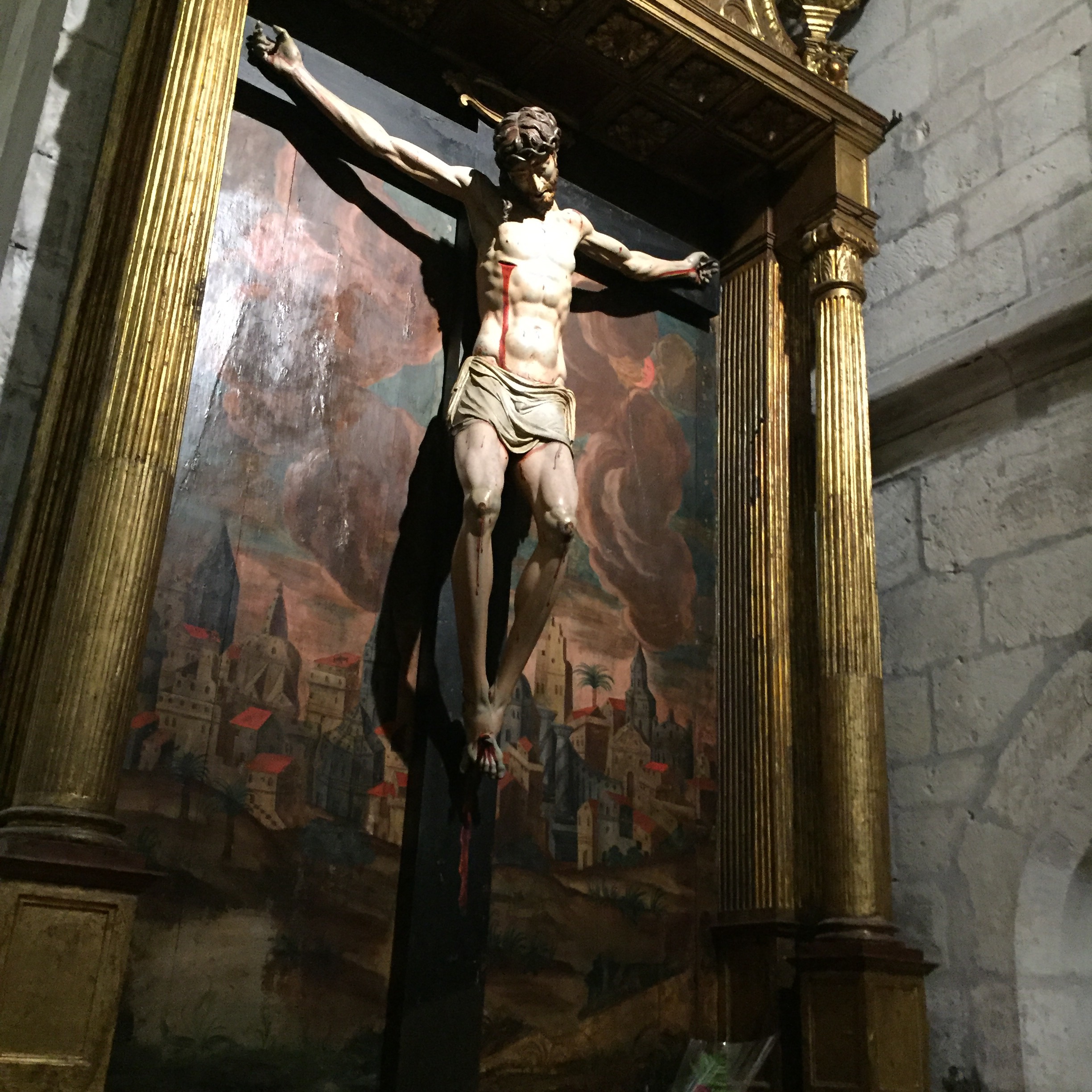
Below is a small sample of what we saw.

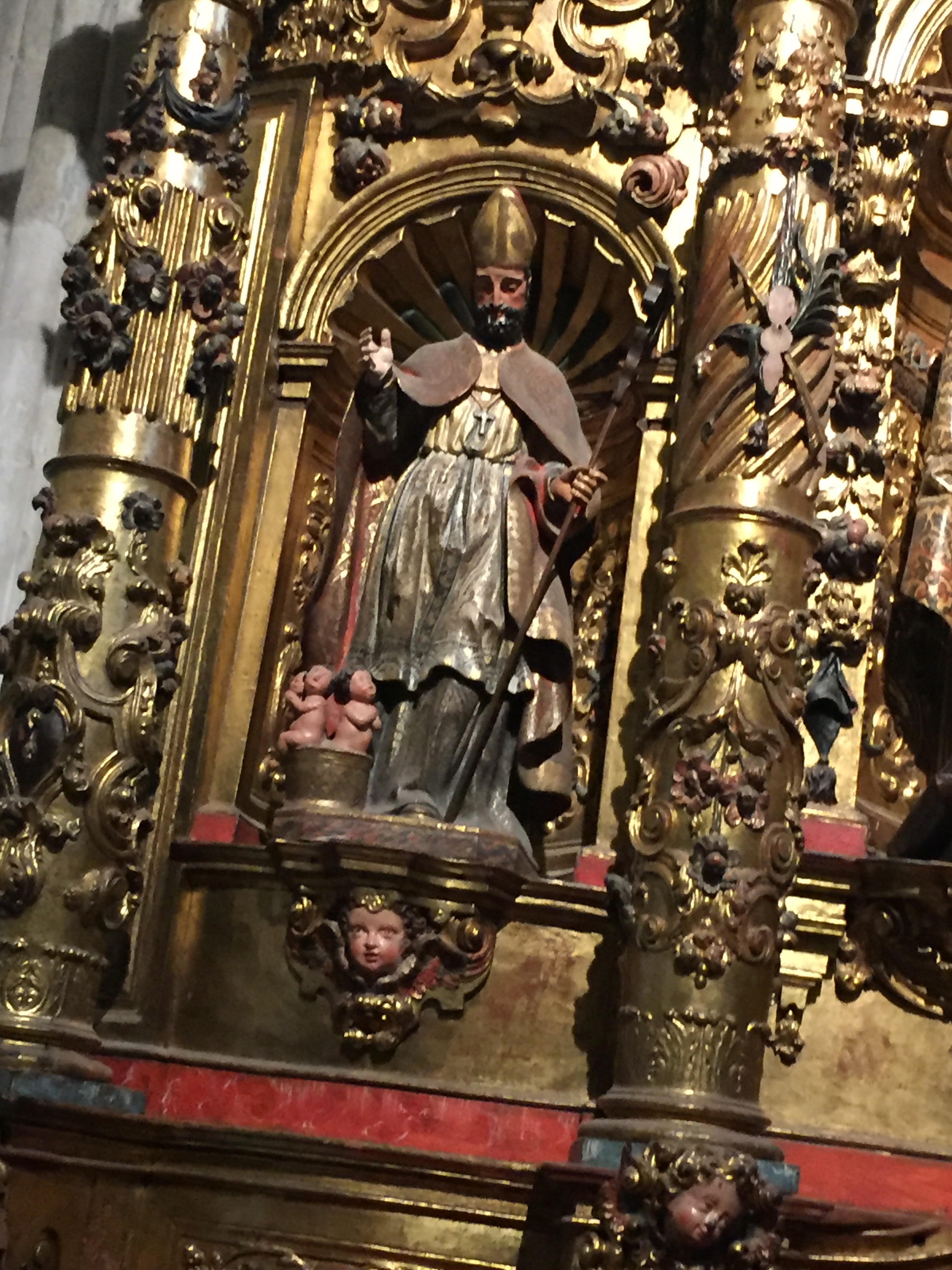
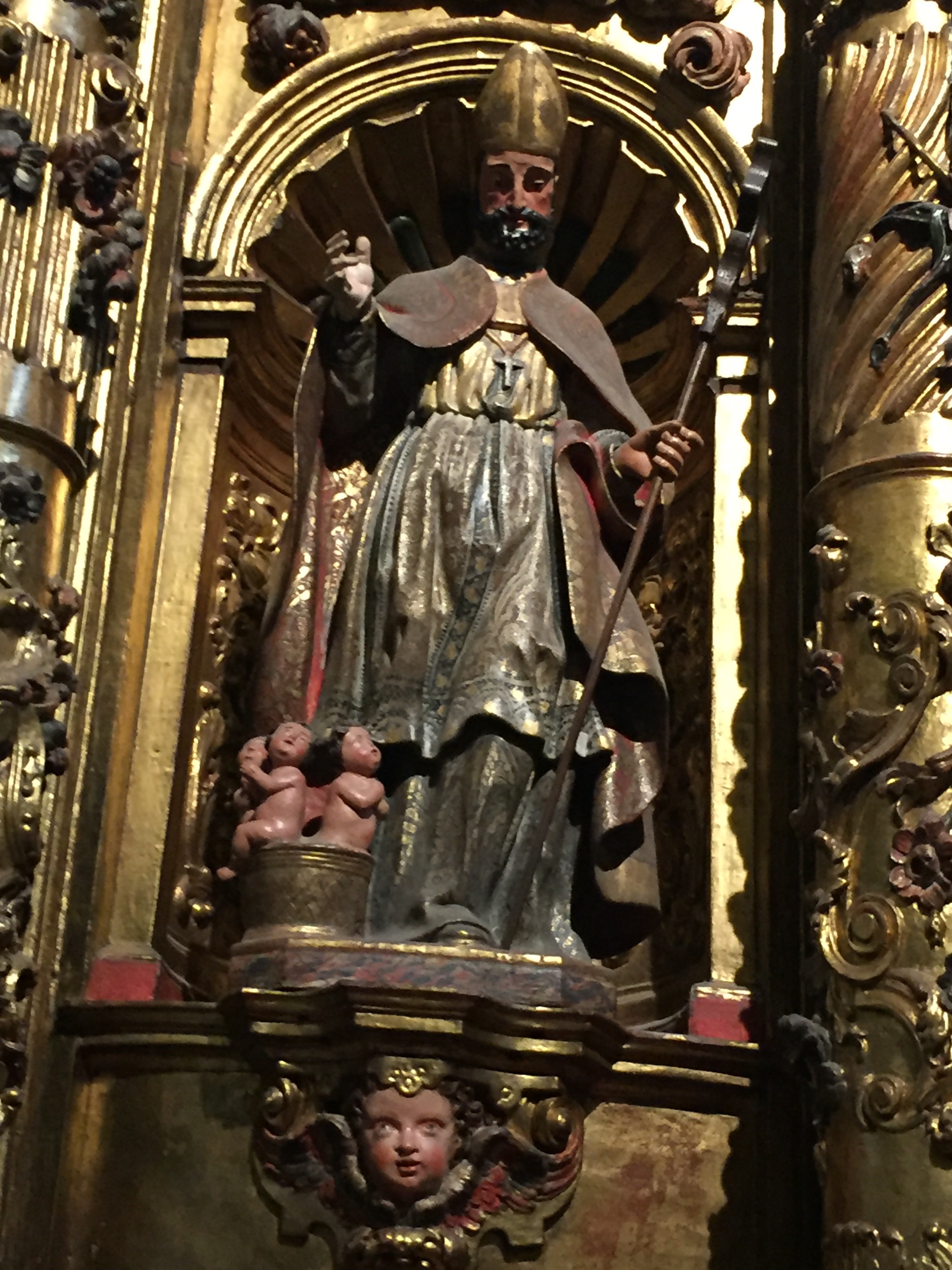
Saint Nicholas

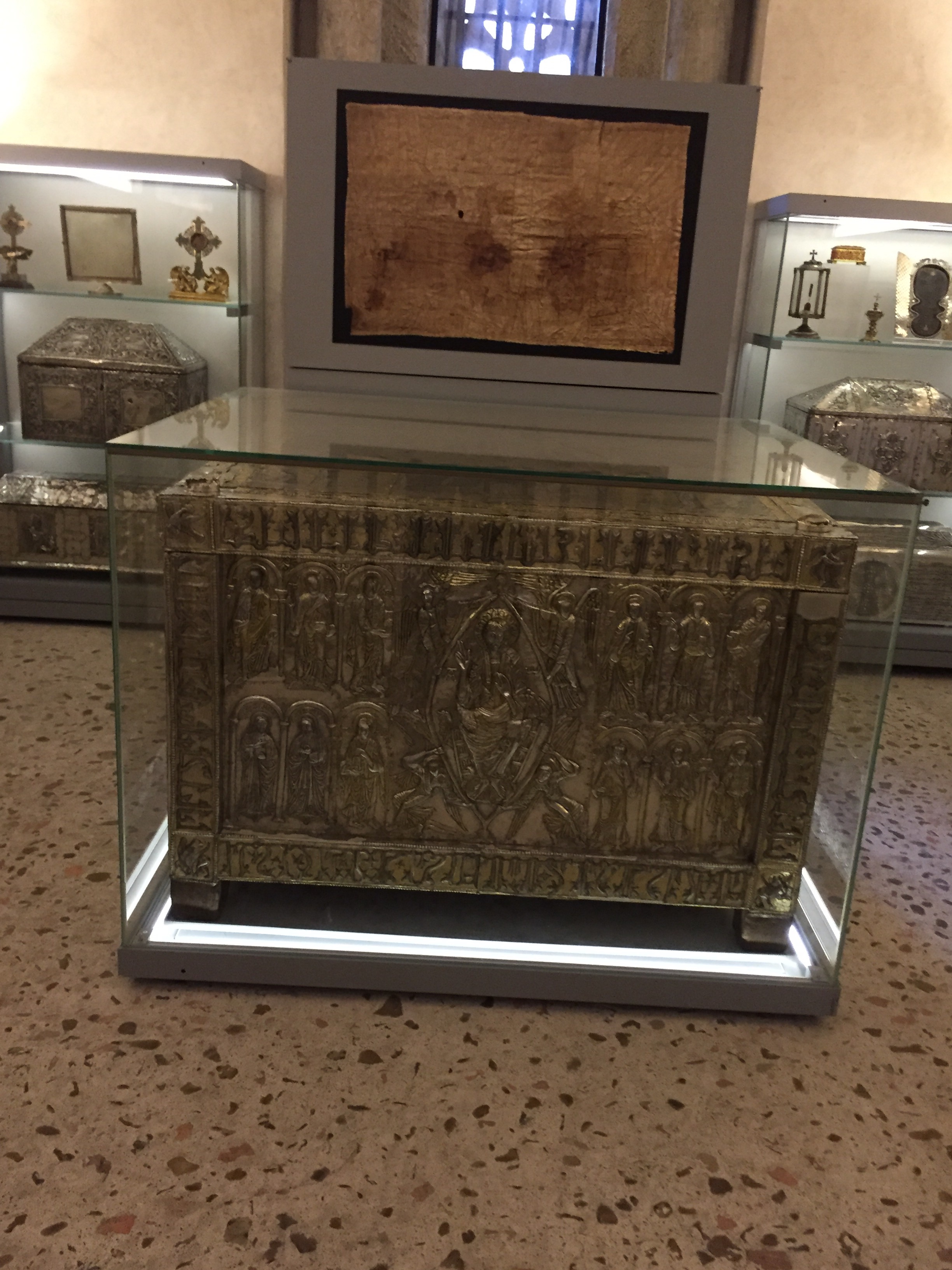
Holy Chamber where the Sudarium (cloth covering the face if Christ in his tomb) and other relics are kept.

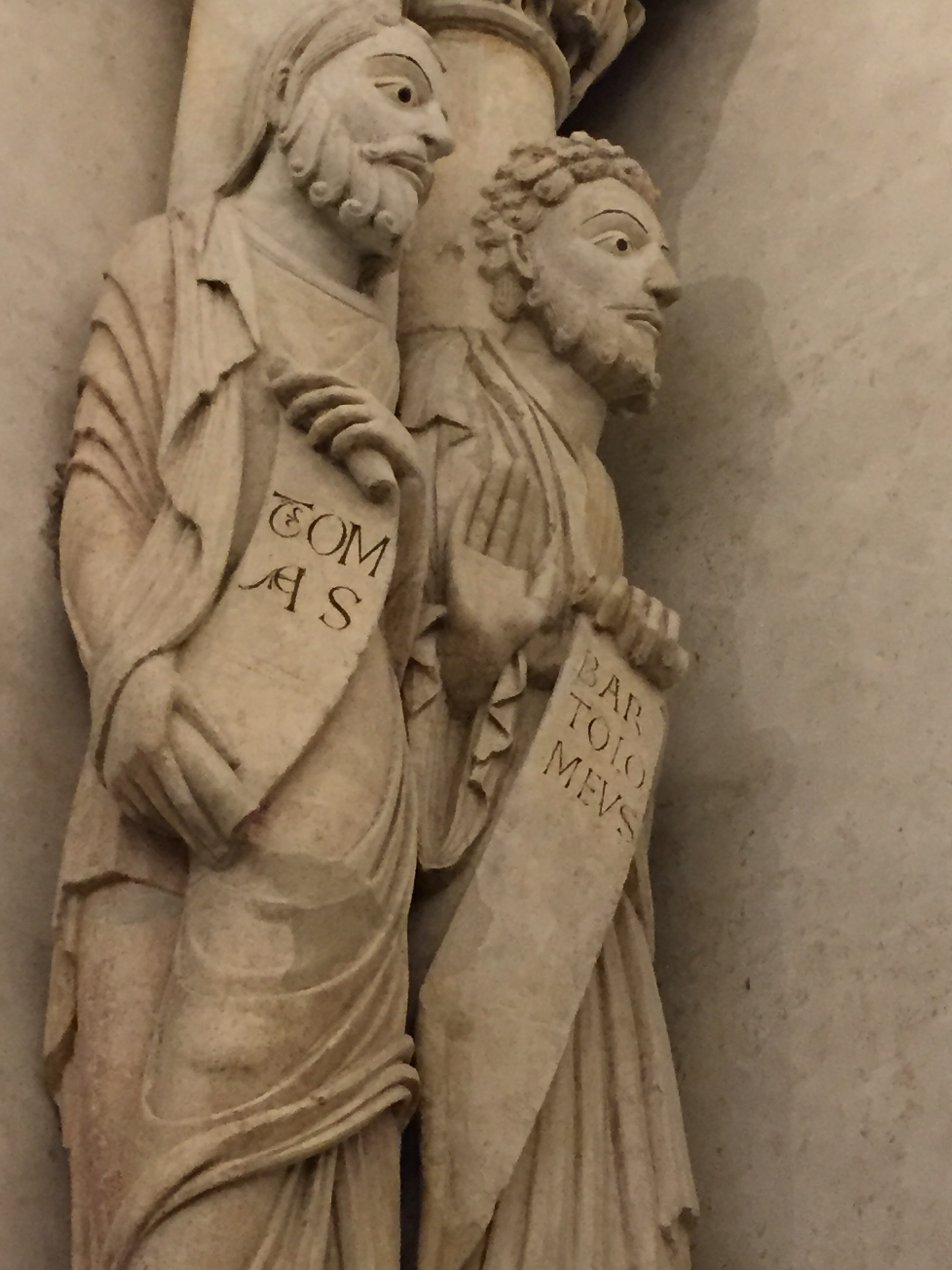
Doubting Thomas with lapis eyes and Saint Bartholomew.

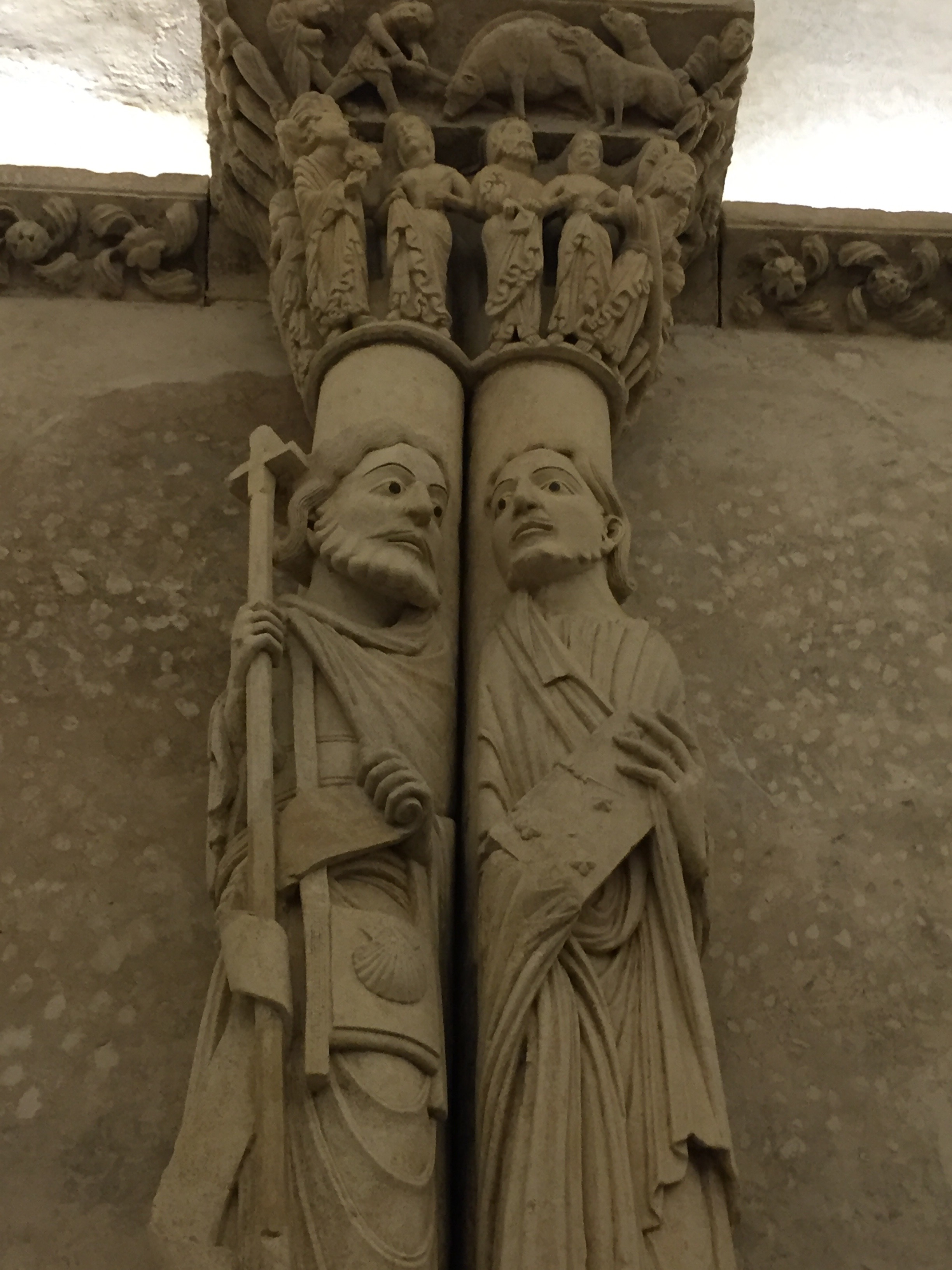
Santiago with scallop  shell.

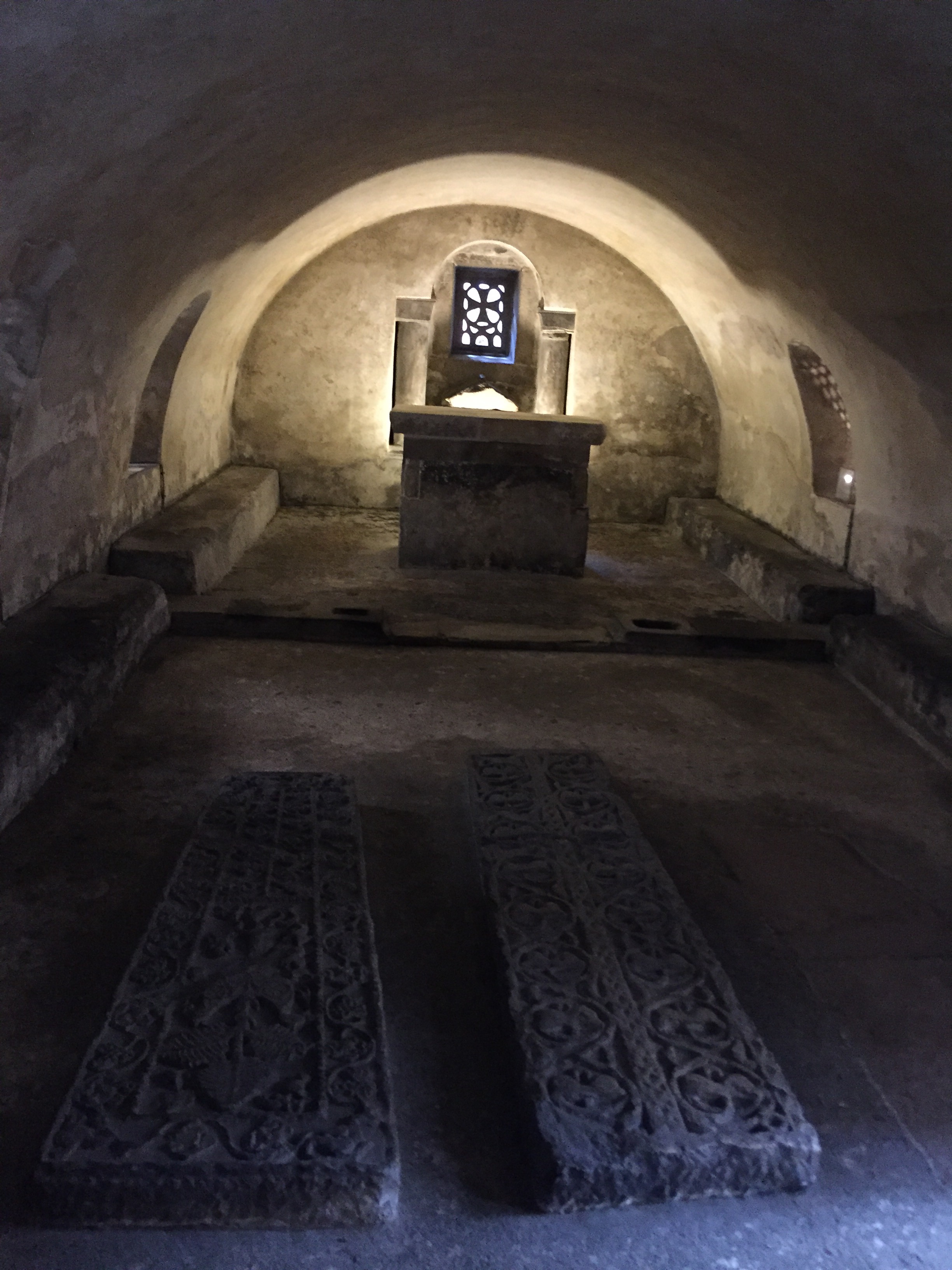
Saint Leocadia crypt from 883

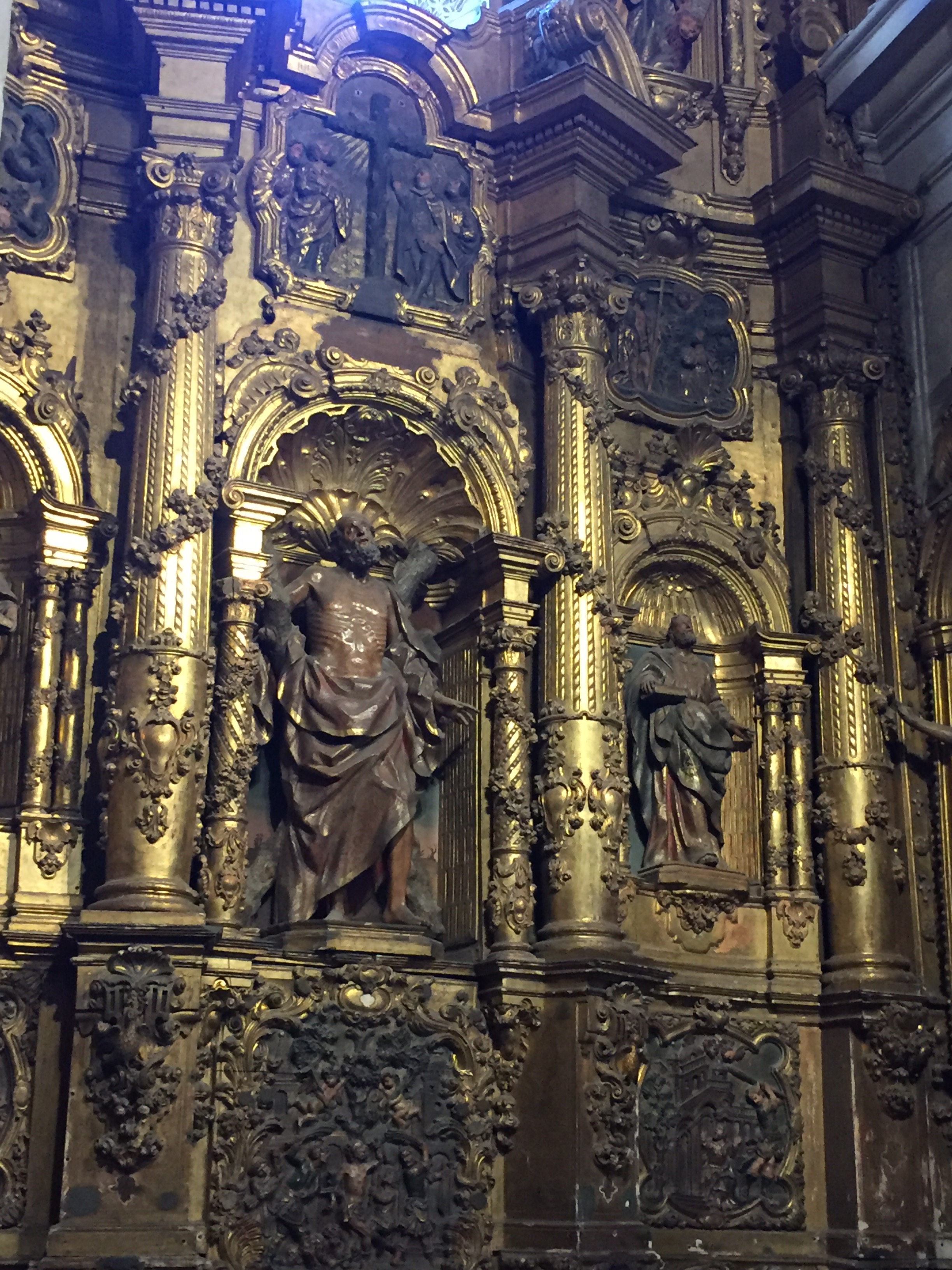
Saint Andrew 

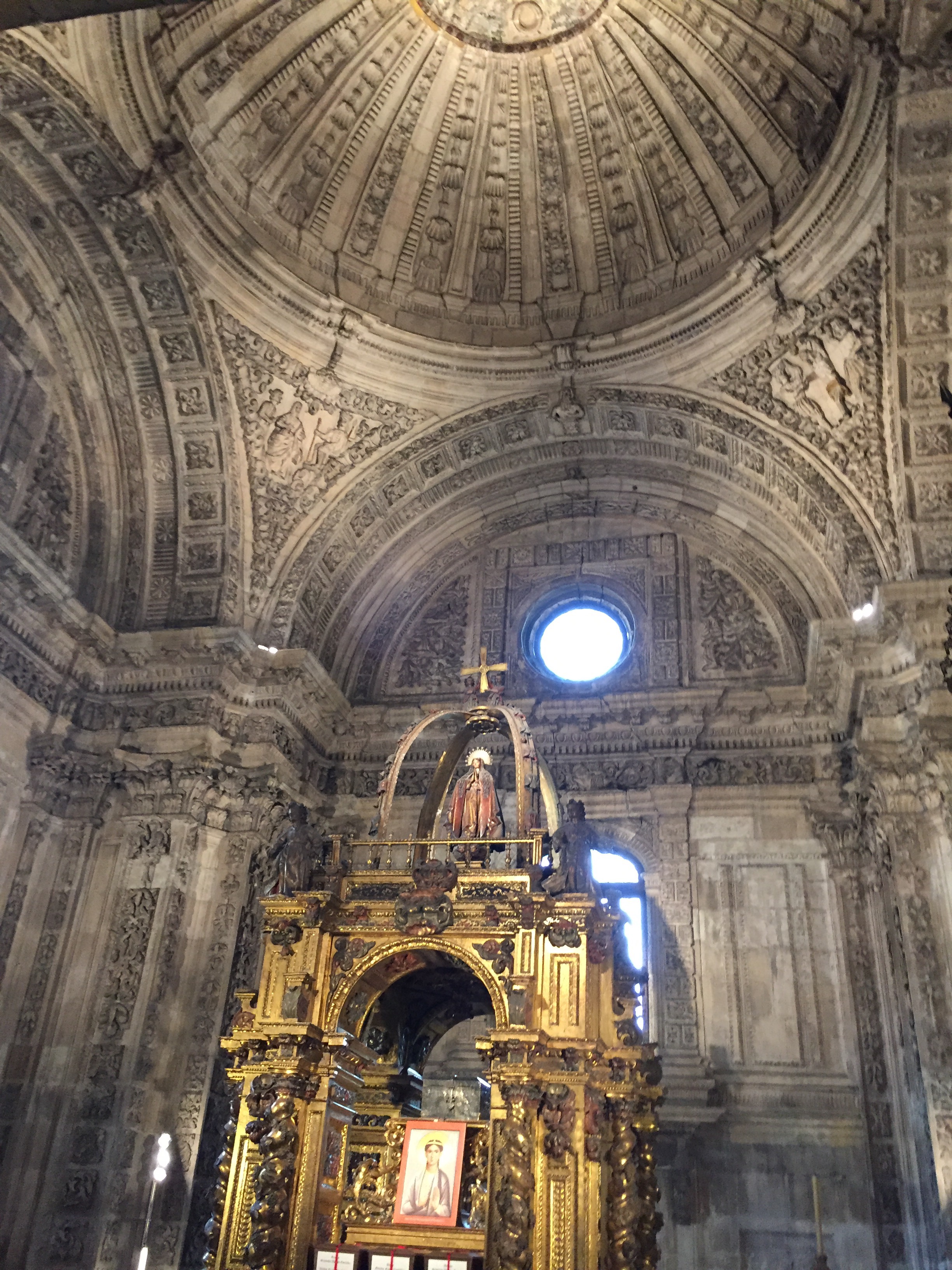
Shrine of Saint Eulalia

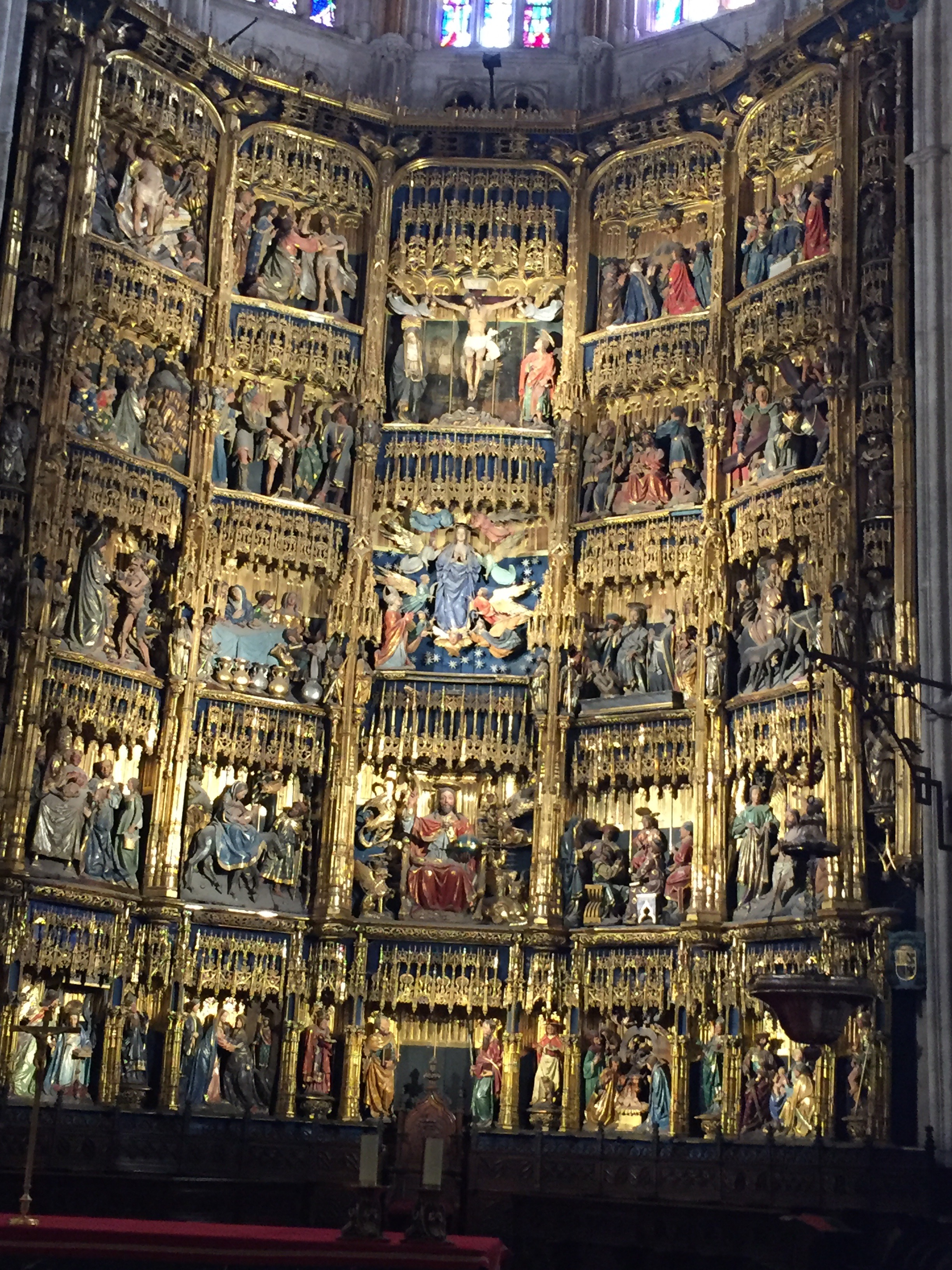
And one last look at the reredos. 

Final  thoughts on this Cathedral. We have a building started by the father of Alfonso II the first pilgrim to Santiago. Twelve hundred years later pilgrims are still taking their first steps from this church to Santiago de Compostela.

We have a reredos carved five hundred years ago  depicting the life of Christ. Originally  carved as a teaching tool for  the uneducated it is still teaching Christians today. 

Amazing.  God is good.

Ease on down the road

Sept 29 and 30

Every now and then your age catches up with you. It has happened to me and to B on this walk. 

I am just on one side of 70 and B is just on the other. We have joined the ranks of the “formerly young ” and it had taken its toll on our feet, our hips and our backs to name a few of the more sensitive spots.

This camino route is beautiful but it is also very rigorous. I think of all the routes we have travelled this is the most strenuous.

In two weeks we have walked 217.57 miles and gone up the equivalent of 1,286 flights of stairs. Time for a correction.

The question was whether to slog on in misery or find a way to make this incredible walk as enjoyable as possible. 

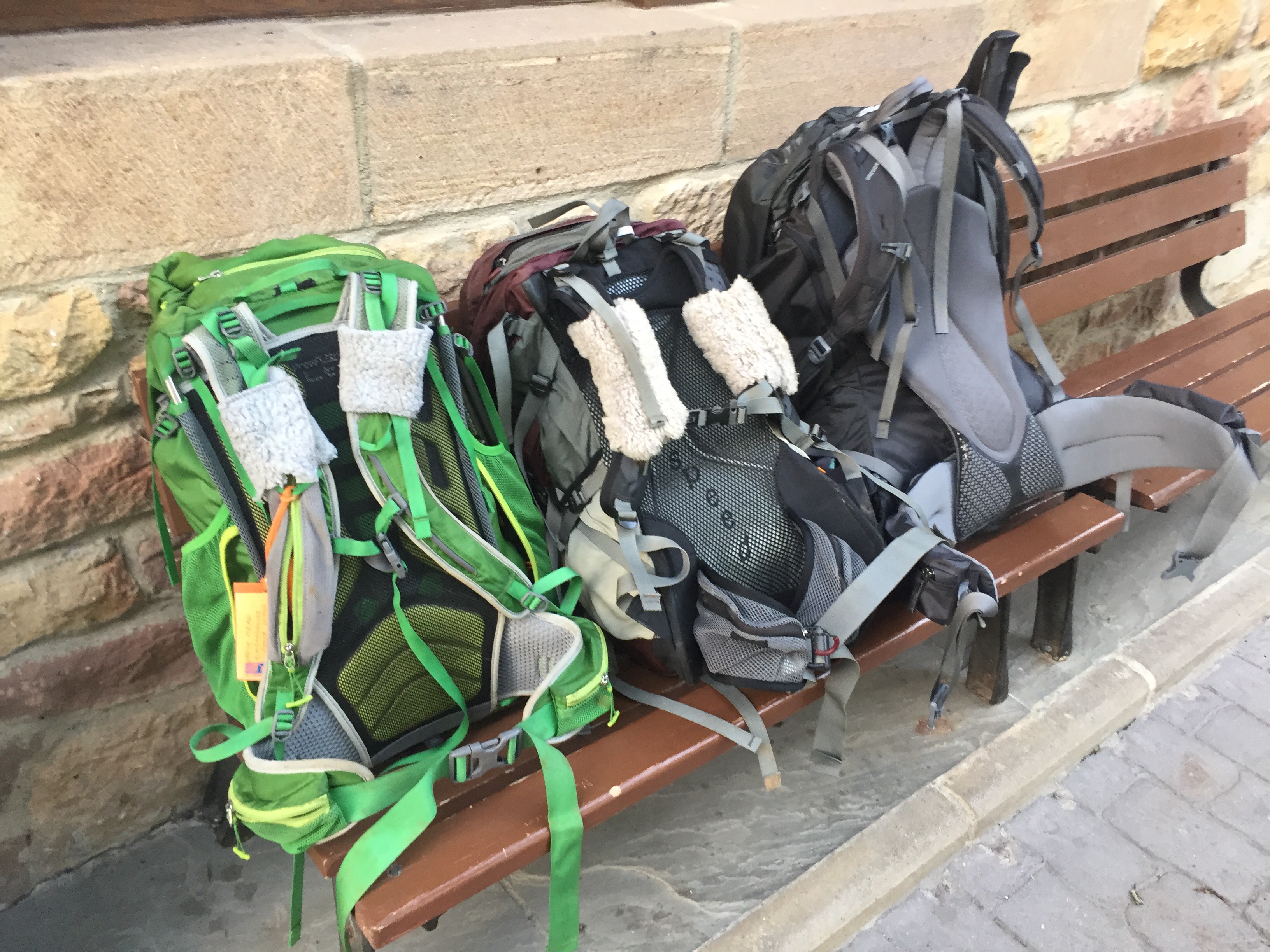
The solution was simple. Have our bags moved from one place to the next and walk carrying only the bare necessities in a day pack.


One phone call to the  only taxi in town and our bags plus one of a friend are lined up and ready to go. If we had known how easy it was to do this we would have done it earlier. 

Without the weight of the bags our walking speed  nearly doubles. We now have the time to enjoy everything Spain has to offer.  

And so we do.

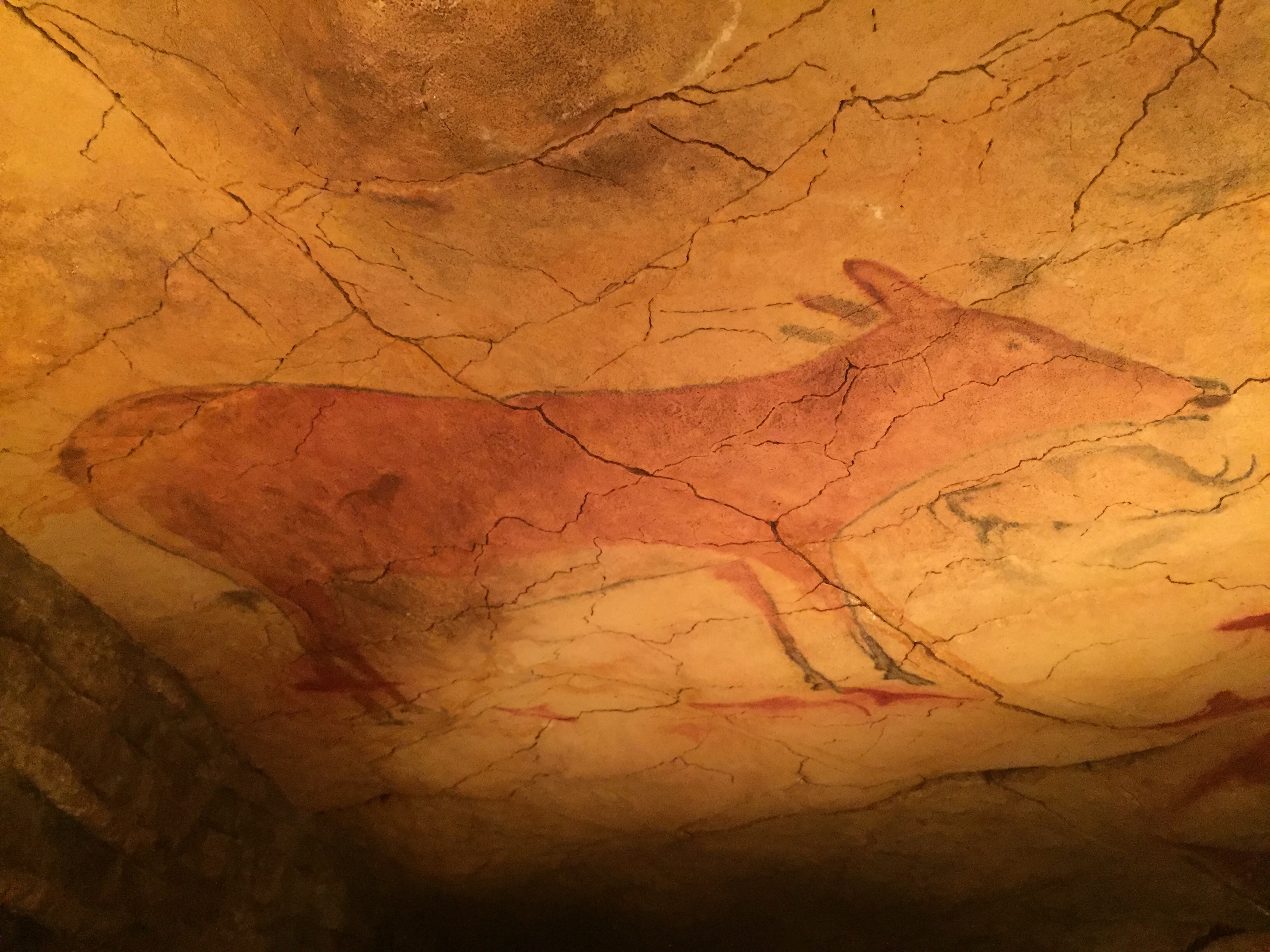
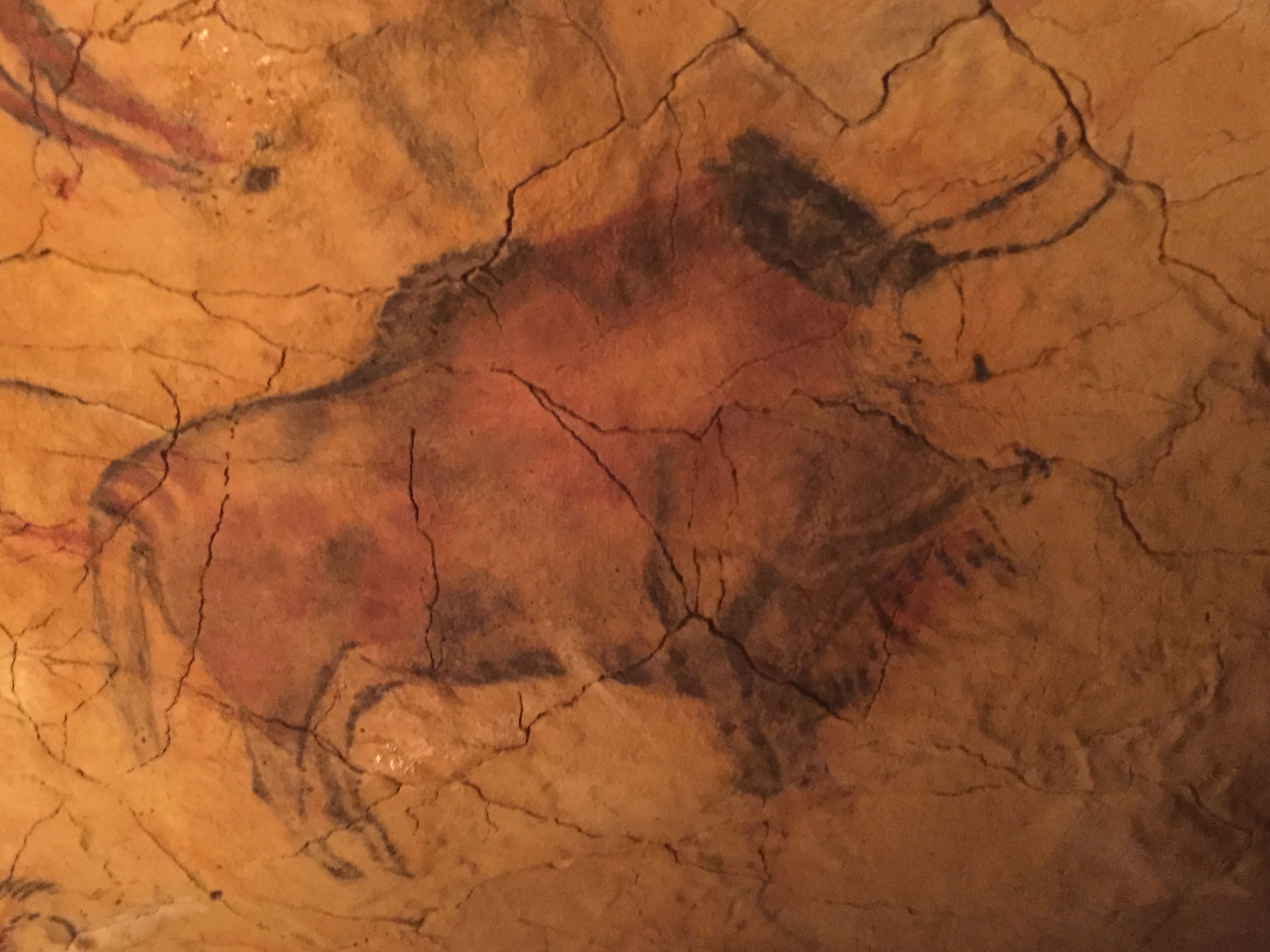
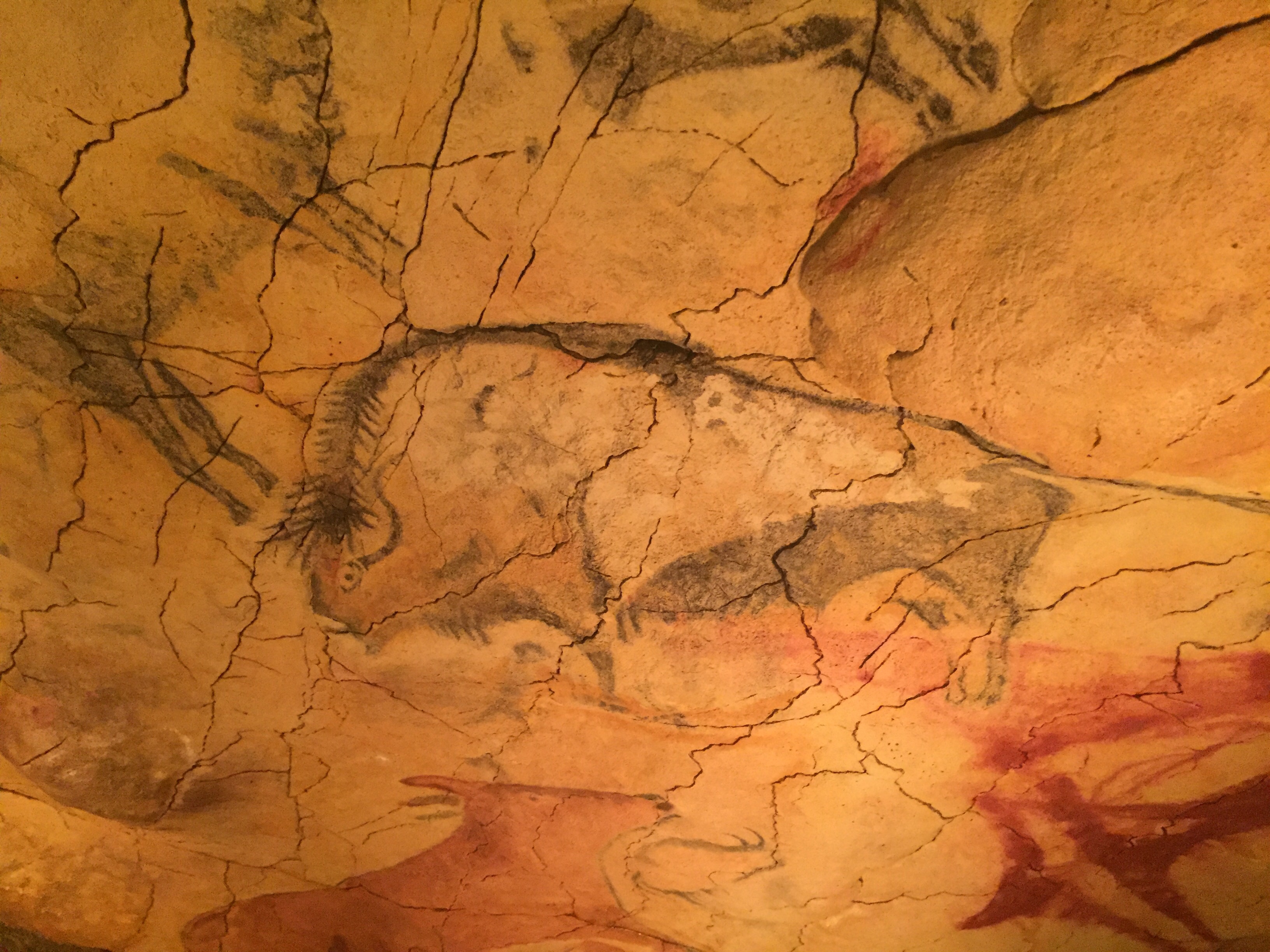
The Caves of Altamira in Santanilla Del Mar are one of our stops.  This museum is a replica of a cave found in the late 1800s by an amateur archeologist. 

He and his daughter found a cave filled with artifacts and painting of what we now know go back at least 20,000 years. 

At the time he reported his discovery he was accused by the  scientific community of being a fraud. Only after his death was the validity of his find acknowledged. 

Although the actual caves themselves are closed to the public, the replica cave is excellent and the copies of the original  paintings done with ochre, charcoal and hematite are amazing .

In San Vincent de Barquera – St Vincent of the Boatman- we have time to enjoy a bit of their seafood festival.

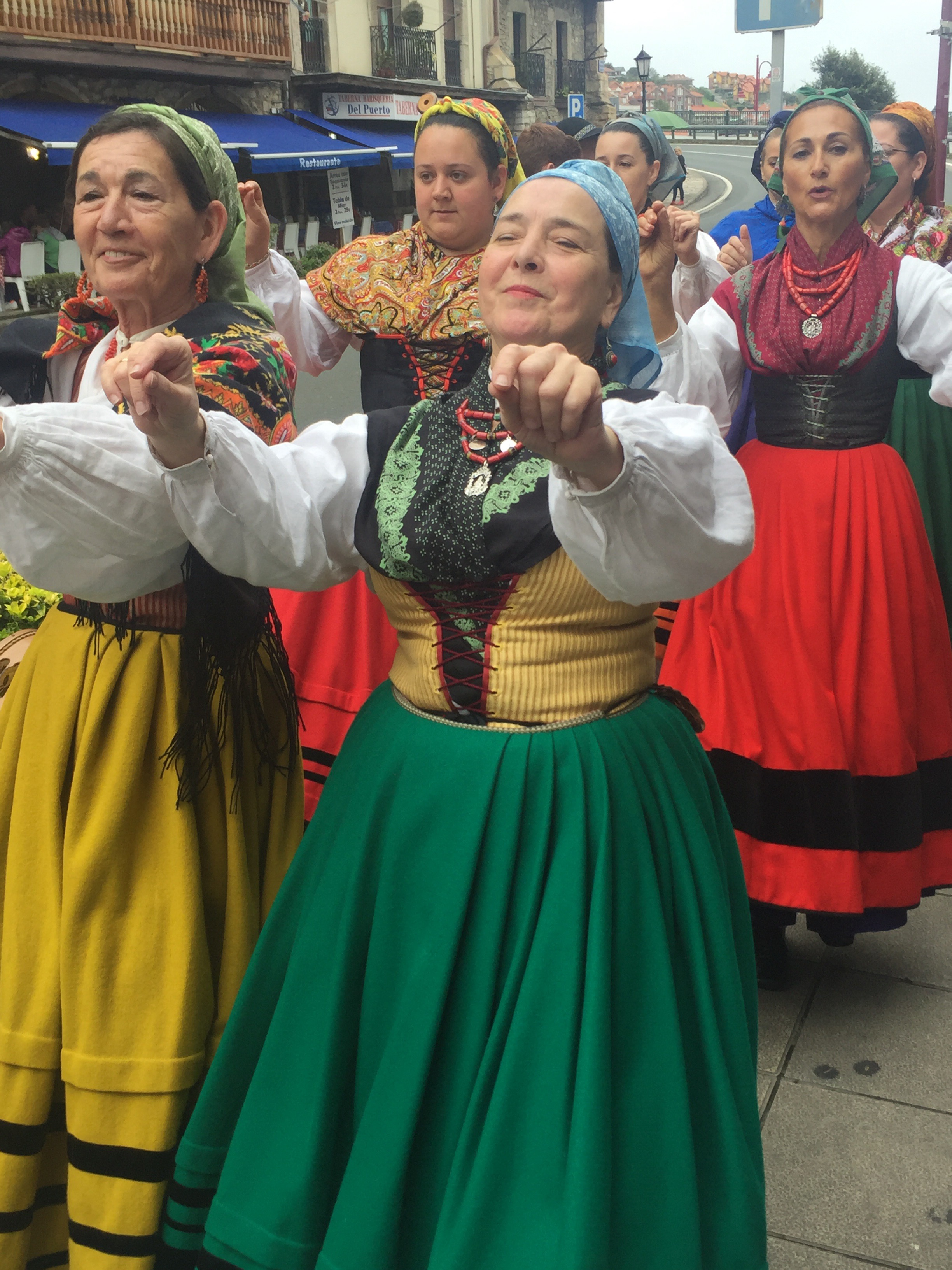
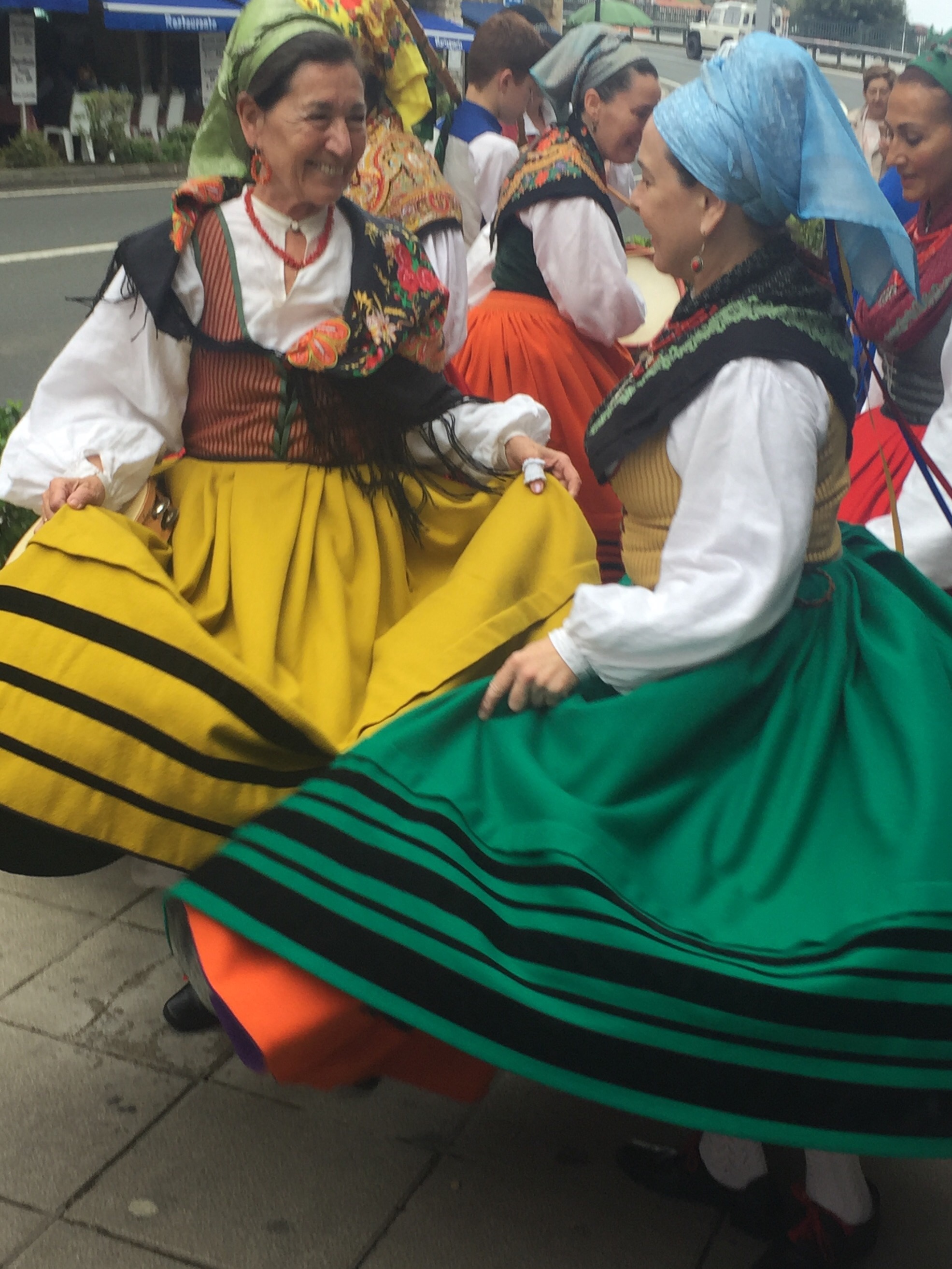
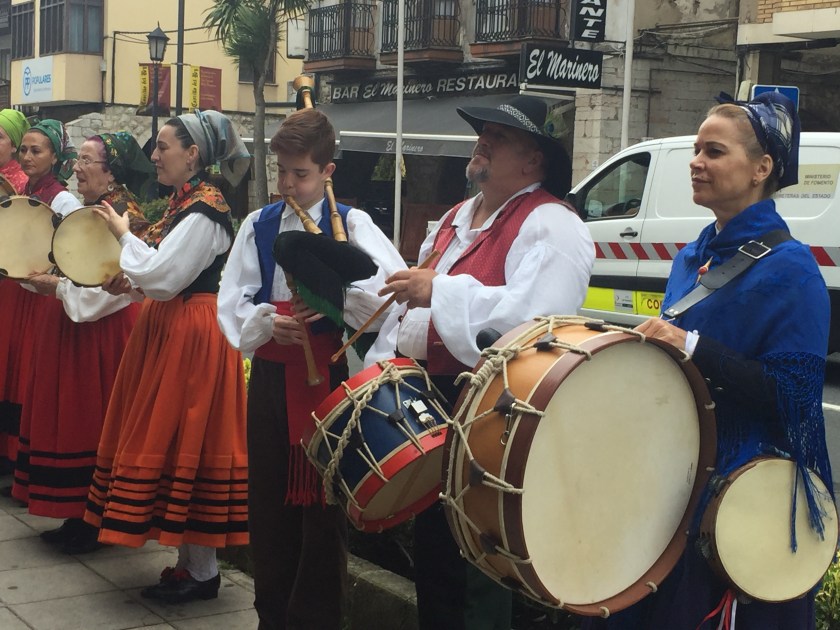
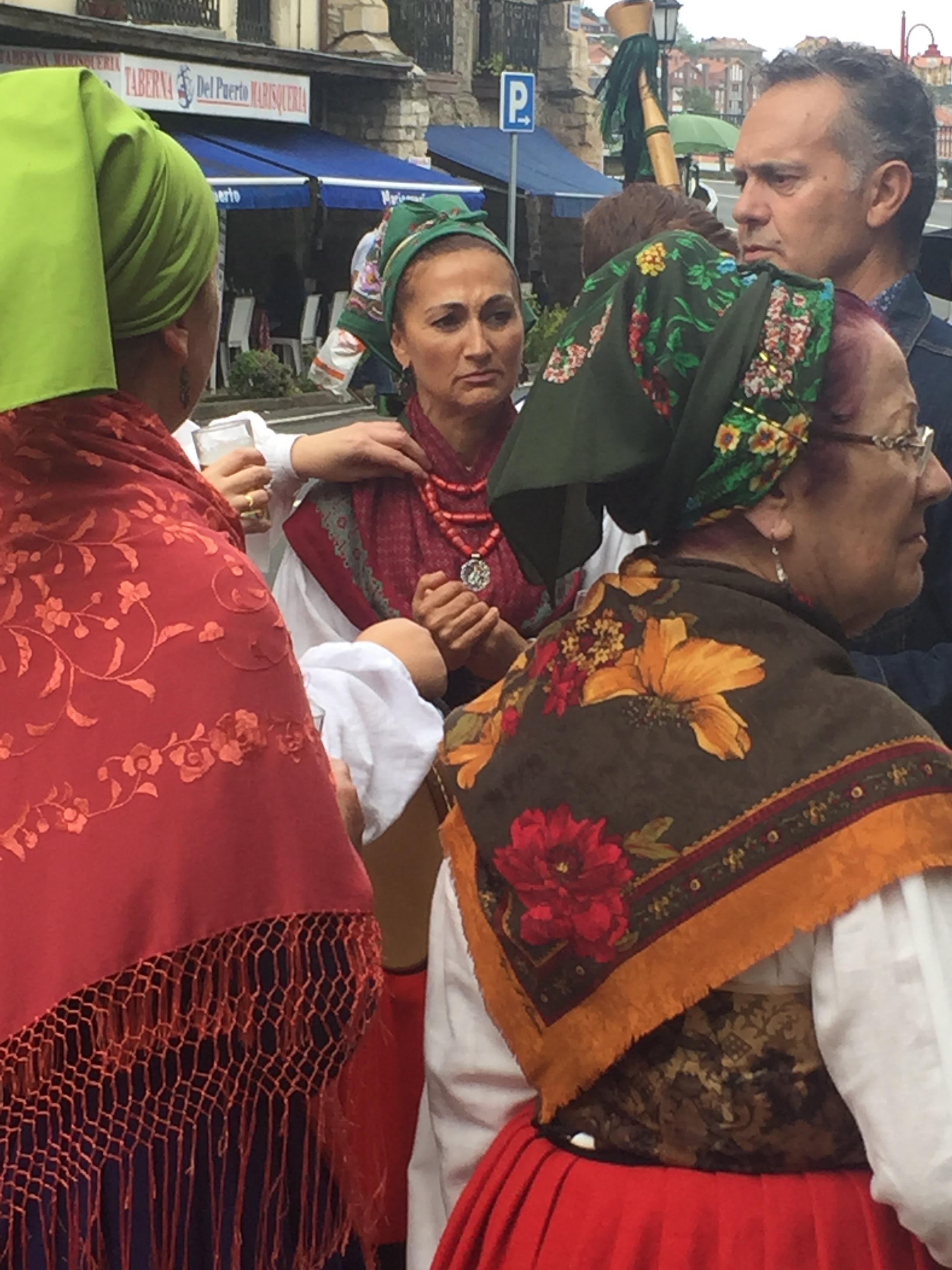
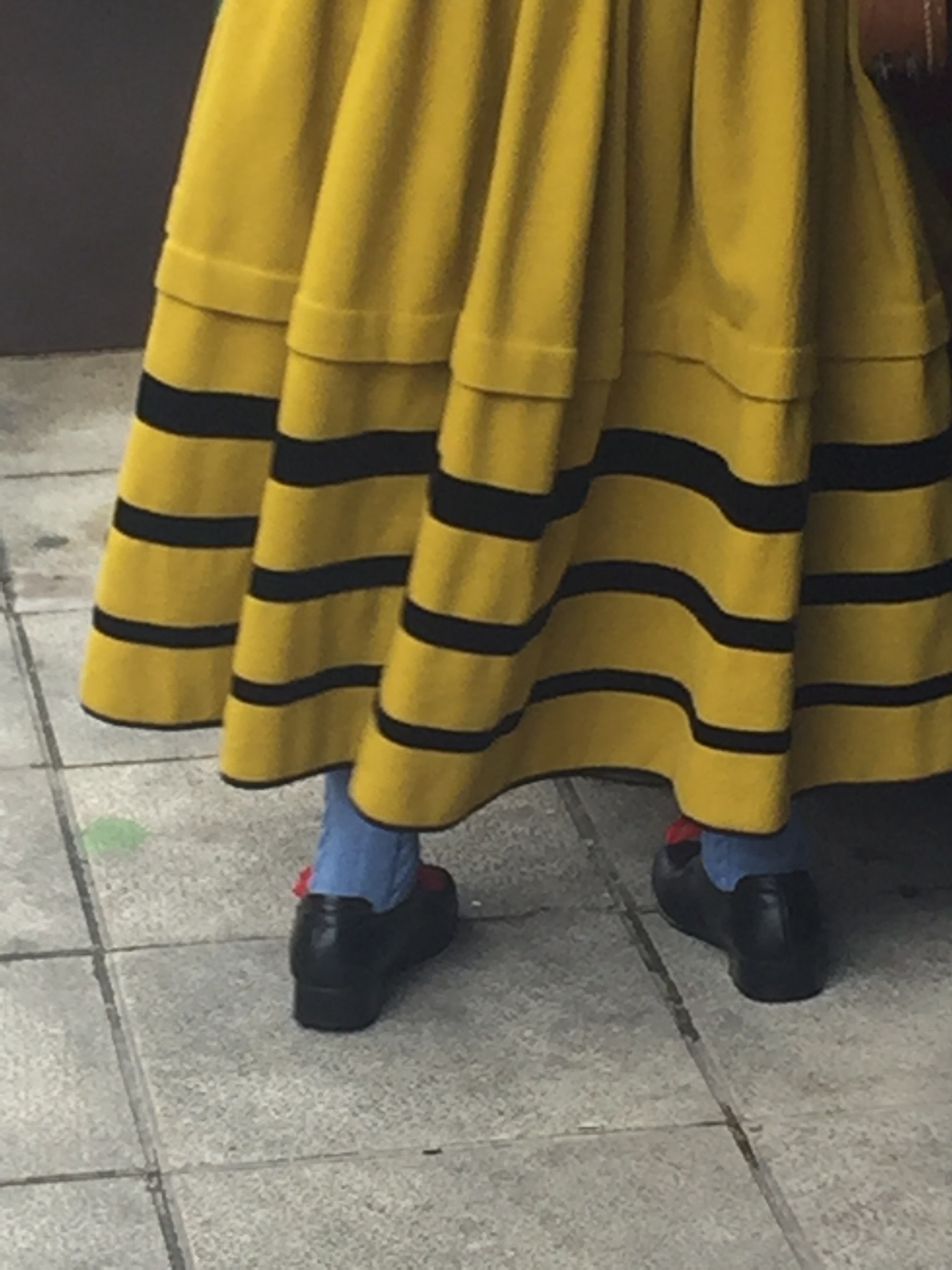
 Not only do we have a fine lunch of mussels, anchovies and octopus,we spend some time watching traditional Spanish dancers and listening to their music .
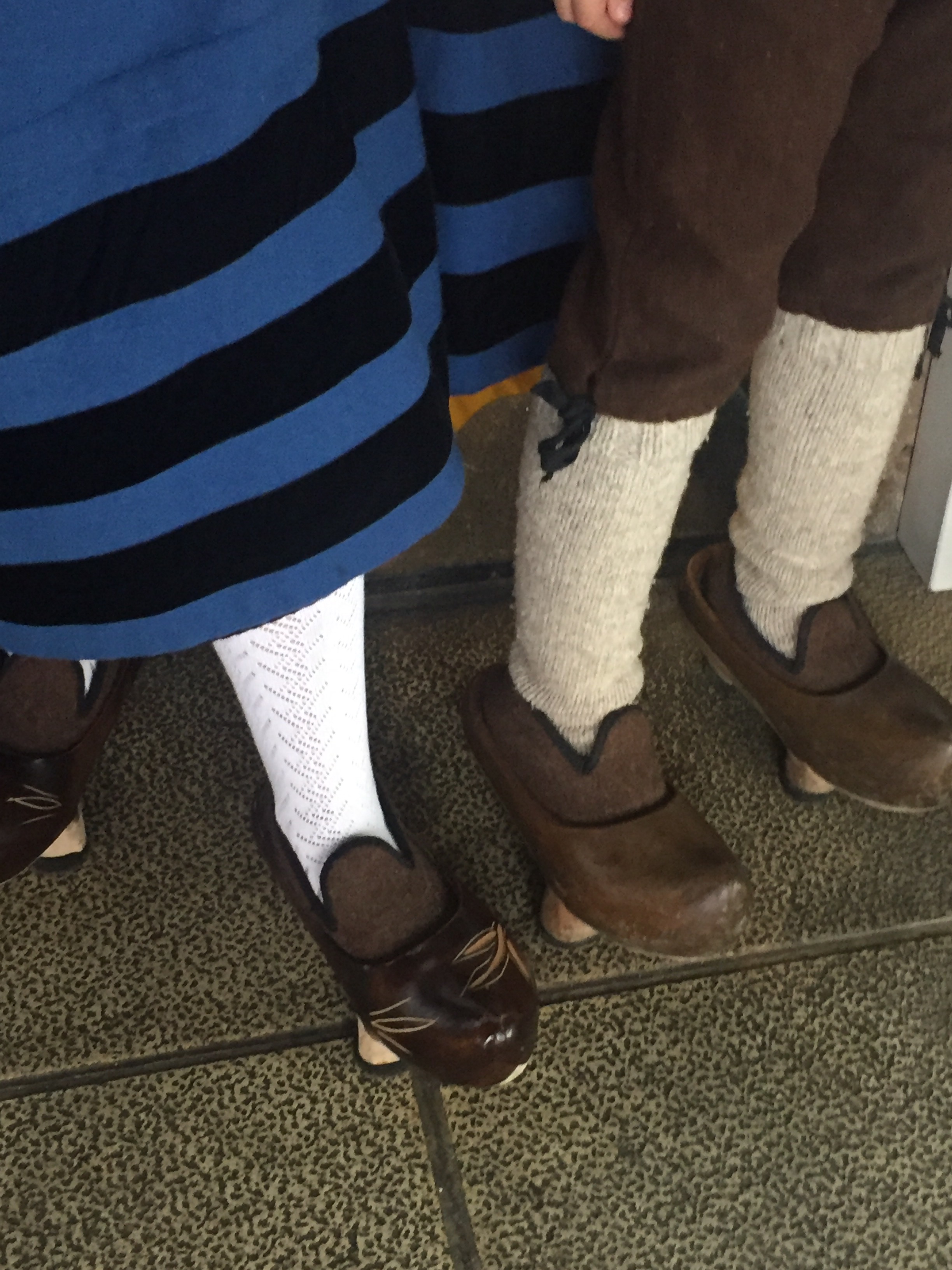
IWe have time to comparetheir fancy shoes and beautiful clothes with our “walking clothes”. Note the wooden clogs designed to  keep you above the mud.

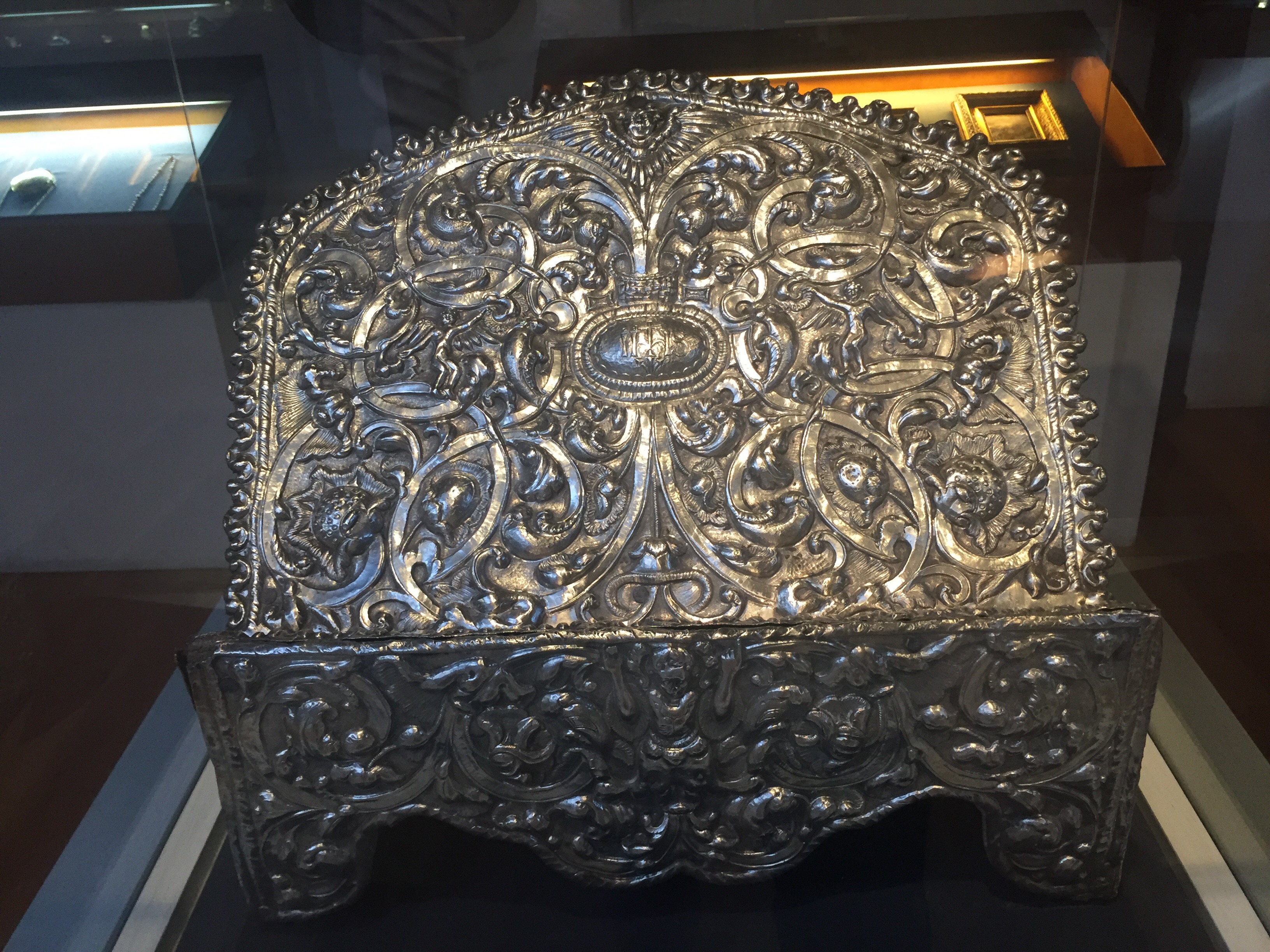
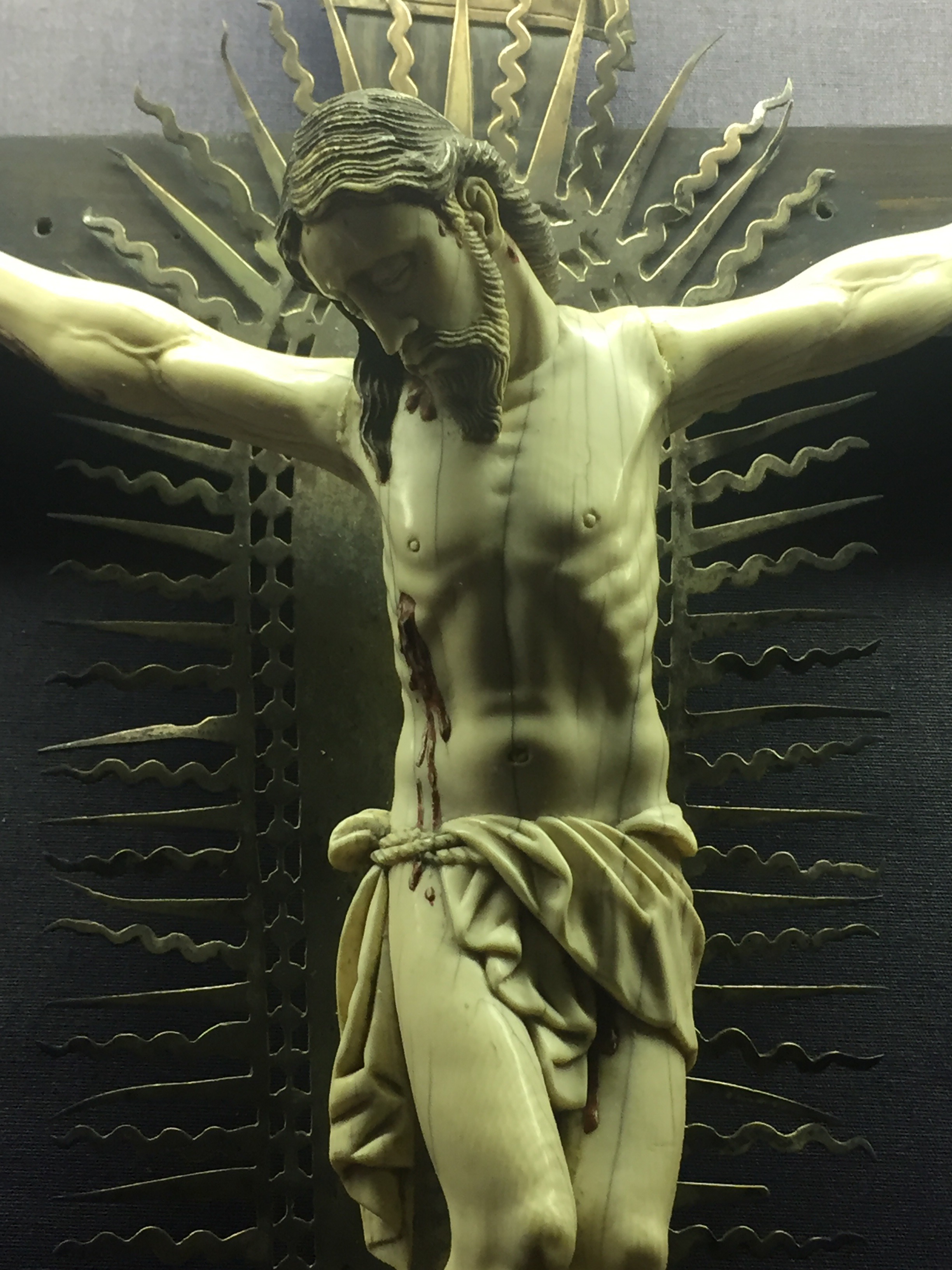
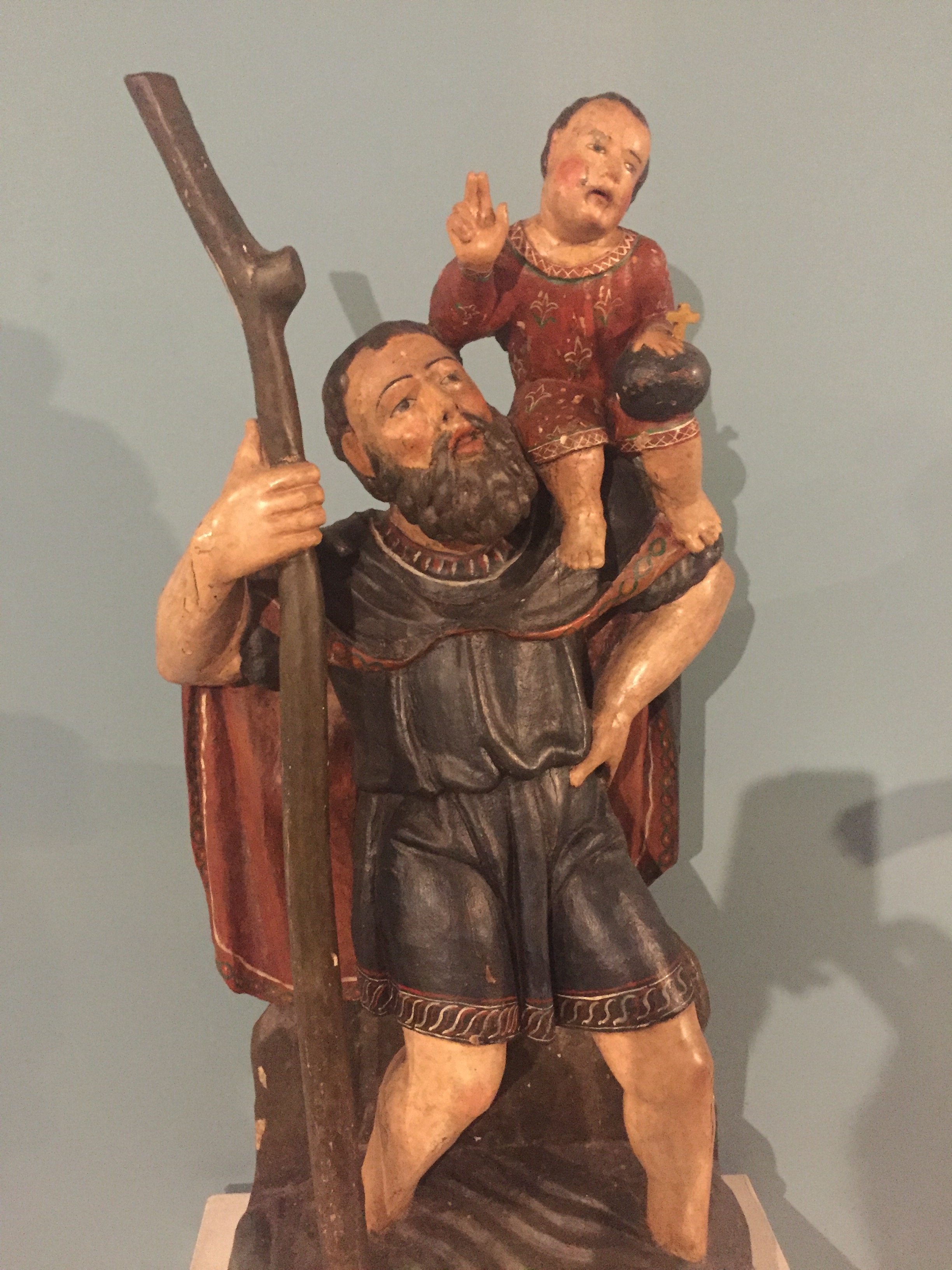
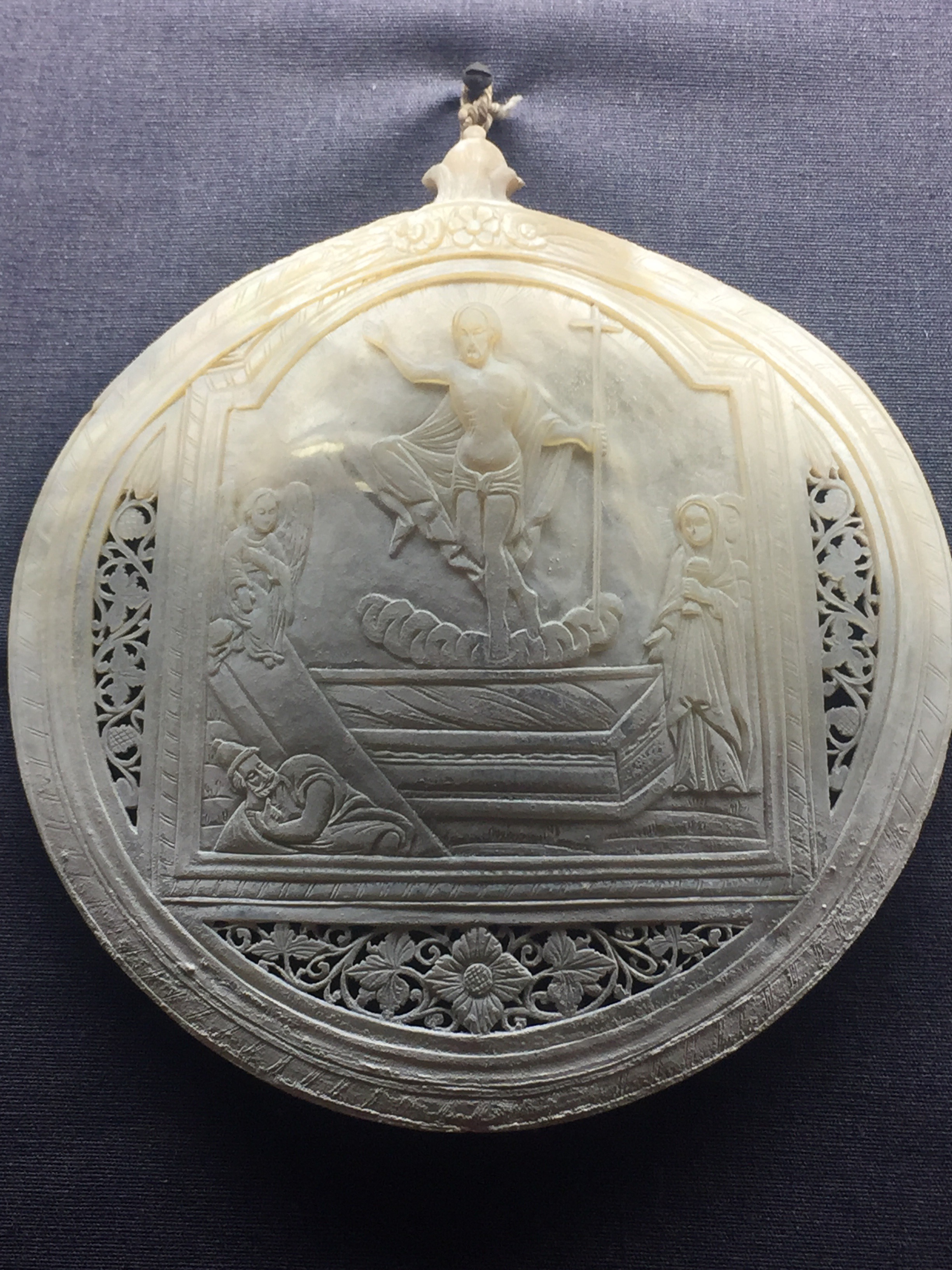
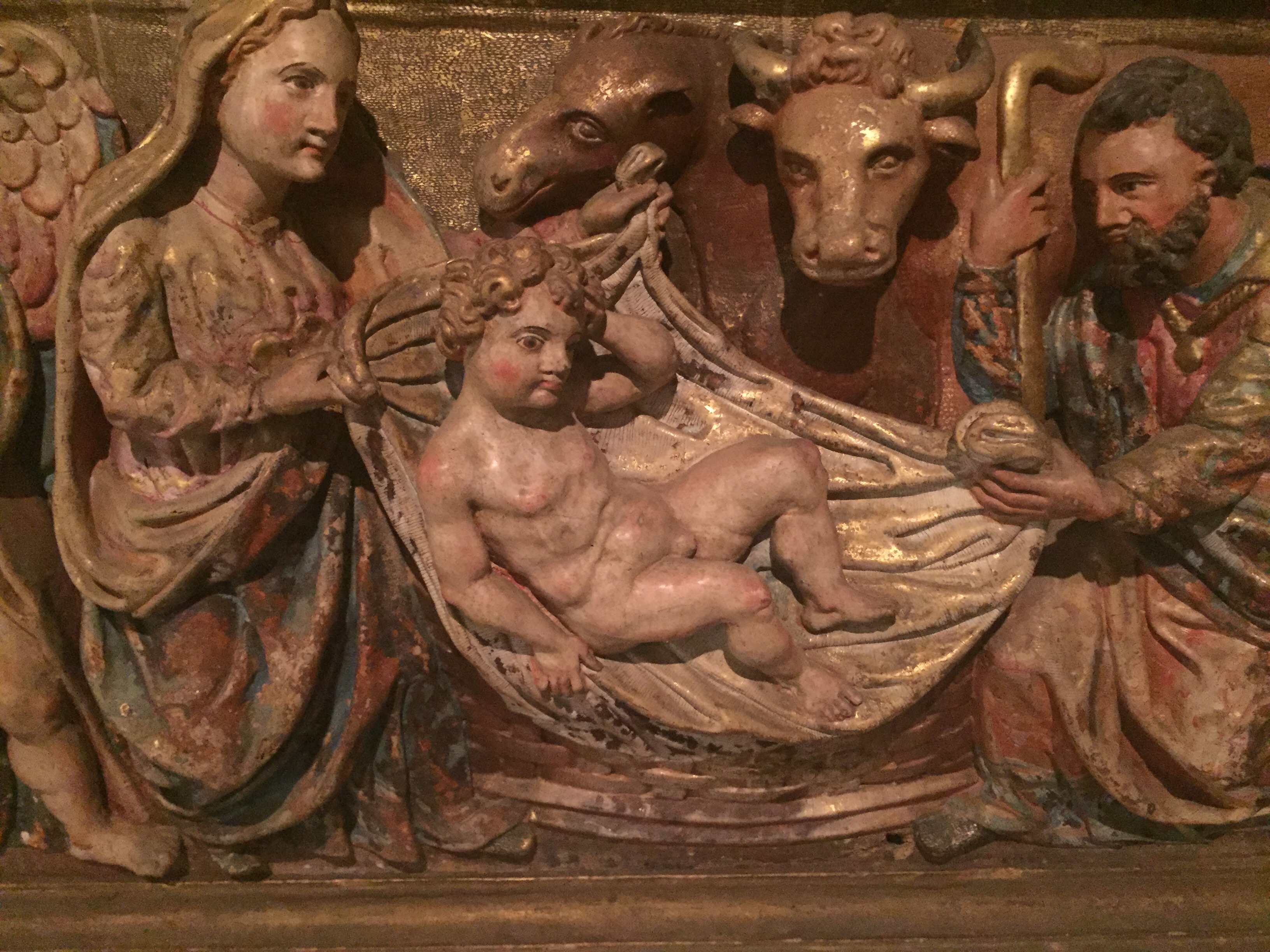
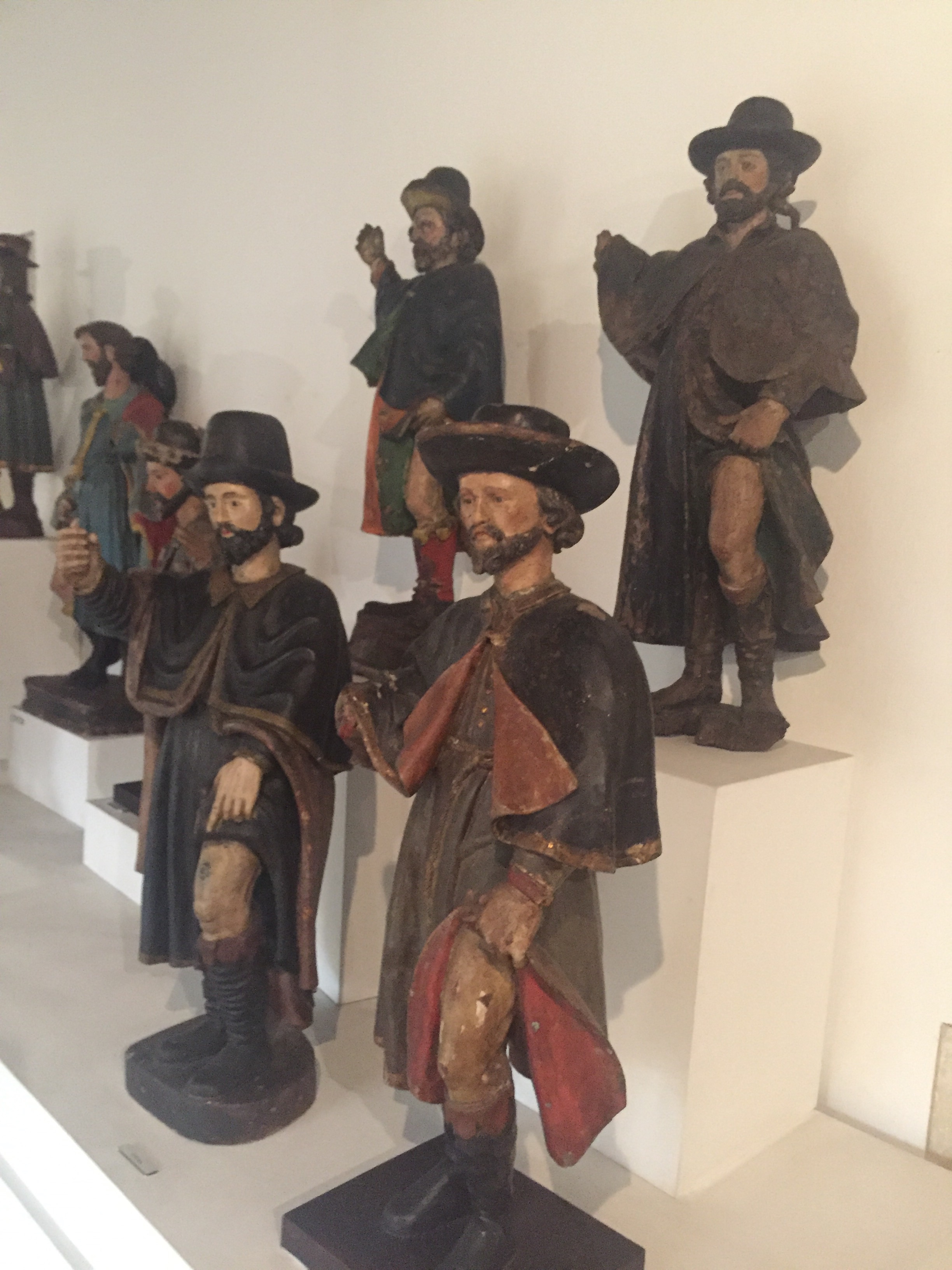
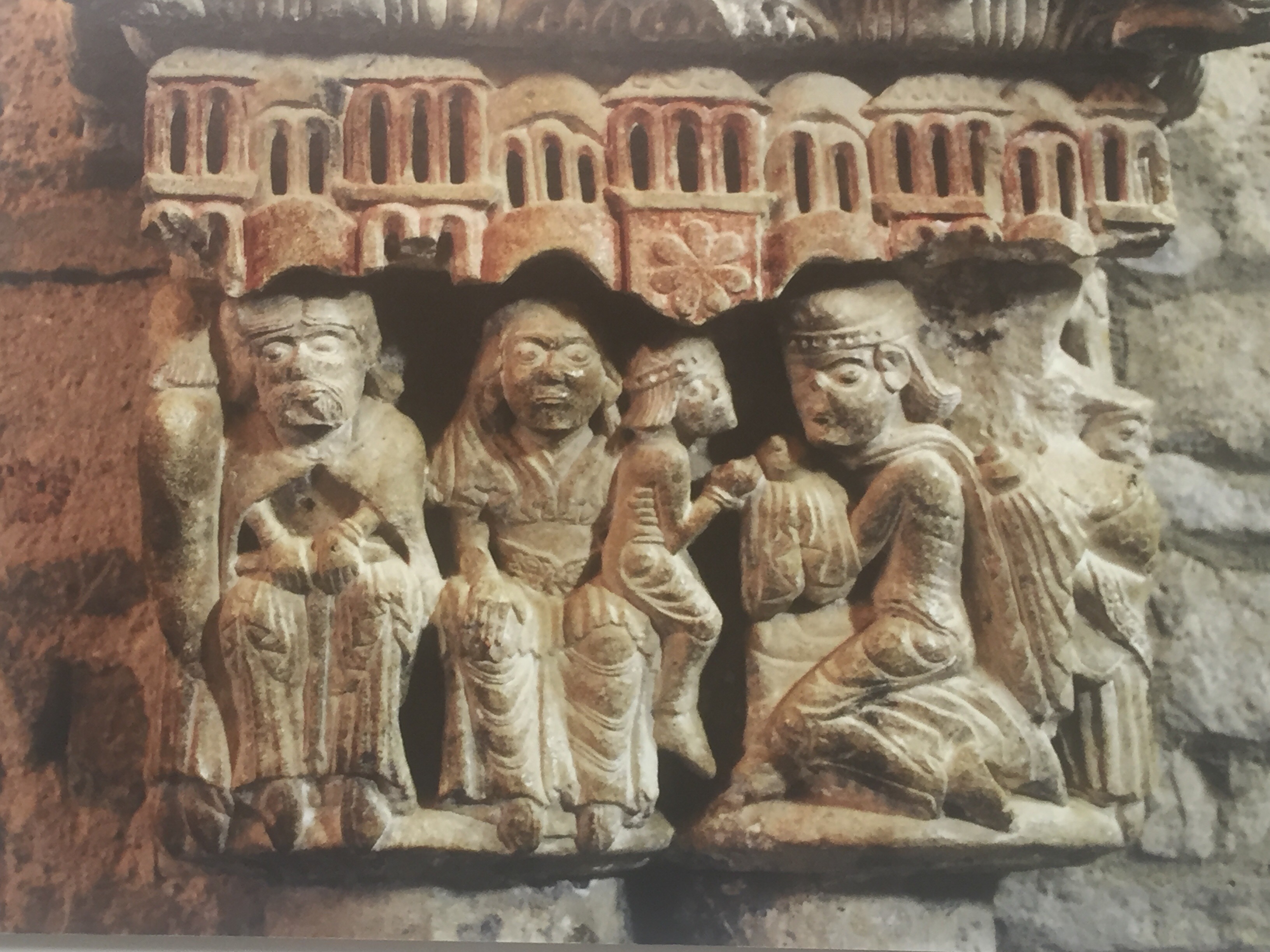
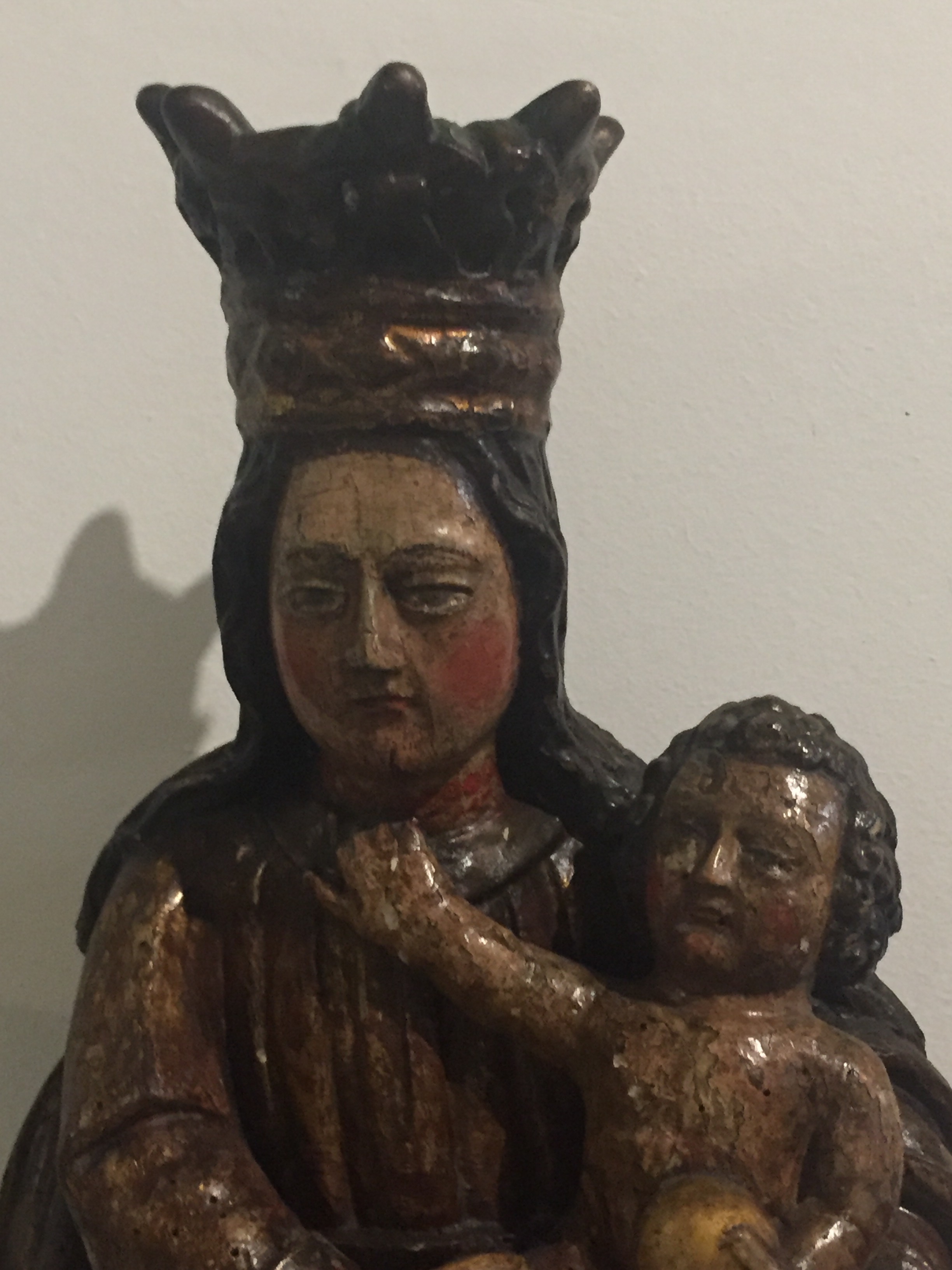
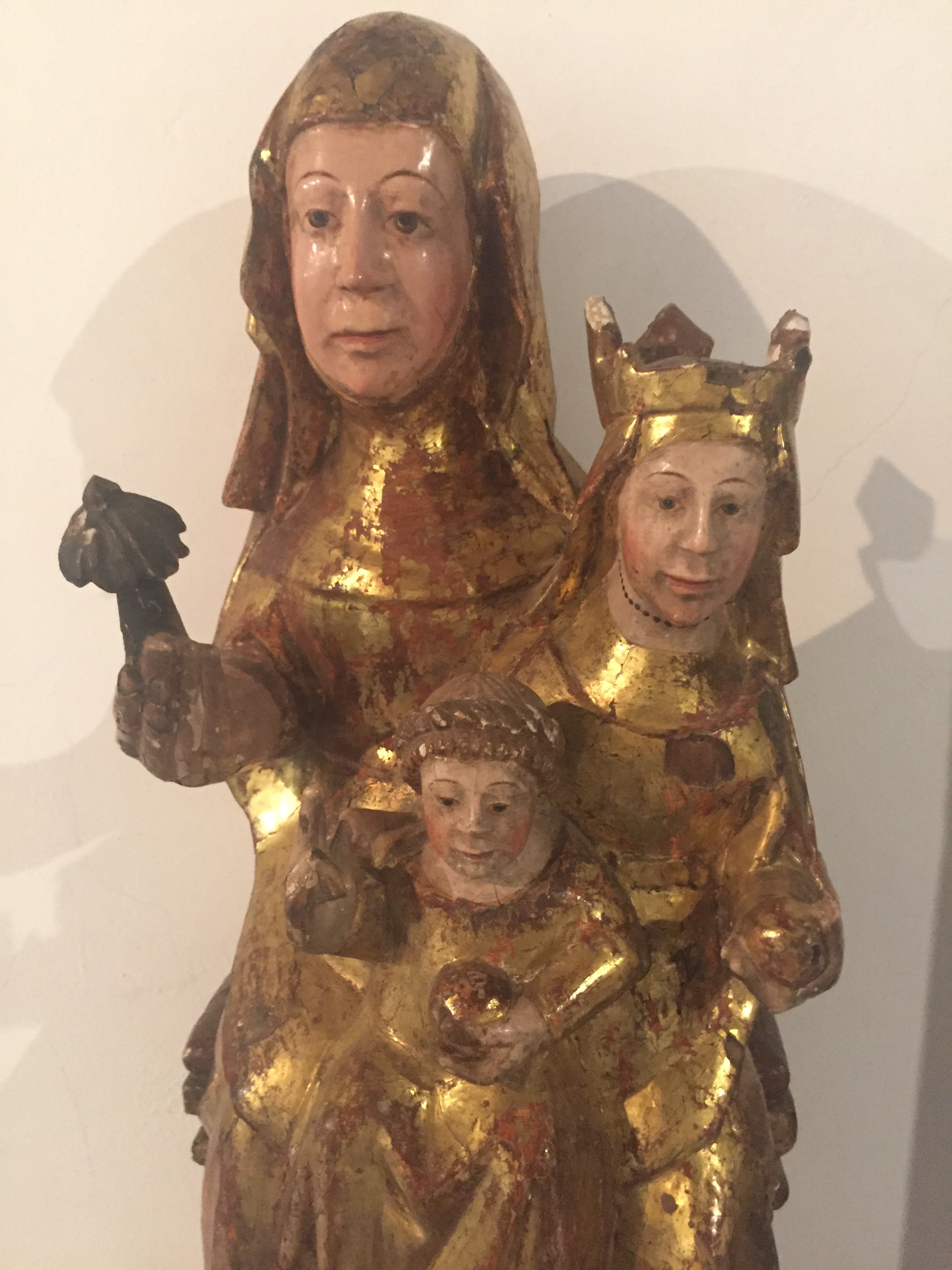
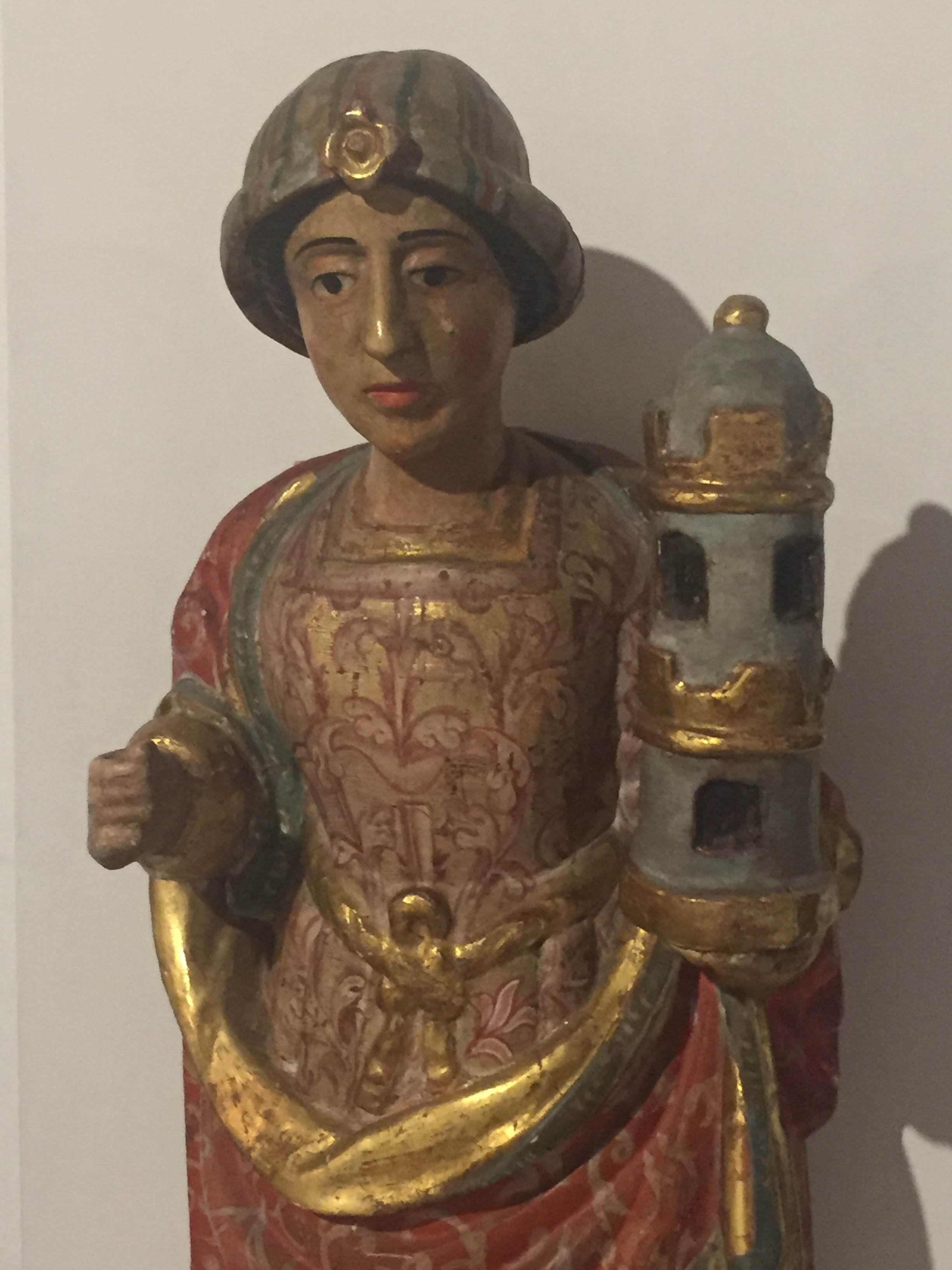
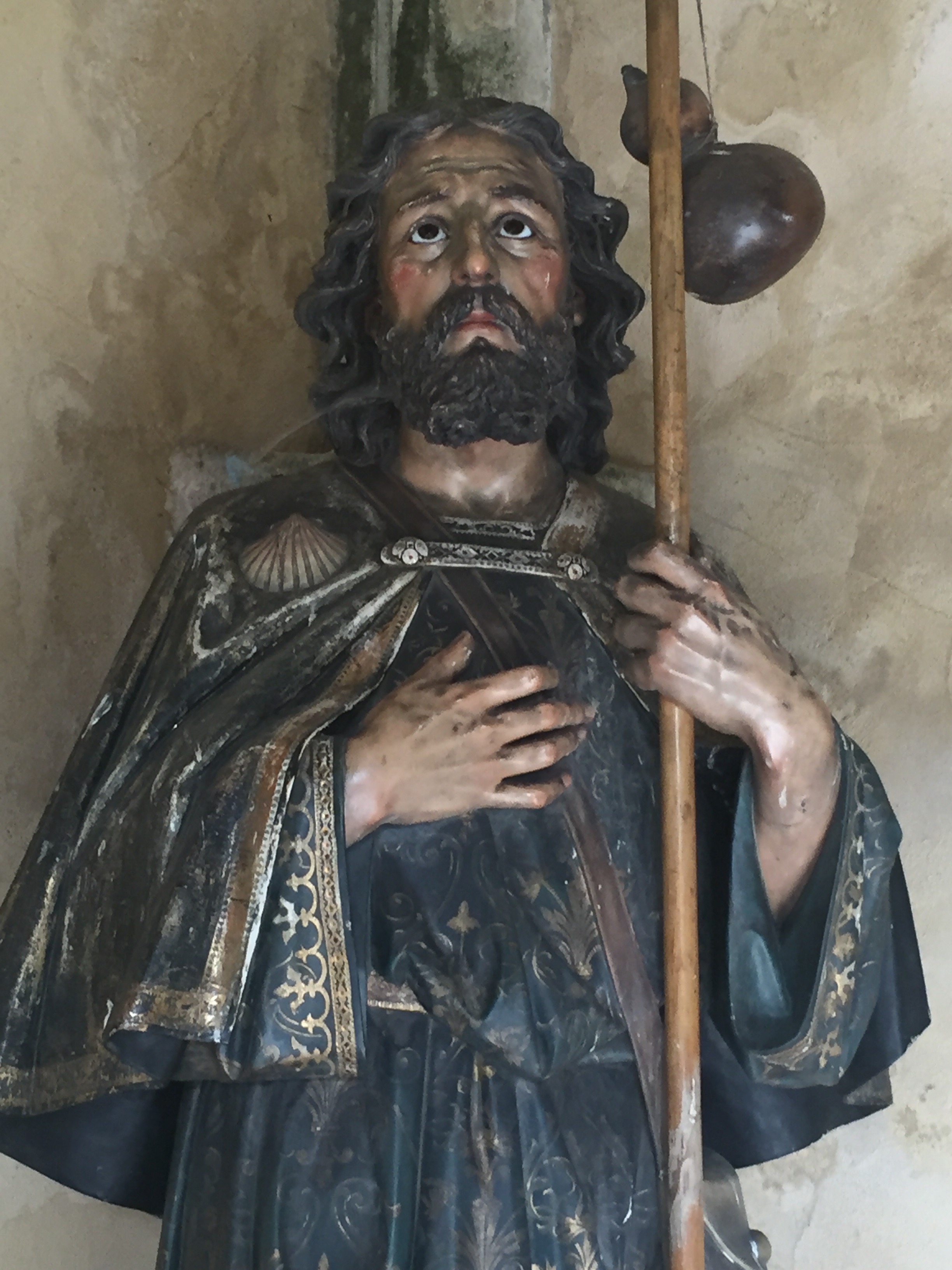
In recent years the priceless art work of small churches has been collected and displayed in Diocesean Museums. This is a practical solution for  the parish and the diocese and the “tourist”. The treasures are in a safe place and  access to them is much easier.

Here are a few of the treasures I have seen.

Silver Book stand

Ivory crucifix

Saint Christopher

Baptismal shell

Nativity

A row of Saint Roche

Visit of the Magi

Madonna and child

Madonna and child with Saint Anne

Saint Barbara

And, of course Saint James

Thus enlightened in more ways than one  we continue on to Santiago de Compostela.

A good decision and we are old enough to know it !